
Overnight Care at Home
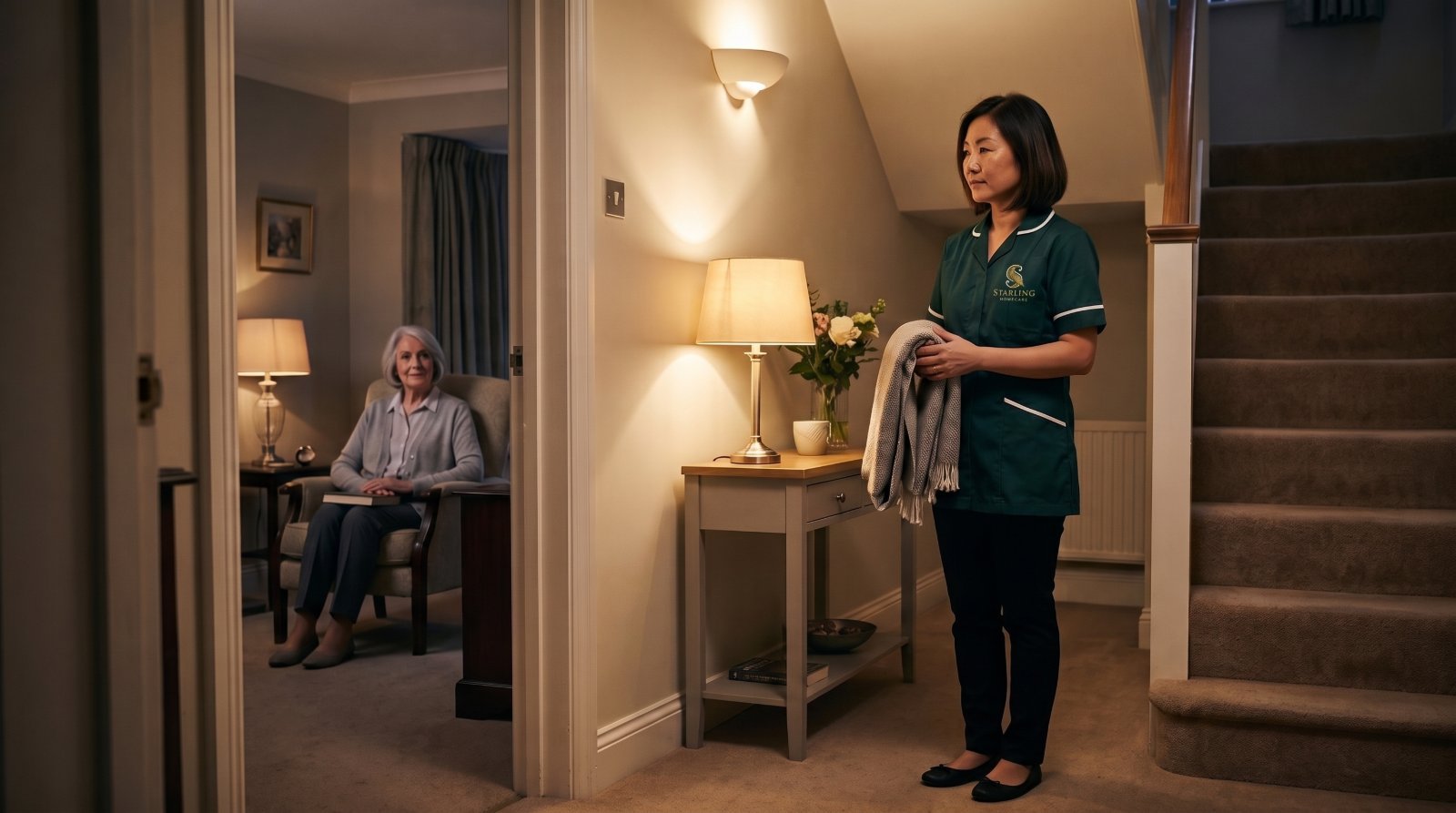
A calm, trusted presence through the night
Overnight care means a carer is with your family member through the night, in their own home. That might be help settling safely into bed, a carer who sleeps nearby and responds if needed, or someone awake through the night for people who need regular support. At Starling Homecare, we provide consistent overnight care across Hertfordshire, shaped around how much help is actually needed, so someone can stay in the home they love when nights have become the worry.
Why Nights Are Often the Turning Point
Days can usually be managed with visits and family help. It is the nights that start conversations about moving into a care home: a fall on the way to the bathroom at 3am, medication that cannot wait until morning, or the anxiety of waking alone. The right night-time support usually answers those worries without a move.

How Much Night-Time Cover Is Needed?
If you are not sure, start with a week of honest notes. How many nights were disturbed, what happened each time, and what could have gone wrong if nobody had been there. That week of notes usually makes the right level obvious, and it gives us something concrete to talk through together. We would rather begin with less and step up than suggest more cover than you need.
Overnight Care and Dementia
Nights are often hardest for people living with dementia, and for the family members listening out for them. A consistent overnight carer helps in practical ways: the same face brings a calm that a rota of strangers cannot, and a familiar bedtime routine often means a more settled night for everyone.


Overnight Care May Include:
- Help with the evening routine: washing, changing and settling into bed
- Support to the bathroom during the night
- Medication at the right times, including during the night
- Reassurance after waking, and help settling back to sleep
- A calm, familiar presence for someone living with dementia
- A safe response if something goes wrong, and a clear handover in the morning
- Flexible cover, from a few nights a week to every night
The Levels of Overnight Care
An evening settling visit
A carer arrives later in the evening to help with washing, medication and getting comfortably to bed. This suits someone whose main risk is around the bedtime routine itself.
A sleeping night
A carer sleeps in the home and is there to respond if help is needed. This suits someone who rarely wakes but cannot safely be alone overnight.
A waking night
The carer stays awake throughout the night. This is the right level when someone wakes regularly, needs help to the bathroom or with medication during the night, or would be unsafe if no one was watching over them.
24-hour and live-in care
When support is needed through the day as well as the night, one dedicated carer living in the home often becomes the simplest and most reassuring arrangement. You can read more about live-in care, or we will talk you through both options honestly so you can decide what feels right.

Overnight Care FAQs
How much does overnight care cost?
It depends on the level of cover: an evening settling visit, a sleeping night and a waking night are each priced differently. We confirm everything in a written quote before anything begins, and regulated home care is VAT exempt, so there is nothing to add on top. Many families also find our care funding guide a helpful place to start.
What is the difference between a sleeping night and a waking night?
On a sleeping night the carer sleeps in the home and responds if needed, which suits someone who rarely wakes. On a waking night the carer stays awake throughout, which is the safer arrangement when someone wakes regularly or needs frequent help. A week of notes on how often nights are disturbed usually points clearly to one or the other.
Can overnight care start with just a few nights a week?
Yes. Many families begin with cover on the nights that are hardest, or while a family carer catches up on sleep, and adjust from there. Support can step up or down as needs change, and there is no minimum commitment beyond the nights you choose.
Will the same carer come each night?
We keep the team around each person small and familiar, because consistency matters at night even more than in the day. We will be honest with you about how continuity is planned and what happens when your usual carer takes time off.
When does overnight care become 24-hour or live-in care?
When someone needs support through the day as well as most nights, separate visits can become more disruptive than helpful. At that point one dedicated live-in carer, with proper rest planned in, is often calmer, simpler and better value. We will talk it through honestly and help you weigh the options.
Can you support someone living with dementia at night?
Yes. Waking confused in the dark, getting up to walk around, or day and night gradually swapping over are all common with dementia. A consistent overnight carer and a familiar bedtime routine often mean a more settled night, for the person and for the family listening out for them.
How quickly can overnight care start?
The right timing depends on your situation and on matching you with a suitable carer. We will talk through your needs and explain realistic timescales when you contact us, so you know what to expect.
Do we have to commit long term?
No. There are no long-term or fixed-term contracts, and every package carries our 90-day risk-free guarantee: you can cancel at any time.
How to Get Started
- Think about what type of help would make life easier
- Check if you or your loved one might be eligible for support
- Speak with us. We can guide you through options and next steps
Arranging Overnight Care Is Simple
Starting care can feel like a big step. We keep it calm and straightforward, and we are here from your very first call to help you explore what might feel right, whether that is with us or simply pointing you in the right direction.
1. Talk to us
Get in touch by phone or request a callback. We will listen, answer your questions and help you understand the options, so you can decide in your own time.
2. A home visit and initial consultation
We arrange a visit to understand your routines, your home and what matters most to you. Together we agree an initial consultation and shape the support that feels right.
3. Your care begins
A small, familiar team starts your care, arriving at the agreed times and staying involved as your needs change. We remain your trusted adviser throughout.
Whenever you are ready, we are here to help.

If nights have become the hardest part of caring, the right overnight support can make everything feel more manageable. If you are exploring night-time care, we are here to talk it through. Call us or complete our enquiry form. We would be glad to help.