
Care at Home for Sight Loss
Keeping life familiar when your sight changes
If you or someone in your family is living with sight loss, whether from macular degeneration, glaucoma, diabetic eye disease, a stroke or another cause, we can arrange regulated sight loss care at home across St Albans, Harpenden, Welwyn Hatfield, Hemel Hempstead and Potters Bar, with live-in care available across the whole of Hertfordshire. Most people with sight loss have some useful vision and a great deal of independence. The job of good care is to protect both, with a small, familiar team who know your home, your routine and how you like things done.
Why Home Matters with Sight Loss
When you cannot see well, you navigate by memory. You know how many steps to the kitchen, which cupboard the tea is in and where the light switch sits. A move to unfamiliar surroundings takes all of that away at once. Care at home keeps it. We build the support around the layout you already know, and we never move things without asking.

Care That Starts With What You Can See
Sight loss is rarely total, and it is rarely the same in all conditions. Some people see well in bright daylight and very little in the evening. Some have lost central vision and read with the edge of the eye. Some manage well at home and struggle outside. Before care begins we understand what you can see, when, and what helps, so the care plan records the practical detail: where you want the lamps on, how you prefer to be guided, which labels need to be large print, and what must stay exactly where it is.
Guided, Not Led
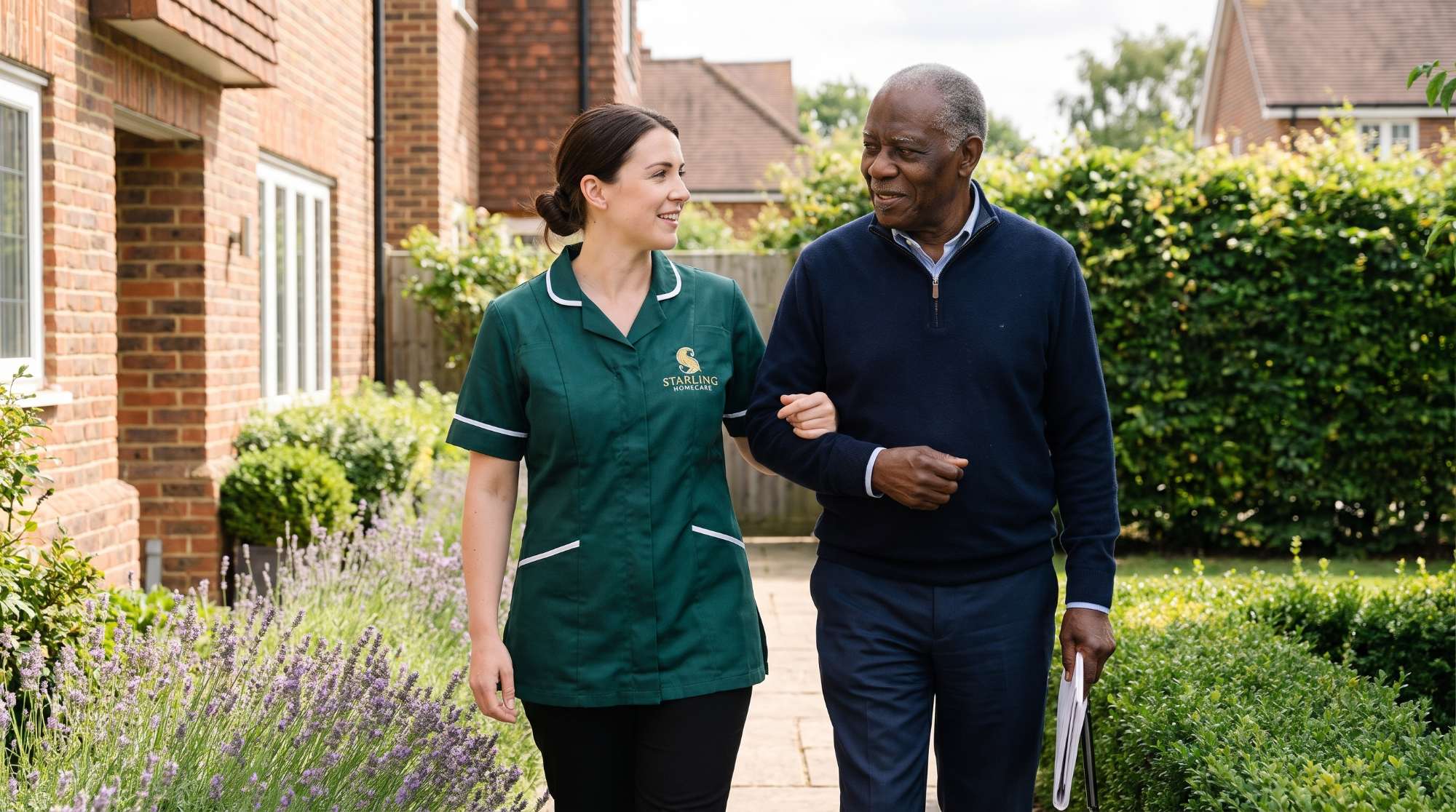
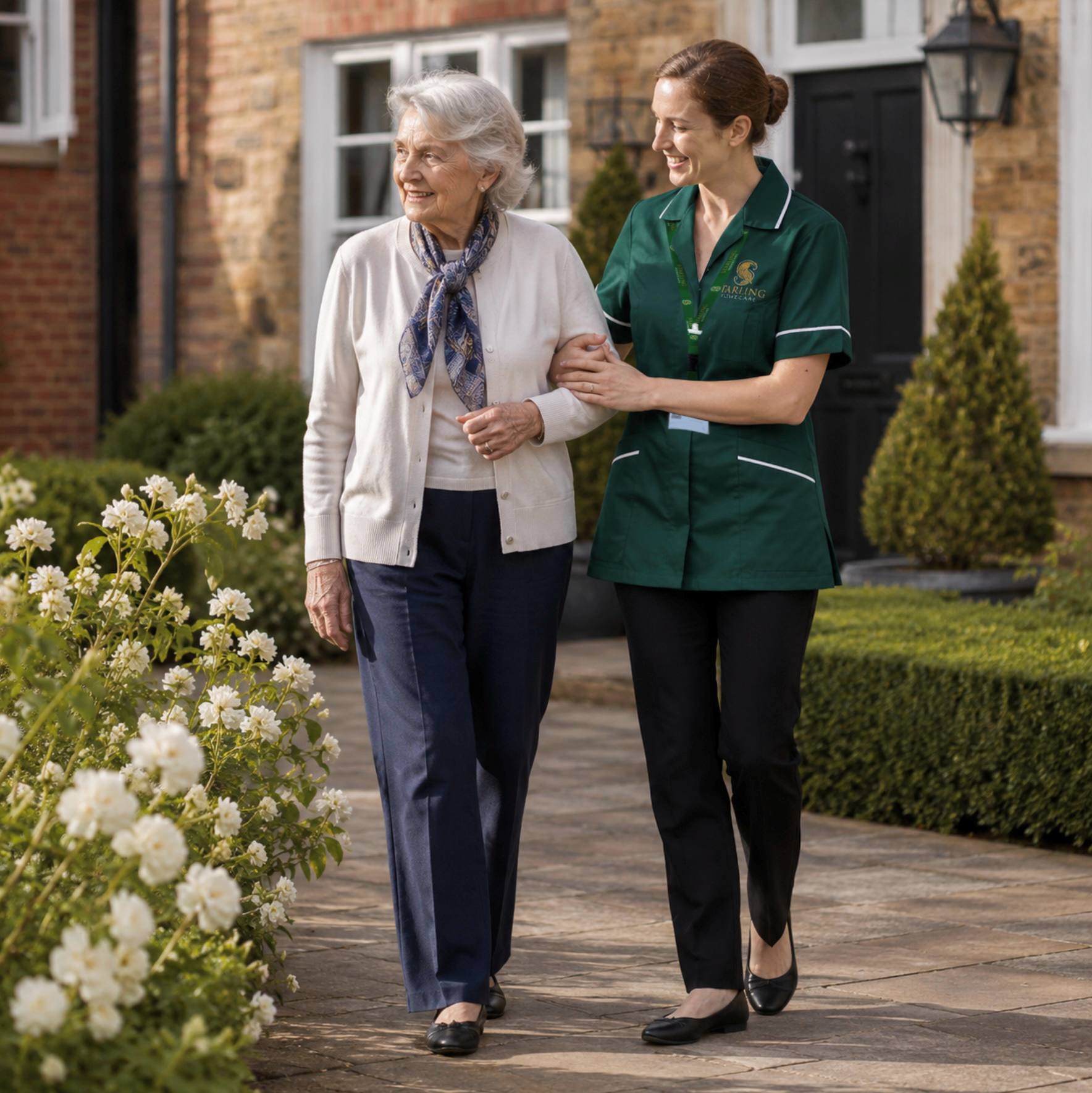
Our carers introduce themselves by name each time they arrive, describe what they are doing before they do it, and offer sighted guiding in the proper way, with you taking the carer’s arm rather than being steered. If you use a long cane, a symbol cane or a guide dog, carers know how to work alongside them. If you use a magnifier, talking devices, audio books or screen readers, we support you to keep using them. Nothing is done for you that you would rather do yourself.

Sight Loss Care May Include:
- Personal care that respects your privacy and lets you lead at your own pace
- Reading post, labels, instructions and appointment letters, and helping with replies
- Medication support, checking labels and keeping to the routine you have agreed
- Meal preparation and help in the kitchen, with everything returned to its place
- Keeping the home well lit, clutter free and safe, to reduce the risk of a fall
- Sighted guiding for appointments, shopping, worship and trips out
- Companionship, help with hobbies, and support to stay part of community life
- Longer visits, overnight support or full live-in care where needs are greater
Support That Fits the Level of Need
When help is occasional
Short visits for the things that have become difficult, such as reading the post, sorting medication or cooking, with a steady eye on how you are managing.
When help is regular
Daily visits built around your day, with the same small team who know how you prefer to be guided and how the home is laid out.
When needs are greater
Longer visits, overnight support or full live-in care, planned with your family and, with your consent, alongside the eye clinic and any rehabilitation workers involved.
Working alongside the NHS and specialist services
Diagnosis, treatment and the certification of vision impairment sit with your optician, your GP and the NHS eye clinic. Rehabilitation and mobility training for sight loss are provided through specialist services, and Hertfordshire County Council can advise on local support. Our role is the day-to-day care at home that helps you live well with the sight you have, and we fit visits around clinic appointments and treatment such as injections for macular degeneration. This page is part of our sensory impairment care service.
If you are arranging sight loss care on someone else’s behalf as a case manager, deputy or solicitor, our page for case managers, deputies and solicitors covers our registration, reporting and referral route.
Arranging Sight Loss Care at Home: Your Questions
How much does sight loss care at home cost?
Care visits start from 30 minutes, from £34, with no hidden fees, and every family receives a written quote before anything begins. Regulated home care is VAT exempt.
Will the same carers come each time?
Yes, as far as we can arrange it. A familiar voice at the door and a carer who already knows where everything lives are what make care feel safe when you cannot see who has arrived. We keep the team small for that reason.
Will carers move things in my home?
No. We ask where everything belongs and we put it back there. A chair moved a few inches or a cup left on the floor is a real hazard for someone with sight loss, and carers are trained to treat it that way.
Can carers help me read my post and manage paperwork?
Yes. Reading post, bills, appointment letters and medication labels, and helping with replies, is one of the most useful things a carer can do. Where you would rather keep some correspondence private, you tell us and we respect it.
Do your carers know how to guide someone with sight loss?
Yes. Carers offer sighted guiding in the proper way, with you holding the carer’s arm just above the elbow and walking half a step behind, and they describe steps, kerbs, doors and changes of surface as you go. They also know how to behave around a working guide dog.
Can you help with medication when I cannot read the labels?
Yes. Carers can check labels, prompt and support you with your medication routine, and keep a record. Where it would help, we can talk to your pharmacy about large print labels or a dispensing system that is easier to manage by touch.
How quickly can sight loss care start?
The right timing depends on your situation and on matching you with a suitable carer. We will talk through your needs and explain realistic timescales when you contact us.
Do we have to commit long term?
No. There are no long-term or fixed-term contracts, and every package carries our 90-day risk-free guarantee: you can cancel at any time.
Sight Loss and Support in Hertfordshire
What are the most common causes of sight loss in later life?
Age-related macular degeneration, glaucoma, cataracts and diabetic eye disease are the common causes, and a stroke can also affect vision. Each affects sight differently, which is why we plan care around what you can actually see rather than around a diagnosis.
Do you cover the whole of Hertfordshire for sight loss care?
In practice, we arrange visiting care at home in St Albans, Harpenden, Welwyn Hatfield, Hemel Hempstead and Potters Bar, and the villages around them. In addition, live-in care is available across the whole of Hertfordshire.
Where do I go for an eye assessment or to register as sight impaired?
Start with your optician or your GP, who can refer you to the NHS eye clinic. An ophthalmologist certifies vision impairment, and Hertfordshire County Council keeps the register and can advise on the support that follows. We are happy to help you make those calls.
Can carers take me to eye clinic appointments and injections?
Yes. Carers can accompany you to the clinic, help you find your way, wait with you and bring you home. Regular treatment such as injections for macular degeneration can be tiring, and having someone with you makes the day easier.
Living With Sight Loss at Home
Can someone with sight loss live alone safely with care at home?
Very often, yes. With a consistent routine, a home kept clear and well lit, items that stay where they belong and a reliable way to call for help, many people with significant sight loss live independently for years. The care plan is built to make that possible.
How is sight loss care at home funded?
Many families fund care privately. Council support may be available following a care needs assessment and a financial assessment from Hertfordshire County Council, and Direct Payments can be used to pay for care where someone is eligible. Attendance Allowance may also apply for people over State Pension age. Our care funding guide sets out the options.
How do you reduce the risk of falls for someone with sight loss?
By keeping walkways clear, making the most of the lighting, keeping items in agreed places, encouraging the use of handrails and good footwear, and noticing changes in confidence or steadiness early. Our falls prevention at home page explains more.
What will the carer know about me before the first visit?
We write the care plan with you before care starts. It records what you can see and in what light, the aids you use, how you like to be guided, how the home is laid out and what must stay where it is. The carers who visit work from that plan, so you should not have to explain it again.
How to Get Started
- Think about what type of help would make life easier
- Check if you or your loved one might be eligible for support
- Speak with us. We can guide you through options and next steps
Arranging Sight Loss Care Is Simple
Starting care can feel like a big step. We keep it calm and straightforward, and we are here from your very first call to help you explore what might feel right, whether that is with us or simply pointing you in the right direction.
1. Talk to us
Get in touch by phone or request a callback. We will listen, answer your questions and help you understand the options, so you can decide in your own time.
2. A home visit and initial consultation
We arrange a visit to understand your routines, your home and what matters most to you. Together we agree an initial consultation and shape the support that feels right.
3. Your care begins
A small, familiar team starts your care, arriving at the agreed times and staying involved as your needs change. We remain your trusted adviser throughout.
Whenever you are ready, we are here to help.

Sight loss asks you to rely more on memory, routine and the people around you. Good care at home strengthens all three. If you are exploring sight loss care, we are here to talk it through. Call us or complete our enquiry form. We would be glad to help.
Information on this page was checked on 24 October 2026. For the latest information and support on sight loss, RNIB is the right place to start.