
Brain Injury Care at Home
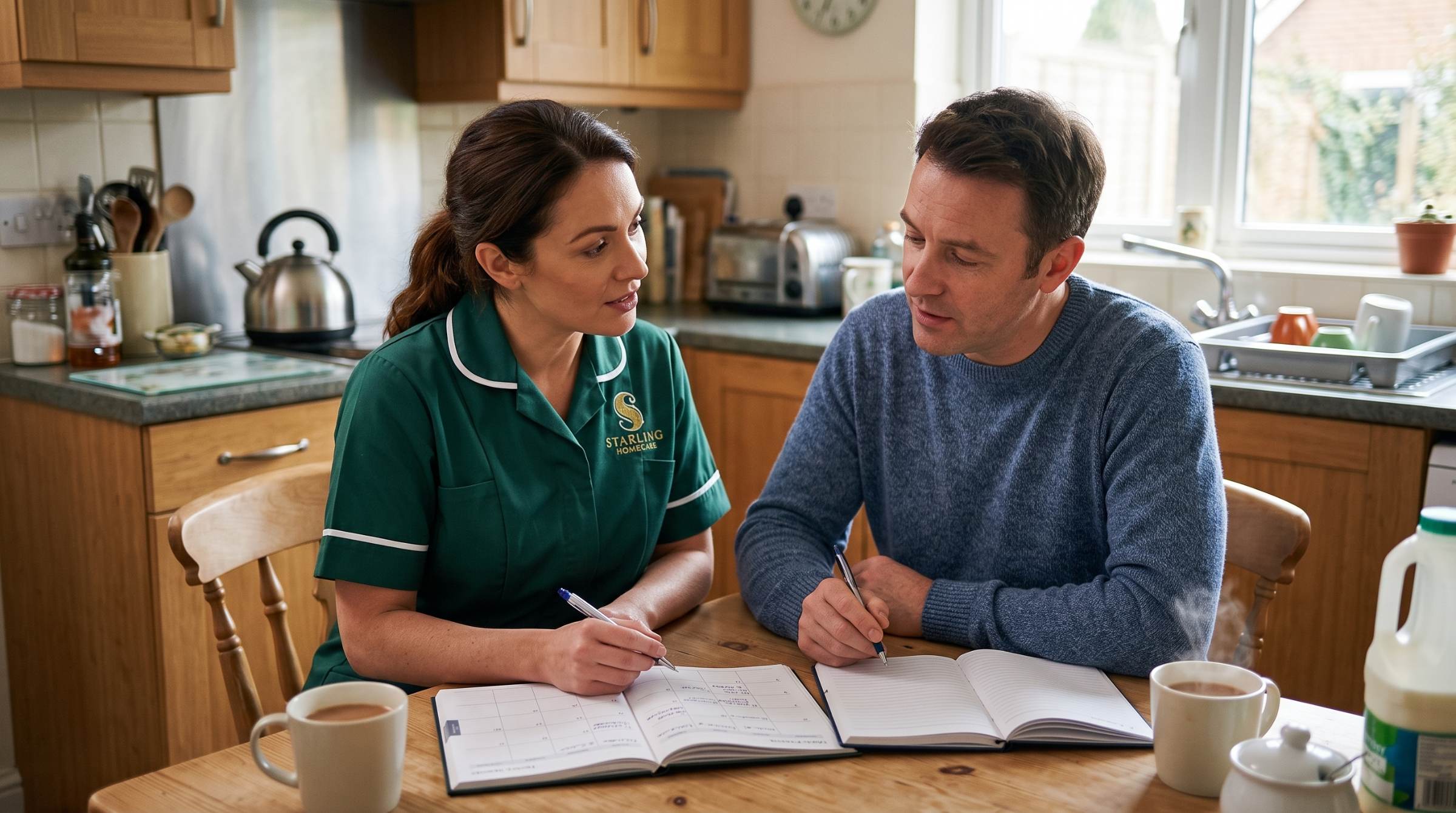
Support after a brain injury, for the parts other people cannot see
If someone in your family is living with an acquired brain injury, we can arrange regulated care at home across St Albans, Harpenden, Hemel Hempstead and Welwyn Hatfield, with live-in care across the whole of Hertfordshire.
A brain injury is often invisible to everyone except the people living with it. From the outside, someone can look recovered: walking, talking, back at home. Inside the house it is different. Getting started on anything takes enormous effort. Names and appointments slip. An ordinary afternoon uses up a whole day’s energy. Families tell us the hardest part is that the world assumes it is over, just as the real work begins.
Why Brain Injury Care at Home Matters
Recovery happens in ordinary life, not in appointments. Home is where the routines are, where the surroundings are already familiar, and where someone can rebuild confidence without an audience. Familiarity is not a nicety after a brain injury. When memory and orientation are affected, a familiar face is part of the support.

Planned Around Fatigue and Thinking, Not Just the Body
The physical side is the part most care plans capture: mobility, balance, weakness, help with washing and dressing. We plan for the rest too. Brain injury fatigue is not ordinary tiredness and does not respond to willpower, so we time visits around the hours that work and take on the tasks that would otherwise consume the whole day.
Care That Adapts as Recovery Changes
Many people after a brain injury know exactly what needs doing and cannot begin. Carers prompt, break tasks into steps and stay alongside, which is different from doing it for them and protects independence rather than eroding it. Irritability and low mood are common after a brain injury and are part of the injury, not a character flaw. Our carers are steady and unhurried, and they do not take a difficult moment personally.

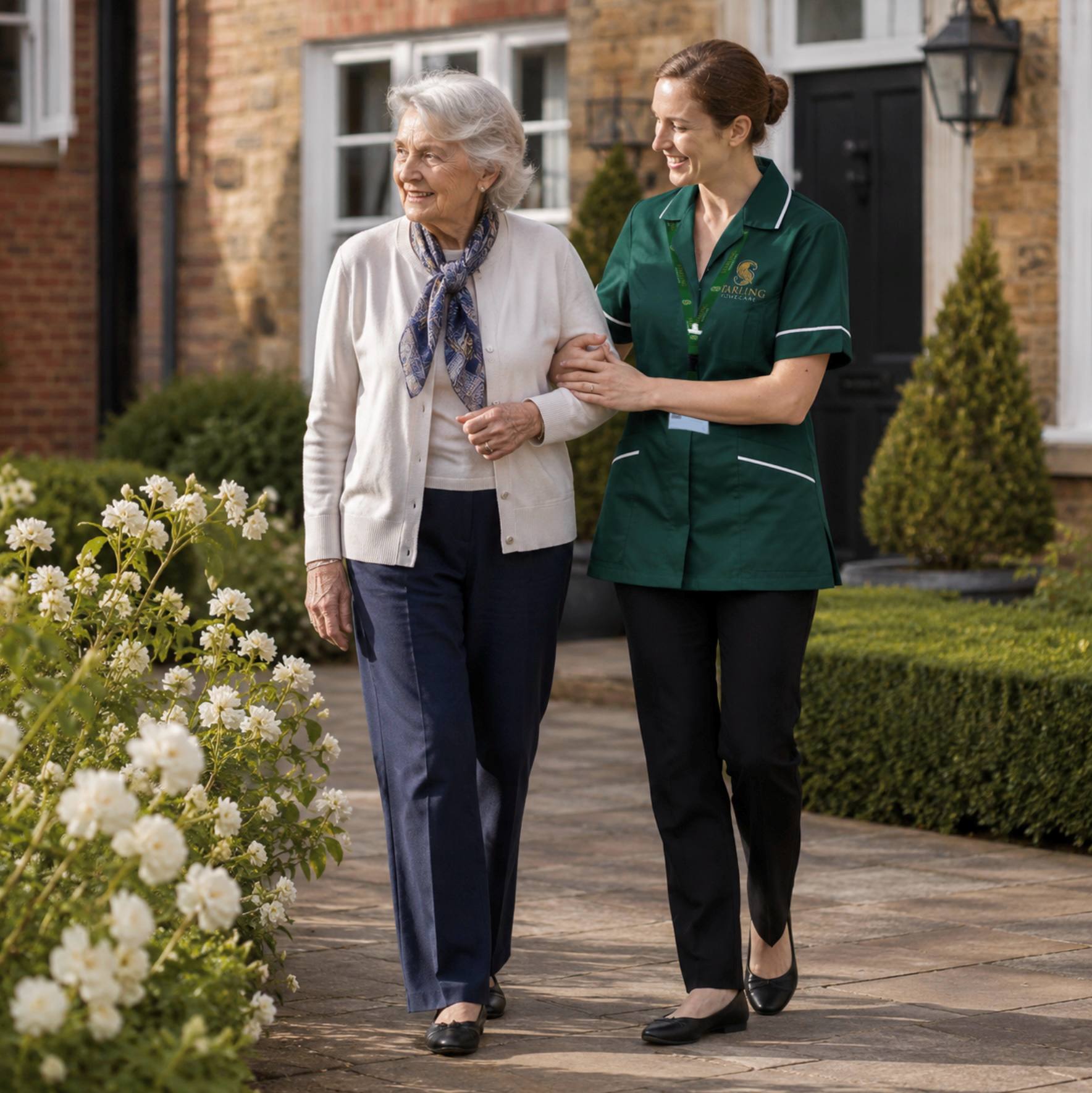
Brain Injury Care at Home May Include:
- Help with washing, dressing and personal care, paced to the day
- Support with mobility and moving safely around the home
- Help with medication routines and appointment timings
- Prompting and structure through daily tasks, step by step
- Meals, shopping and housekeeping
- Companionship and support to get back out into the community
- Support in the weeks after discharge from hospital
- Respite so family carers get a proper break
- Longer visits, overnight support or full live-in care where needs are greater
Brain Injury Care at Home That Tracks the Recovery
Coming home from hospital
The weeks after discharge are often the hardest, because hospital support stops and family are suddenly holding everything. We can put support in quickly and step it back as confidence returns.
Living with the longer term
Daily or twice-daily visits shaped around fatigue, routine and the things that matter, with the same small team so nothing has to be explained from the beginning each time.
When needs are greater
Longer visits, overnight support or full live-in care, planned with your family and, with your consent, alongside your treating team.
Working alongside the NHS
Treatment and rehabilitation belong to your NHS and specialist teams. Families in the east and north of the county also have access to the NHS neuro community rehabilitation team at the Danesbury Neurological Centre in Welwyn, which runs a specialist acquired brain injury service for adults with a consultant diagnosis. Our role is the daily care at home that makes their work possible. Our guide to coming home after a brain injury sets out what usually changes in the first weeks at home.
If you are a case manager, deputy or solicitor arranging care after a brain injury, our page for case managers, deputies and solicitors sets out what we are registered for, how we report, and how to make a referral.
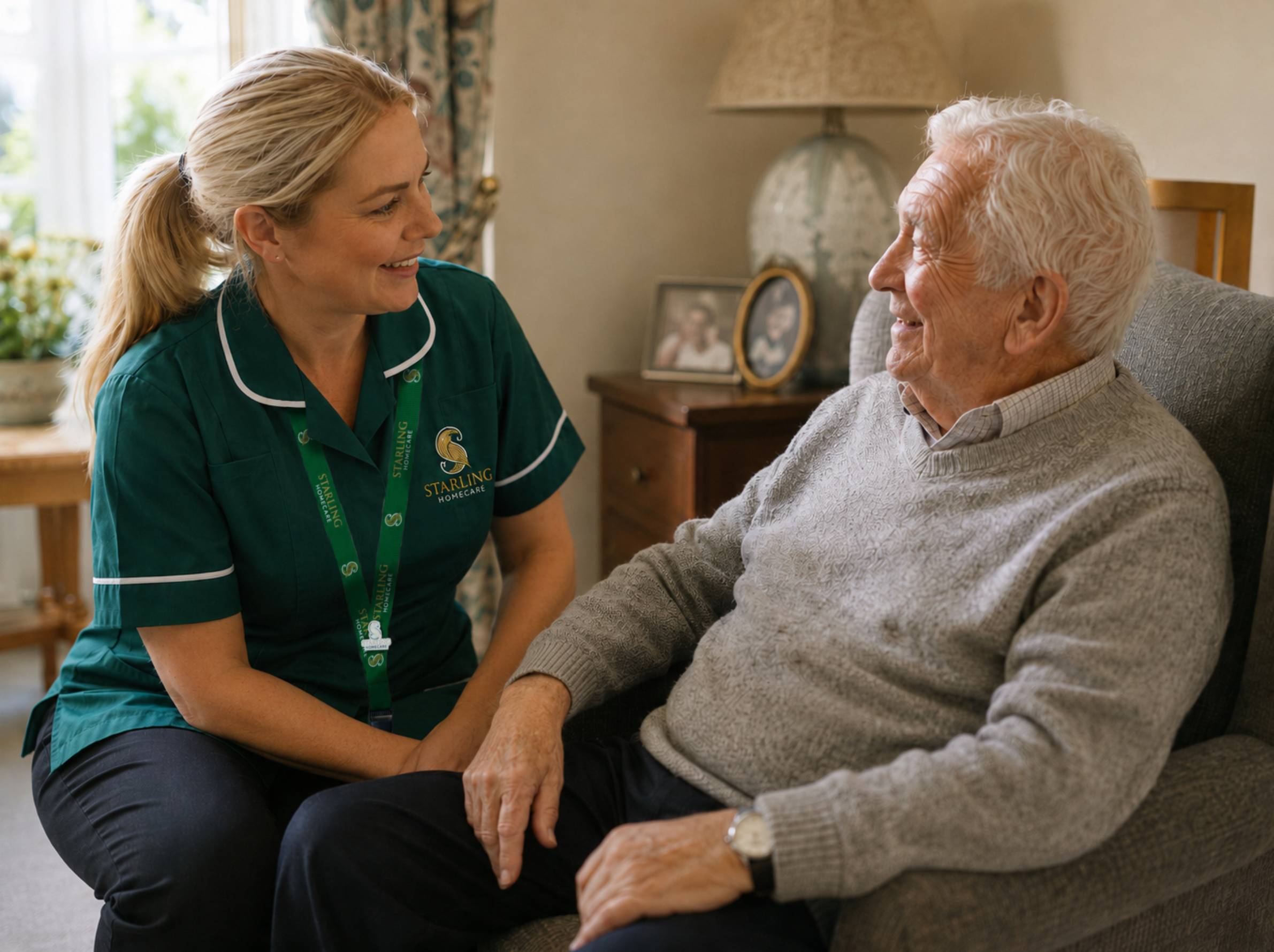
Arranging Brain Injury Care at Home: Your Questions
Can you provide carers for someone with an acquired brain injury?
Yes. We provide regulated care at home for adults living with the effects of a brain injury, whether from a head injury, stroke, tumour, haemorrhage or infection. Support ranges from short daily visits to full live-in care.
Do your carers understand fatigue and memory problems?
Yes, and we plan around them deliberately. We time visits for the hours that work, break tasks down rather than rushing them, and keep routines consistent so less has to be held in mind.
Can you help someone who has just come home from hospital?
Yes. We can put support in quickly after discharge and step it back as confidence returns, rather than committing you to more than you need. Our guide to coming home after a brain injury covers the first weeks.
Do you support younger adults?
Yes. Brain injury frequently affects working-age people, and support is shaped around work, children and independence rather than an older person’s template.
What if behaviour or mood is difficult?
Irritability, frustration and low mood are common after a brain injury. Our carers work calmly and consistently to the plan agreed with you and your treating team. Where someone’s needs are primarily behavioural or psychological, we will say so honestly and help you find the right service.
Do you provide nursing care?
No. We are registered for personal care, so we do not carry out clinical or nursing tasks such as ventilation, tracheostomy or PEG feeding. We will tell you plainly if needs go beyond what we can provide, and can work alongside a nursing provider where one is involved.
Do you work with case managers and solicitors?
Yes. We take referrals from case managers, professional deputies and attorneys, work to their care plan, and can recruit and supervise a dedicated team around one client. Our guide to working with a brain injury case manager explains how that arrangement works in practice.
Do we have to commit long term?
No. There are no long-term or fixed-term contracts, and every package carries our 90-day risk-free guarantee: you can cancel at any time.
Brain Injury, Services and Support in Hertfordshire
What counts as an acquired brain injury?
Headway, the brain injury association, describes an acquired brain injury as an injury caused to the brain since birth. For example, causes include falls, road accidents, assaults, strokes, tumours, haemorrhages and infections. A traumatic brain injury is one that a blow to the head causes. In practice, we support adults living with the effects of any of these, and the plan starts from the effects rather than the cause.
Is there an NHS brain injury service in Hertfordshire?
Yes, for the east and north of the county. Hertfordshire Community NHS Trust runs a neuro community rehabilitation team from the Danesbury Neurological Centre in Welwyn, and it includes a specialist acquired brain injury service for adults with a consultant diagnosis. Referrals come through a GP, a hospital or another health professional, and the team is on 0300 123 7571. For St Albans, Harpenden, Hemel Hempstead and the rest of west Hertfordshire, Central London Community Healthcare NHS Trust runs community neuro rehabilitation through the Hertfordshire single point of access on 03000 200 656. Our guide to brain injury support in Hertfordshire sets out the full route, including specialist inpatient rehabilitation.
Is there a Headway group in Hertfordshire?
Yes. Headway Hertfordshire is the county's brain injury charity, based in Hitchin and reached on 0300 330 1455. In addition, it runs peer support groups in St Albans, Borehamwood, Hemel Hempstead, Hertford, Letchworth, Stevenage, Watford and Welwyn, most of them fortnightly, along with carers' support and counselling. Headway UK also issues a free Brain Injury Identity Card to adults with a verifiable brain injury, which can help in everyday situations and with the police.
Funding and Working With Case Managers
How is brain injury care at home paid for?
It depends on the person's needs and circumstances. Where someone has ongoing health needs, they may qualify for NHS Continuing Healthcare, which the NHS arranges and funds in full, including at home. Where there is a personal injury claim, a case manager usually arranges the care, and the settlement or an interim payment funds it. Otherwise, families fund care privately or through a council care needs assessment and Direct Payments. Our guides to NHS Continuing Healthcare, Direct Payments in Hertfordshire and care funding explain each route.
Can you work to a case manager's rehabilitation plan?
Yes. In addition, many people leave hospital with a rehabilitation plan or prescription, and where a case manager is involved they coordinate it. We work to that plan, keep the daily record they need, join reviews where invited and, with consent, share what carers notice between appointments. We can also recruit and supervise a dedicated team around one client, which is often what a settlement funded package needs. There is more detail in our guide to working with a brain injury case manager.
Living Well With Brain Injury Care at Home
What does a care worker actually do day to day after a brain injury?
Less doing and more prompting than people expect. First, we pace personal care to the day. Beyond that, the carer helps someone start a task they know how to do, breaks it into steps, keeps a checklist and a routine, and keeps the things the person uses in one place. Headway recommends exactly these strategies for the initiation and planning problems that follow a brain injury. As a result, the person keeps doing more for themselves, and the carer records what changes for the treating team.
How do you plan brain injury care at home around fatigue?
Headway describes fatigue after brain injury as an extreme tiredness that sleep and rest do not relieve. So we plan the week around energy, not around the clock. For example, we time visits for the hours that work, put demanding tasks early in the day, and build rest in rather than squeezing it in. Similarly, we watch for the early signs the person and their family recognise, and we set realistic targets for a day rather than catching up on a good one.
Can you support memory problems at home?
Yes. Headway makes the point that after a brain injury it is not that someone will not remember, but that they cannot. Therefore, the plan uses external aids rather than relying on memory: a diary or memory book, a calendar in one place, written lists, alarms for medication and appointments, and the same small team so nothing has to be explained from the beginning each time.
How to Get Started
- Think about what type of help would make life easier
- Check if you or your loved one might be eligible for support
- Speak with us. We can guide you through options and next steps
Arranging Brain Injury Care Is Simple
Starting care can feel like a big step. We keep it calm and straightforward, and we are here from your very first call to help you explore what might feel right, whether that is with us or simply pointing you in the right direction.
1. Talk to us
Get in touch by phone or request a callback. We will listen, answer your questions and help you understand the options, so you can decide in your own time.
2. A home visit and initial consultation
We arrange a visit to understand your routines, your home and what matters most to you. Together we agree an initial consultation and shape the support that feels right.
3. Your care begins
A small, familiar team starts your care, arriving at the agreed times and staying involved as your needs change. We remain your trusted adviser throughout.
Whenever you are ready, we are here to help.

Life after a brain injury takes patience from everyone around it. The right support at home carries some of that weight, so the family can go back to being family. If you are exploring brain injury care, we are here to talk it through. Call us or complete our enquiry form. We would be glad to help.
Information on this page was checked on 17 August 2026. For information and support after a brain injury, Headway, the brain injury association is the right place to start.