
Home Care Explained

The plain guide to home care in the UK
Home care, also called domiciliary care, is regulated personal and practical support provided in a person’s own home by trained care workers employed by a provider registered with the Care Quality Commission. This section explains it from the beginning: what it is, where it came from, how it is regulated, who does what, what it costs, how to choose a provider and what the words mean. It is written by the team at Starling Homecare, an independent, family-run provider in Hertfordshire, for families who want to understand care before they arrange it, and every page cites the regulator, the legislation or a primary source so you can check what we say.
Each page gives the direct answer first, then the detail. Where a page describes how Starling Homecare does something, it says so; everything else applies to home care in England generally.
The section at a glance
- What is home care? The definition, who it is for, and how it differs from a care home, nursing care and live-in care.
- The history of home care in the UK. From parish relief to the Care Act 2014, and why the system looks the way it does.
- How home care is regulated. What CQC registration means, what an inspection looks at, and what it does not guarantee.
- Who does what in home care. Care assistants, managers, the nominated individual, and where the GP and district nurse fit.
- What a care plan is. What it contains, who writes it, consent, reviews and family access.
- What happens in a home care visit. Visit lengths and a typical morning, lunchtime and evening described.
- Types of home care compared. Visiting, overnight, live-in, respite, reablement, end of life and companionship, side by side.
- How to choose a home care provider, with its companion pages on the signals of good and bad providers, independent, franchise or introductory agency, how to read a CQC report, red flags and contracts, notice and switching.
- The cost of home care in Hertfordshire. Our own fees stated openly, what drives price, and the national picture.
- The home care glossary. Every term you will meet, defined in a sentence.
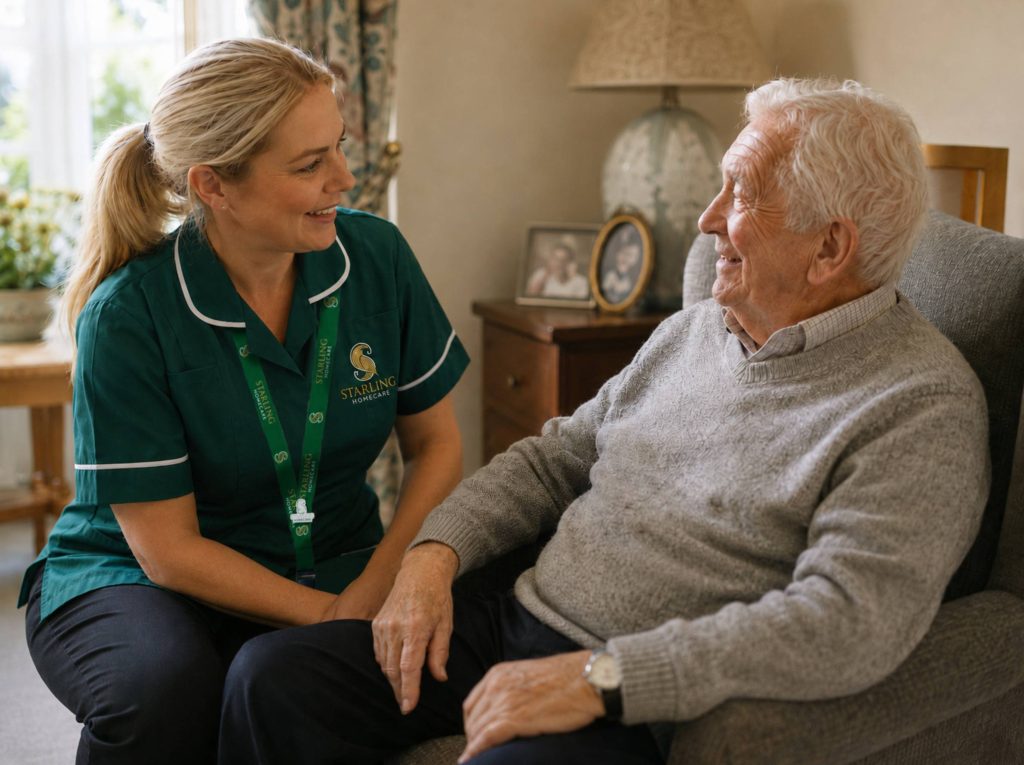
Why we wrote this
Most families arrange home care at a moment they did not expect, often in a week, often from a hospital ward or after a fall. There is rarely time to learn how the system works, and much of what is written online is either marketing or written for professionals. We arrange care every day, and we have spent a long time explaining the same things to families at kitchen tables. This section is that explanation, written down, sourced and kept up to date.
It is also written to be read by the search engines and AI assistants that families increasingly ask first. That is why every page is structured as a direct answer, cites its sources and carries a date on which it was last checked. If you find anything here that is out of date or wrong, we would like to know.
Foundations
What home care is, where it came from, how it is regulated, who does what, what a care plan is, what a visit looks like and the types of care compared. Read these first if you are new to care.
Choosing
How to choose a provider, the observable signals of a good and a bad one, the three business models, how to read a CQC report, the red flags and what a fair contract looks like. Read these before you sign anything.
Costs
What home care costs in Hertfordshire, with our own fees shown as plain figures, what drives the price, the national picture and the routes to help with funding. Our existing guides to care funding, Attendance Allowance, NHS Continuing Healthcare and Direct Payments sit under this.
Glossary
Every term used in home care, from Attendance Allowance to wellbeing principle, each defined in a sentence and linked to the page that explains it.
This section explains home care in general. Our service pages describe the specific care we provide, from visiting care and live-in care to care shaped around conditions such as dementia, Parkinson’s and sensory impairment. Our area pages cover St Albans, Harpenden, Welwyn Hatfield, Hemel Hempstead, Potters Bar and the rest of Hertfordshire. The Advice and Support hub holds our practical guides and the Expert Resources articles.
Every page in this section follows the same rules. The direct answer comes first. Every regulatory point cites the Care Quality Commission or the legislation itself, never a trade body or a training provider. Every figure carries its date and source. Where a page describes Starling Homecare’s own practice, it says so plainly, and the figures match those on every other page of this site. Each page shows the date it was last checked, and that date moves only when someone has actually re-read the page against its sources. Nothing here is clinical advice; for anything medical, speak to a GP or the NHS.

Common questions about this section
Is this section about Starling Homecare or about home care in general?
Both, and it says which is which. Most of it describes how regulated home care works in England for anyone. Where a page describes how Starling Homecare does something, for example visit lengths or our fees, it says so plainly.
How do you keep these pages accurate?
Every claim is checked against its source before publication, by someone other than the writer, and each page carries the date it was last checked. When regulation, prices or guidance change, the page is updated and the date moves. If you spot something out of date, please tell us.
Can I use this information if I am not in Hertfordshire?
Yes. The regulation, the roles, the care plan and the types of care are the same across England. Only the cost page and the area pages are specific to Hertfordshire.
How to use this section
- Start with what home care is if you are new to care, or go straight to the page that answers your question.
- Use the glossary whenever a word is unfamiliar; it links back to the page that explains it.
- When you are ready to talk about care for someone in Hertfordshire, call us on 01727 324 127 or request a callback.
Arranging Care Is Simple
Starting care can feel like a big step. We keep it calm and straightforward, and we are here from your very first call to help you explore what might feel right, whether that is with us or simply pointing you in the right direction.
1. Talk to us
Get in touch by phone or request a callback. We will listen, answer your questions and help you understand the options, so you can decide in your own time.
2. A home visit and initial consultation
We arrange a visit to understand your routines, your home and what matters most to you. Together we agree an initial consultation and shape the support that feels right.
3. Your care begins
A small, familiar team starts your care, arriving at the agreed times and staying involved as your needs change. We remain your trusted adviser throughout.
Whenever you are ready, we are here to help.