
End-of-Life & Palliative Care at Home

Compassionate care, gentle support and quiet presence through life’s most sensitive moments
End-of-life care is about providing comfort, dignity and support during life’s final stage. At Starling Homecare, we deliver thoughtful, professional care that allows people to remain at home, surrounded by the people and surroundings they know best.
We stay by each client’s side, delivering care that respects their wishes and helps them feel as settled and supported as possible, while also guiding their family with compassion through each step.
Care That Respects Each Person
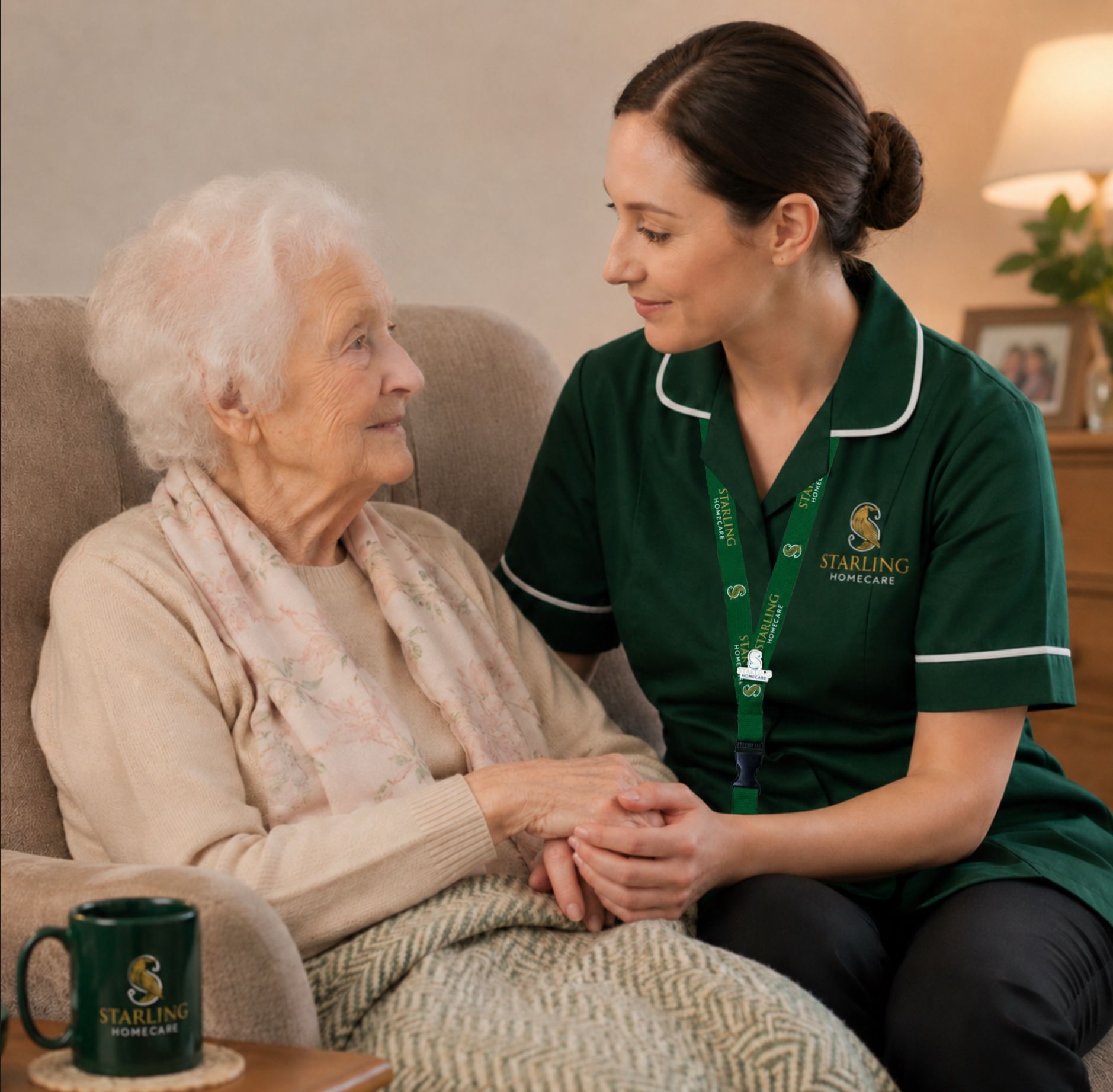
End-of-life care focuses on easing discomfort, preserving dignity and offering calm, continuous support. Care is shaped around the person’s wishes and pace, helping them stay involved in decisions wherever possible.
Helping Families Focus on What Matters
Our carers assist with personal care, mobility, hydration, nutrition and day-to-day routines, allowing families to spend meaningful time together without the pressure of managing everything alone.
Professional Support That Adapts
We work closely with district nurses and other professionals to ensure care is consistent, well-coordinated and responsive as needs change.
Present When It Matters Most
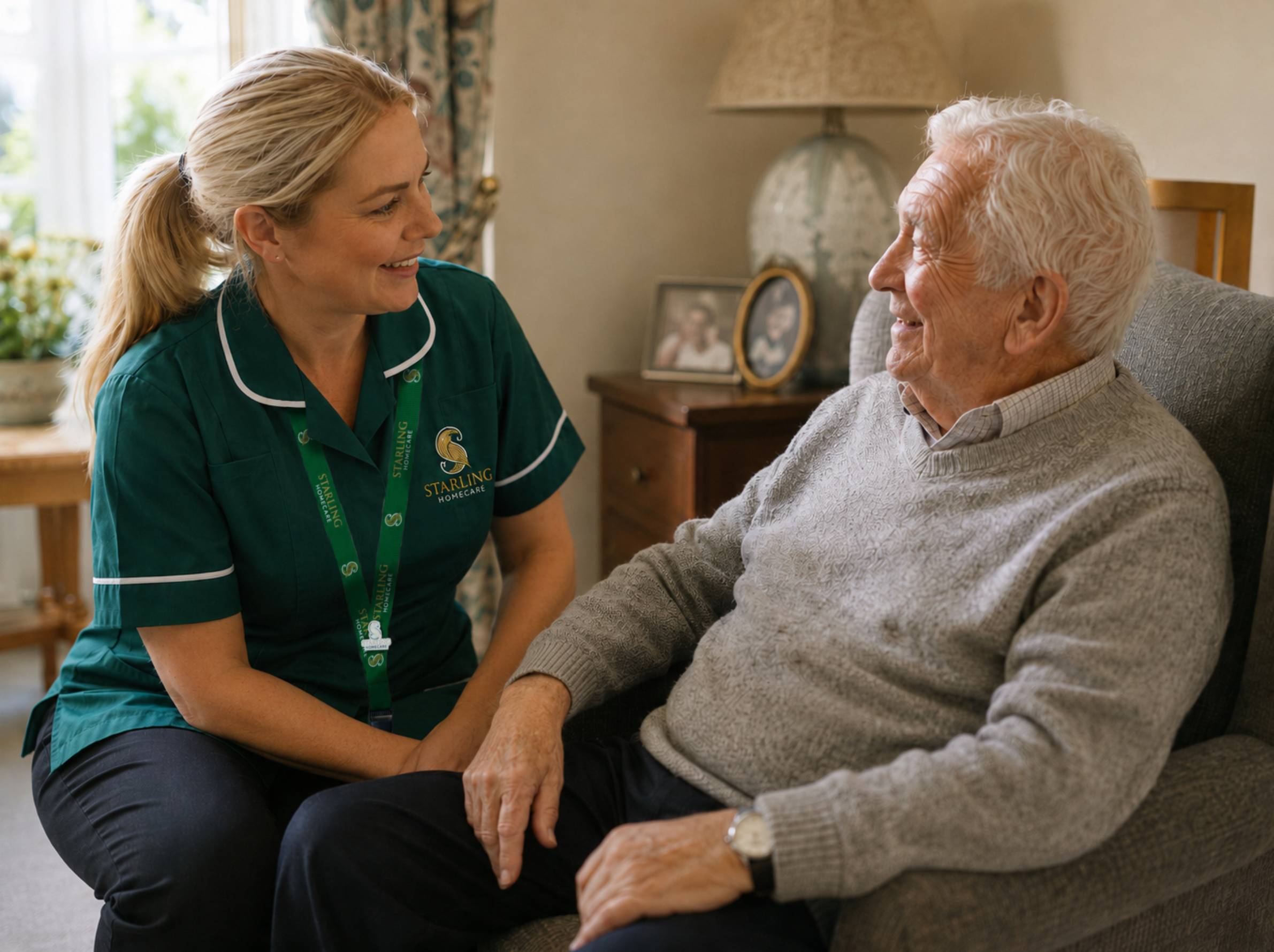
Whether we’re offering hands-on care or simply being present in quiet moments, we’re here to support both clients and families with professionalism, empathy and respect.

End-of-Life & Palliative Care May Include:
- Gentle personal care and hygiene support
- Help with repositioning and comfort
- Medication prompting and liaison with district nurses
- Support for nutrition and hydration where possible
- Respectful emotional and spiritual presence
- Quiet companionship and attentive listening
- Guidance and reassurance for families
Frequently asked questions about end-of-life and palliative care
What is the difference between palliative care and end-of-life care?
The two are closely related and often overlap, but they are not quite the same. Palliative care is support that focuses on comfort and quality of life for someone living with a serious illness, and it can begin at any stage, sometimes alongside other treatment. End-of-life care is the support given in the final stage of life. At home, both are about easing discomfort, protecting dignity and making sure the person and those close to them feel supported. We are always glad to talk through which kind of help would suit your situation.
What does palliative and end-of-life care at home involve?
Our support is shaped around comfort and dignity. It can include gentle personal care, help with repositioning and staying comfortable, support with eating and drinking where possible, medication prompting and quiet companionship. Just as importantly, we offer a calm, reassuring presence for the whole family. We work closely with district nurses and other professionals so that hands-on nursing tasks remain with the right clinical team while we support everyday comfort and routine.
Can this care be provided at home rather than in a hospice or hospital?
For many people, staying at home among familiar surroundings and the people they love brings real comfort at this time. We help make that possible by providing steady, attentive support day to day, working alongside district nurses, GPs and any hospice or specialist palliative team already involved. Where someone’s wishes or needs change, we adapt with them, always keeping their comfort and dignity at the centre.
How do you support the family as well as the person being cared for?
This stage of life can feel overwhelming for those closest to someone. By taking on practical care and being present in difficult moments, we help families step back from managing everything and spend meaningful time together. We keep communication gentle and clear, offer reassurance as things change, and try to ease some of the weight so families can focus on what matters most.
Will you work with our district nurse, GP or hospice team?
Yes. Care at this time usually involves several professionals, and we see our role as supporting that wider team rather than replacing it. We coordinate closely with district nurses, GPs and any palliative or hospice specialists involved, follow the plan they put in place and pass on anything we notice, so that care stays consistent, calm and responsive to each change.
End of Life Care FAQs
How much does end of life care at home cost?
Care visits with Starling Homecare start from 30 minutes, from £34, with no hidden fees: travel to and from your home is included, and the rate you are quoted is the rate you pay. Where round-the-clock support is needed, live-in care starts from £255 a day.
Our care funding guide explains costs and the help available in Hertfordshire.
What is the difference between palliative care and end-of-life care?
The two are closely related and often overlap, but they are not quite the same. Palliative care is support that focuses on comfort and quality of life for someone living with a serious illness, and it can begin at any stage, sometimes alongside other treatment. End-of-life care is the support given in the final stage of life. At home, both are about easing discomfort, protecting dignity and making sure the person and those close to them feel supported. We are always glad to talk through which kind of help would suit your situation.
What does palliative and end-of-life care at home involve?
Our support is shaped around comfort and dignity. It can include gentle personal care, help with repositioning and staying comfortable, support with eating and drinking where possible, medication prompting and quiet companionship. Just as importantly, we offer a calm, reassuring presence for the whole family. We work closely with district nurses and other professionals so that hands-on nursing tasks remain with the right clinical team while we support everyday comfort and routine.
Can this care be provided at home rather than in a hospice or hospital?
For many people, staying at home among familiar surroundings and the people they love brings real comfort at this time. We help make that possible by providing steady, attentive support day to day, working alongside district nurses, GPs and any hospice or specialist palliative team already involved. Where someone’s wishes or needs change, we adapt with them, always keeping their comfort and dignity at the centre.
How do you support the family as well as the person being cared for?
This stage of life can feel overwhelming for those closest to someone. By taking on practical care and being present in difficult moments, we help families step back from managing everything and spend meaningful time together. We keep communication gentle and clear, offer reassurance as things change, and try to ease some of the weight so families can focus on what matters most.
Will you work with our district nurse, GP or hospice team?
Yes. Care at this time usually involves several professionals, and we see our role as supporting that wider team rather than replacing it. We coordinate closely with district nurses, GPs and any palliative or hospice specialists involved, follow the plan they put in place and pass on anything we notice, so that care stays consistent, calm and responsive to each change.
Do we have to commit long term?
No. There are no long-term or fixed-term contracts, and every package carries our 90-day risk-free guarantee: you can cancel at any time.
How to Get Started
- Think about what type of help would make life easier
- Check if you or your loved one might be eligible for support
- Speak with us. We can guide you through options and next steps
Arranging End of Life Care Is Simple
Starting care can feel like a big step. We keep it calm and straightforward, and we are here from your very first call to help you explore what might feel right, whether that is with us or simply pointing you in the right direction.
1. Talk to us
Get in touch by phone or request a callback. We will listen, answer your questions and help you understand the options, so you can decide in your own time.
2. A home visit and initial consultation
We arrange a visit to understand your routines, your home and what matters most to you. Together we agree an initial consultation and shape the support that feels right.
3. Your care begins
A small, familiar team starts your care, arriving at the agreed times and staying involved as your needs change. We remain your trusted adviser throughout.
Whenever you are ready, we are here to help.
Related reading on end of life and palliative care
- End of Life Care at Home: A Gentle Guide for Families
- Palliative Care at Home: What to Expect
- What At-Home Palliative Care Involves
- Arranging End of Life Care at Home in St Albans
- End of Life Care at Home in Harpenden: Letting Family Be Family
- End of Life Care at Home in Hemel Hempstead: A Practical Picture for Families
- End of Life Care at Home in Welwyn Garden City: Planning Ahead Together