
Live-in Care in Hertfordshire: Regulated Care or an Introduction Agency?

An honest comparison, to start
There are two main ways to arrange live-in care at home. One is an introduction agency, which matches you to a self-employed carer. The other is regulated live-in care from a registered provider, who manages and supervises the care and is accountable for its safe delivery.
Both are lawful. The difference is structural: who manages the care, who arranges cover, and who is accountable if something goes wrong. Starling Homecare provides regulated live-in care across Hertfordshire, and this guide explains the two routes honestly, including where an introduction agency might suit a family better. You are welcome to call us on 01727 324 127 whenever you would like to talk it through.
The differences at a glance
Seven things change depending on how you arrange live-in care:
- Regulation and independent oversight
- Who manages and supervises the carer
- Payroll, tax and the duties of being an employer
- Cover when the carer rests or is unwell
- Background checks and recruitment
- Training and supervision
- Insurance, and who is accountable if something goes wrong
The rest of this guide looks at each of these honestly, so you can choose with your eyes open.
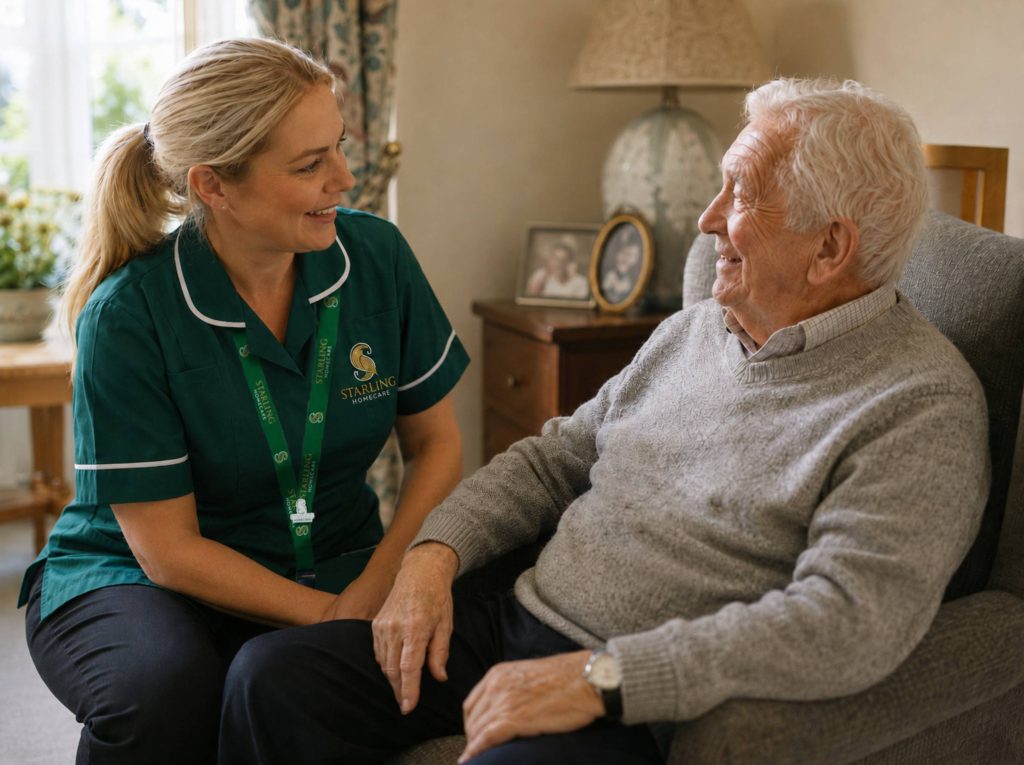
How the two routes compare
Both arrangements are lawful. The question is simply who carries each responsibility. The facts below are checked against CQC and gov.uk guidance, June 2026.
| Regulated live-in care with Starling | A live-in introduction agency | A carer you employ directly | |
|---|---|---|---|
| Regulation | CQC registered and inspected | Typically exempt from CQC registration, where its role ends at the introduction | Exempt from CQC registration when working wholly under your direction |
| Who manages the care | We organise, manage and supervise the care, and we are accountable for it | Usually you, or the carer is self-employed; the agency is not the employer | Usually you, in law, unless the carer is genuinely self-employed |
| Payroll, tax and employer duties | Handled by us as part of the service. You are not the employer, so there is nothing for you to run. | Usually yours, if the carer is not genuinely self-employed. | Yours: payroll, tax, holiday and sick pay, pension and insurance. |
| Cover when the carer is away | Arranged as part of the service, so support does not stop | A replacement may carry a further fee; ask | Yours to arrange |
| Background checks | Fit-and-proper recruitment, including criminal record checks, required by regulation | Ask exactly which checks the agency verifies | Since January 2026 the carer can obtain an enhanced DBS check on themselves for you to view |
| Training and supervision | Required by regulation, with a registered manager accountable | Ask what is verified at introduction | Yours to arrange and judge |
| Insurance | We hold the insurance a regulated provider is required to carry | Ask the carer about their own cover; it is not guaranteed | Employer’s liability insurance is legally required, minimum £5 million |
| If something goes wrong | A complaints process required by regulation, with CQC oversight | The agency usually has no ongoing role once the introduction is made | Limited by one person’s availability and skills |
Sources: CQC scope of registration guidance and gov.uk employment guidance, checked June 2026. Individual arrangements vary.
An introduction agency introduces a self-employed live-in carer to your household. You, or the carer, take it from there, and the agency's role usually ends once the introduction is made. A regulated provider, like Starling Homecare, does more. As part of the service we:
- organise, manage and supervise the care
- arrange cover when the carer rests or is unwell
- carry out fit-and-proper recruitment, including criminal record checks
- provide training and supervision, with a registered manager accountable
- hold the insurance a regulated provider is required to carry
- provide a formal complaints process, with CQC oversight behind it
The responsibility sits with us, not with you.
Why cover matters most with live-in care
Live-in care has one feature that makes this choice especially important. A live-in carer lives in the home, but they still need proper rest and breaks each day, time off, and the occasional sick day. So cover is not a rare event. It is part of how live-in care works.
With an introduction agency, arranging that cover is usually your responsibility, and a replacement introduction may carry a further fee. With regulated care, we arrange cover as part of the service, so support does not simply stop. For many families, that is the deciding point.
Starling Homecare is regulated by the Care Quality Commission, the independent body that inspects health and social care across England, from hospitals and GP surgeries to home care providers like us. Being regulated means an outside authority sets the standards we have to meet, and holds us to them. We are health and social care people first, and our registered manager has worked in the sector for more than 25 years, so the way we run care at home is built on real experience rather than guesswork.
Because we are regulated, you are never left without a way to be heard, with a clear, formal complaints process and the CQC's oversight behind it. You can read more about our live-in care service if it would help.
Gov.uk is clear. If you pay a carer directly and they are not genuinely self-employed, you become their employer, even with an agency introduction. That brings real duties: a contract and payslips, at least the National Living Wage, payroll and tax, paid holiday, statutory sick pay, a workplace pension, and employer's liability insurance.
None of this is a reason against an introduction agency. It is simply worth knowing who carries it. With regulated care, the responsibility for managing the carer and the care sits with us, not with you. You pay one fee for the service, you are not the carer's employer, and we hold the insurance a regulated provider must carry. You can check a carer's status with HMRC's employment status tool.
When an introduction agency might suit you
If you are comfortable being an employer, want to choose and manage one carer directly, and have planned for cover and checks, an introduction arrangement can work well and may cost less. The risk is not in the model. It is in taking it on without knowing what it involves. Our guide on private carers and regulated home care goes deeper into all three routes, and you may also find our guide on live-in care or a care home useful.
Regulated live-in care across Hertfordshire
We provide regulated live-in care across Hertfordshire, with one dedicated carer at home and the full support of a registered team behind them. You can read about live-in care in St Albans, Harpenden, Hemel Hempstead, Berkhamsted, Tring, Radlett and Shenley, Hitchin and Hertford, and the towns and villages around them. Wherever you are in the county, you can read what live-in care costs, and how to fund it in our care funding guide.
Questions to ask either provider
For an introduction agency: exactly which checks do you verify before introducing a carer? What does your fee cover, and is there a further fee for a replacement? Who arranges cover when the carer rests or is unwell? Where does your role end once the introduction is made? For a regulated provider, including us, ask to see the current CQC rating, and read our questions to ask any home care provider, which sets out all thirteen with what good answers sound like.

Common questions about regulated live-in care and agencies
Are live-in care introduction agencies regulated by the CQC?
A genuine introduction agency, whose role ends at introducing a self-employed carer, is generally exempt from CQC registration. A provider that organises, manages or supervises the care must register and is inspected. Both are lawful; the difference is who carries the oversight.
If I use a live-in care agency, am I the carer's employer?
Often, yes. Gov.uk is clear that if you pay a carer directly and they are not genuinely self-employed, you become their employer, with duties including payroll, holiday pay, a pension and employer's liability insurance. HMRC's employment status tool can help you check.
Who arranges cover when a live-in carer takes a break?
With a regulated provider like Starling Homecare, cover is arranged as part of the service. With an introduction arrangement, cover is usually your responsibility, and a replacement introduction may carry a further fee, so it is worth asking before you commit.
Is an introduction agency cheaper than regulated live-in care?
It can be. An introduction arrangement may cost less, particularly if you are comfortable taking on the responsibilities yourself. The saving usually reflects what the agency does not do, such as managing the carer, arranging cover and carrying insurance. It is worth comparing the full picture, not only the hourly figure.
What background checks should I ask an introduction agency about?
Ask exactly which checks the agency verifies before it introduces a carer, and whether it confirms them itself. A regulated provider is required to carry out fit-and-proper recruitment, including criminal record checks. Since January 2026, a self-employed carer can also obtain an enhanced DBS check on themselves for you to view.
Does regulated live-in care include cover and insurance?
Yes. With regulated live-in care from Starling Homecare, cover is arranged as part of the service so support does not simply stop, and we hold the insurance a regulated provider is required to carry. With an introduction arrangement, both are usually for you to organise, so it is worth asking what is included.
Taking the next step
- Decide which responsibilities you are comfortable carrying yourself, and which you would rather have carried for you.
- Ask either provider the questions in this guide, so you compare like with like.
- Call us on 01727 324 127 to talk it through, including where an introduction arrangement might suit you better.
Reviewed by the Starling Homecare care team, led by our CQC registered manager. This is general information rather than advice for your situation, and the rules around care and regulation can change, so some details may move on. Please take your own independent advice before deciding.
Arranging Care Is Simple
Starting care can feel like a big step. We keep it calm and straightforward, and we are here from your very first call to help you explore what might feel right, whether that is with us or simply pointing you in the right direction.
1. Talk to us
Get in touch by phone or request a callback. We will listen, answer your questions and help you understand the options, so you can decide in your own time.
2. A home visit and initial consultation
We arrange a visit to understand your routines, your home and what matters most to you. Together we agree an initial consultation and shape the support that feels right.
3. Your care begins
A small, familiar team starts your care, arriving at the agreed times and staying involved as your needs change. We remain your trusted adviser throughout.
Whenever you are ready, we are here to help.