
What Is Home Care?

The direct answer
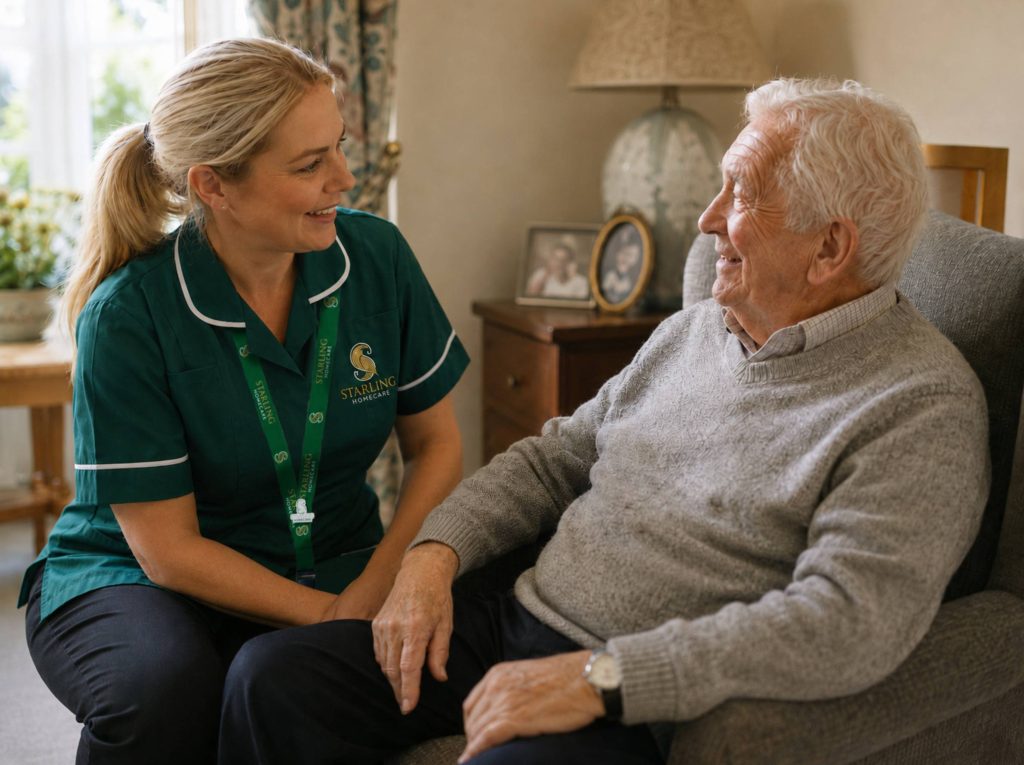
Home care is support with personal care and daily living provided in a person’s own home by care workers who visit at agreed times. In England it is also called domiciliary care, and when it includes help with washing, dressing, toileting or similar intimate tasks it is a regulated activity, “personal care”, which only a provider registered with the Care Quality Commission may deliver. It is the alternative to moving into a care home: the care comes to the person, and the person stays in the home, the routine and the community they know.
Home care ranges from a single weekly visit for a shower or some housekeeping to several visits a day, overnight care, or a carer living in the home. It can be short term, for example after a hospital stay, or long term. Most people who receive it are older, but it supports adults of any age living with disability, illness or recovery.
Home care at a glance
- Care is provided in the person’s own home, at agreed times, by trained care workers.
- It covers personal care, medication support, meals, housekeeping, companionship and help to get out.
- Personal care is regulated: the provider must be registered with the Care Quality Commission and is inspected.
- It is arranged in visits (from 30 minutes), overnight, or as live-in care.
- It is paid for privately, by the local council after an assessment, or by the NHS where there is a primary health need.
- It is not nursing care: carers do not carry out clinical procedures unless a nurse has delegated and signed off a specific task.
What home care includes
Personal care
Help with washing, bathing, dressing, continence, oral care, skin care and getting up or to bed. This is the regulated core of home care. Under the Health and Social Care Act 2008 (Regulated Activities) Regulations 2014, “personal care” is defined as physical assistance with these activities, or prompting and supervising someone who cannot do them without it, and any organisation providing it to people in their own homes must be registered with the CQC.
Practical daily support
Preparing meals and drinks, prompting or assisting with medication, light housekeeping, laundry, shopping, and keeping the home safe. These are not regulated on their own, but a registered provider delivers them under the same care plan and the same supervision.
Companionship and getting out
Conversation, support to keep up hobbies and faith, accompanying someone to appointments, the shops or a club. For many people the company matters as much as the task.
Support shaped around a condition
Care planned around dementia, Parkinson’s, a stroke, sight or hearing loss, diabetes, a physical disability or the end of life. The tasks are the same kinds of tasks; what changes is how the visit is planned and what the carer knows.
It is not nursing care
Care workers are not nurses. Clinical tasks such as injections, catheter insertion, wound care and the management of medical equipment sit with the GP, district nurses and NHS services. Some providers, including Starling Homecare, carry out a small number of specific tasks such as stoma bag or catheter bag care once a nurse has assessed the person and signed the carers off for that task. A provider that offers “nursing care” at home must employ registered nurses and be registered for the regulated activity of treatment of disease, disorder or injury.
It is not a care home
In a care home the person moves into the setting and care is available around the clock from staff on site. With home care the person stays at home and care comes to them at the agreed times. Our guide to home care or a care home sets out how families decide between them.
It is not the same as a private carer
A self-employed carer found through an introductory agency or a personal recommendation is not a regulated home care service: there is no registered manager, no inspection, and the family is usually the employer. Our guide to private carers versus regulated home care explains the difference and the responsibilities it carries.
Anyone over 18 who needs support to manage at home. In practice that is most often an older person whose daily tasks have become harder, someone recovering after a hospital stay, someone living with a long-term condition or a disability, a person approaching the end of life who wants to stay at home, and the family carer who needs a break. Children’s home care is a separate, differently regulated service.
Home care also supports the family around the person. A regular visit means a daughter who lives two hours away knows her mother has had lunch and her tablets, and a husband caring for his wife gets a morning to himself each week.
Care usually starts with a conversation and a home assessment by the provider, which produces a written care plan. Care can begin within a few working days where a provider has capacity. It is paid for in one of three ways: privately, by Hertfordshire County Council following a care needs assessment and a financial assessment under the Care Act 2014, or by the NHS through Continuing Healthcare where someone has a primary health need. Our care funding guide explains each route, and our how care starts page describes the first steps. Starling Homecare’s own fees are set out on our cost of home care in Hertfordshire page.

Common questions about home care
Is home care the same as domiciliary care?
Yes. Domiciliary care is the formal term used in regulation and by councils; home care is the everyday name. Both describe care provided in the person’s own home by visiting care workers.
Does home care include medical care?
Not usually. Carers support with medication, personal care and daily living. Medical and nursing tasks stay with the GP, district nurses and NHS services, though a nurse can delegate a specific task such as stoma bag care to trained carers for a named person.
How much home care can a person have?
As little as one visit a week or as much as a carer living in the home full time. Most people start with a few visits a week and adjust as needs change. Starling Homecare’s visits start at 30 minutes and run from 7am to 10pm, with overnight and live-in care available.
Where to go next
- Read types of home care compared to see which kind fits your situation.
- Read how home care is regulated before you speak to any provider.
- If care is needed in Hertfordshire, call Starling Homecare on 01727 324 127 or request a callback.
Arranging Care Is Simple
Starting care can feel like a big step. We keep it calm and straightforward, and we are here from your very first call to help you explore what might feel right, whether that is with us or simply pointing you in the right direction.
1. Talk to us
Get in touch by phone or request a callback. We will listen, answer your questions and help you understand the options, so you can decide in your own time.
2. A home visit and initial consultation
We arrange a visit to understand your routines, your home and what matters most to you. Together we agree an initial consultation and shape the support that feels right.
3. Your care begins
A small, familiar team starts your care, arriving at the agreed times and staying involved as your needs change. We remain your trusted adviser throughout.
Whenever you are ready, we are here to help.