
Who Does What in Home Care
The direct answer
A regulated home care service has a small number of defined roles. The care assistant, or care worker, is the person who visits and provides the care. A senior carer leads and checks that work. The care coordinator builds the rota and makes sure every visit is covered. The field supervisor, sometimes the deputy manager, assesses people, writes care plans and supervises carers in people’s homes. The registered manager is accountable to the Care Quality Commission for the whole service, and the nominated individual, usually a director, supervises the management of it. Outside the provider, the GP and the district nursing team hold the clinical responsibility that carers do not.
The roles at a glance
- Care assistant: delivers the care in the home, records each visit, reports change.
- Senior care assistant: experienced carer who mentors, checks and covers complex visits.
- Care coordinator: plans the rota, matches carers to people, handles changes and cover.
- Field supervisor or deputy manager: assesses, writes and reviews care plans, supervises in the home.
- Registered manager: runs the service, accountable to the CQC with the provider.
- Nominated individual: the director who supervises the management of the regulated activity.
- GP, district nurse and other NHS professionals: diagnosis, treatment and clinical tasks.
The people who visit
Care assistant
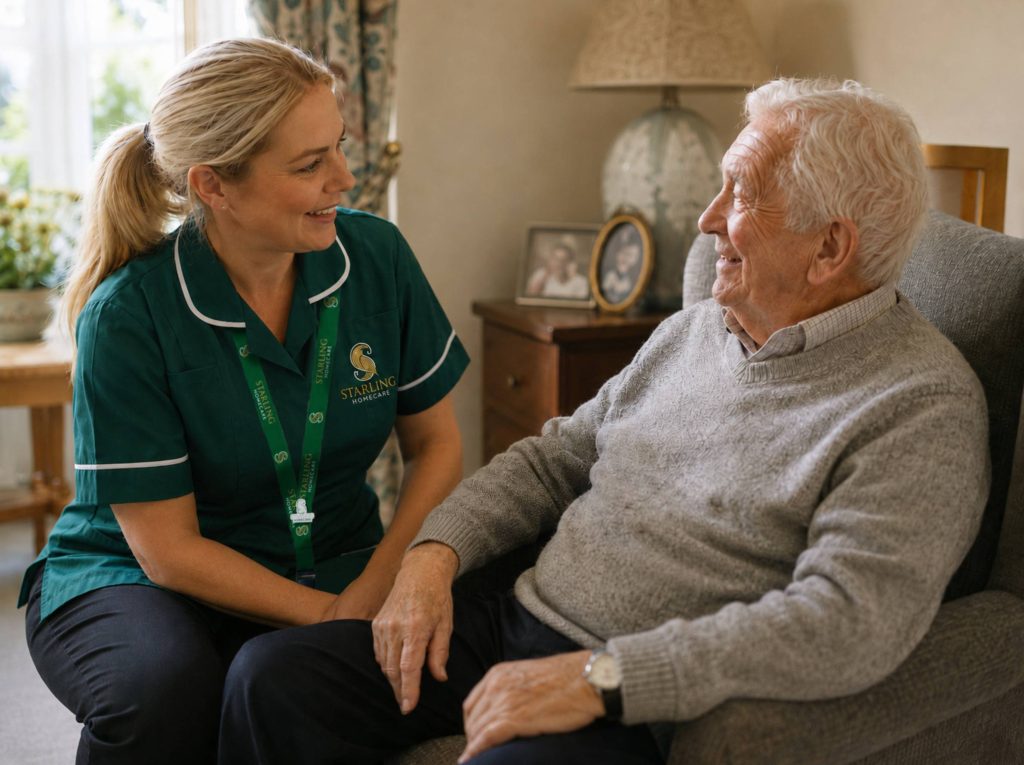
The care assistant is the heart of home care. They arrive at the agreed time, provide the personal and practical support in the care plan, record what was done and anything they noticed, and raise concerns with the office. In England there is no mandatory qualification to begin, but a regulated provider must induct every new carer against the Care Certificate standards, check their identity, right to work and references, obtain an enhanced Disclosure and Barring Service check, and train them in moving and handling, medication, safeguarding, infection control and the needs of the people they support, with refresher training and supervision after that. Carers are not nurses and do not carry out clinical procedures.
Senior care assistant
An experienced carer who leads by example: mentoring new staff, carrying out spot checks and competency observations, taking the more complex visits, and often being the first point of contact for carers out on the round. Some providers call this role a team leader.
Care coordinator
The coordinator builds the rota so every visit has a carer, travel time is realistic, and each person sees a small, familiar team. When a carer is ill or a family changes a visit, the coordinator rearranges cover. Timekeeping and continuity, the two things families notice most, are largely decided here. Starling Homecare uses a digital care management system for rostering and visit records, so the office can see in real time whether a visit has started.
Field supervisor or deputy manager
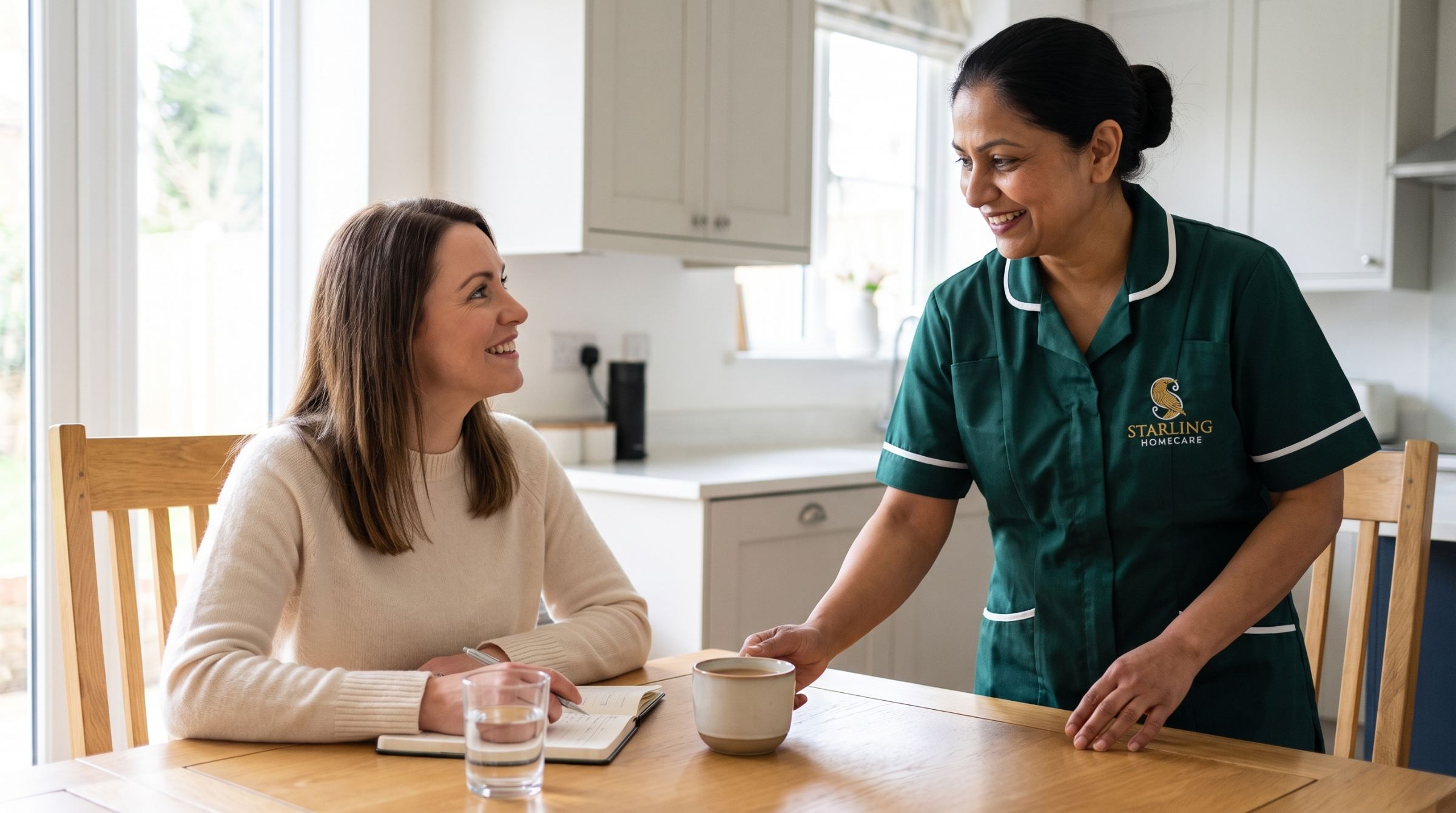
This role carries out the home assessment before care starts, writes the care plan with the person and family, reviews it, and supervises carers in people’s homes. The field supervisor is usually the person a family meets first and the one who comes back when something needs to change.
Registered manager
The registered manager is named on the CQC registration and assessed by the CQC as fit to run the service. They are responsible for the quality and safety of the care, for staffing, training and supervision, for complaints and safeguarding, and for the governance that the fundamental standards require. They are legally accountable alongside the provider. At Starling Homecare this is our Registered Care Manager.
Nominated individual
A director or senior person named by the provider to supervise the management of the regulated activity and to be the CQC’s main contact at provider level. At Starling Homecare this is the Managing Director. In a small independent provider the nominated individual is usually closely involved; in a large franchise they may be remote from the branch.
Clinical responsibility stays with the NHS. The GP diagnoses, prescribes and refers. The district nursing team carries out nursing tasks in the home, such as wound care, injections and catheter changes, and can delegate a specific non-invasive task to trained carers for a named person after assessing and signing them off. Occupational therapists assess for equipment and adaptations, physiotherapists set exercise programmes, and the community pharmacist supports medication. A good provider works alongside all of them, with the person’s consent, and tells them promptly when something changes. Hertfordshire County Council’s social workers carry out care needs assessments and arrange funded care, and its safeguarding team leads enquiries when an adult may be at risk.
Carers may provide personal care, prompt and assist with medication from its original packaging or a dispensing system, prepare food, support mobility using the person’s own equipment and the assessed method, accompany people out, and carry out specific delegated tasks once a nurse has signed them off. They may not give injections, insert or change catheters, dress complex wounds, make clinical decisions, or carry out any invasive procedure. They must not lift someone manually, accept money or gifts beyond the provider’s policy, or act outside the care plan without authority. Starling Homecare’s clinical scope is deliberately narrow and is set out on each relevant service page, for example stoma and catheter care and diabetes support.

Common questions about home care roles
Are home carers qualified?
There is no legal minimum qualification to start as a care assistant in England, but a regulated provider must induct every carer against the Care Certificate standards, train them in the core subjects and check their competence before they work alone, with supervision and refresher training after that. Many carers go on to Level 2 and Level 3 diplomas in care.
Who do I speak to if I have a concern about a visit?
The office in the first instance, usually the care coordinator or field supervisor, who can act the same day. A formal complaint goes to the registered manager. If you believe someone is at risk of harm, contact Hertfordshire County Council’s adult safeguarding team, and in an emergency call 999.
Will the same carer come every time?
A good provider keeps each person’s team deliberately small so familiar faces come most of the time, with cover from within that team for holidays and sickness. Ask any provider how many different carers a person typically sees in a month; the coordinator will know.
Where to go next
- Read what a care plan is to see what the field supervisor writes and what it means for your family.
- Read our leadership team to see who holds each role at Starling Homecare.
- To talk about care in Hertfordshire, call Starling Homecare on 01727 324 127 or request a callback.
Arranging Care Is Simple
Starting care can feel like a big step. We keep it calm and straightforward, and we are here from your very first call to help you explore what might feel right, whether that is with us or simply pointing you in the right direction.
1. Talk to us
Get in touch by phone or request a callback. We will listen, answer your questions and help you understand the options, so you can decide in your own time.
2. A home visit and initial consultation
We arrange a visit to understand your routines, your home and what matters most to you. Together we agree an initial consultation and shape the support that feels right.
3. Your care begins
A small, familiar team starts your care, arriving at the agreed times and staying involved as your needs change. We remain your trusted adviser throughout.
Whenever you are ready, we are here to help.