
Stroke Care at Home
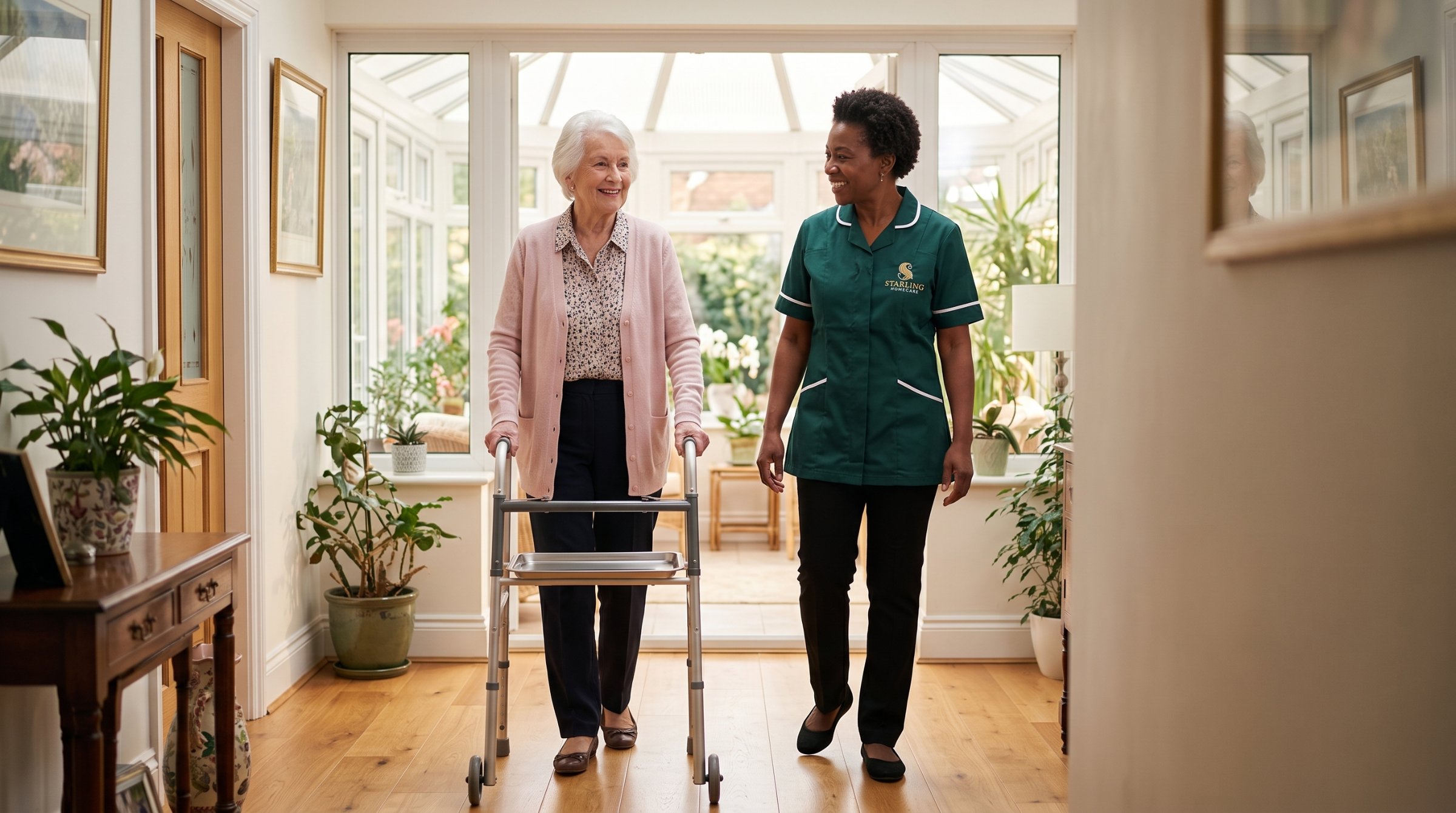
Steady support for the road back after a stroke
Stroke care at home means practical, patient support for life after stroke: help with the routines that have become harder, encouragement with the exercises that rebuild confidence, and a consistent carer who understands that recovery is rarely a straight line. Around 100,000 people have strokes each year in the UK, and there are 1.4 million stroke survivors, according to the Stroke Association. Most recovery happens at home, and that is where we help.
Why Home Matters After a Stroke
Recovery continues long after hospital ends. Familiar surroundings help: routines rebuild more naturally in your own kitchen and bathroom than anywhere else, and progress made at home tends to stick. Care at home protects independence while quietly managing the risks, especially in the early months.
Professionals arranging stroke care on a client’s behalf can read what we are registered for and how a referral works on our page for case managers, deputies and solicitors.

The First Weeks Home Set the Tone
The move from hospital to home is where families feel the cliff edge: therapy appointments to keep, medication that has changed, fatigue that surprises everyone, and a person determined to do more than is safe. Structured support in those first weeks, even briefly, turns the cliff edge into a slope. Our post-hospital and rehabilitation care is built for exactly this handover.
Care That Follows the Therapy Plan
Stroke recovery usually comes with a plan from the hospital or community therapy team: exercises, positioning, communication practice, goals. Our carers support that plan between appointments, encourage the practice that makes therapy stick, and tell you honestly how things are progressing. With your agreement we liaise with the professionals involved, so home and clinic pull in the same direction.

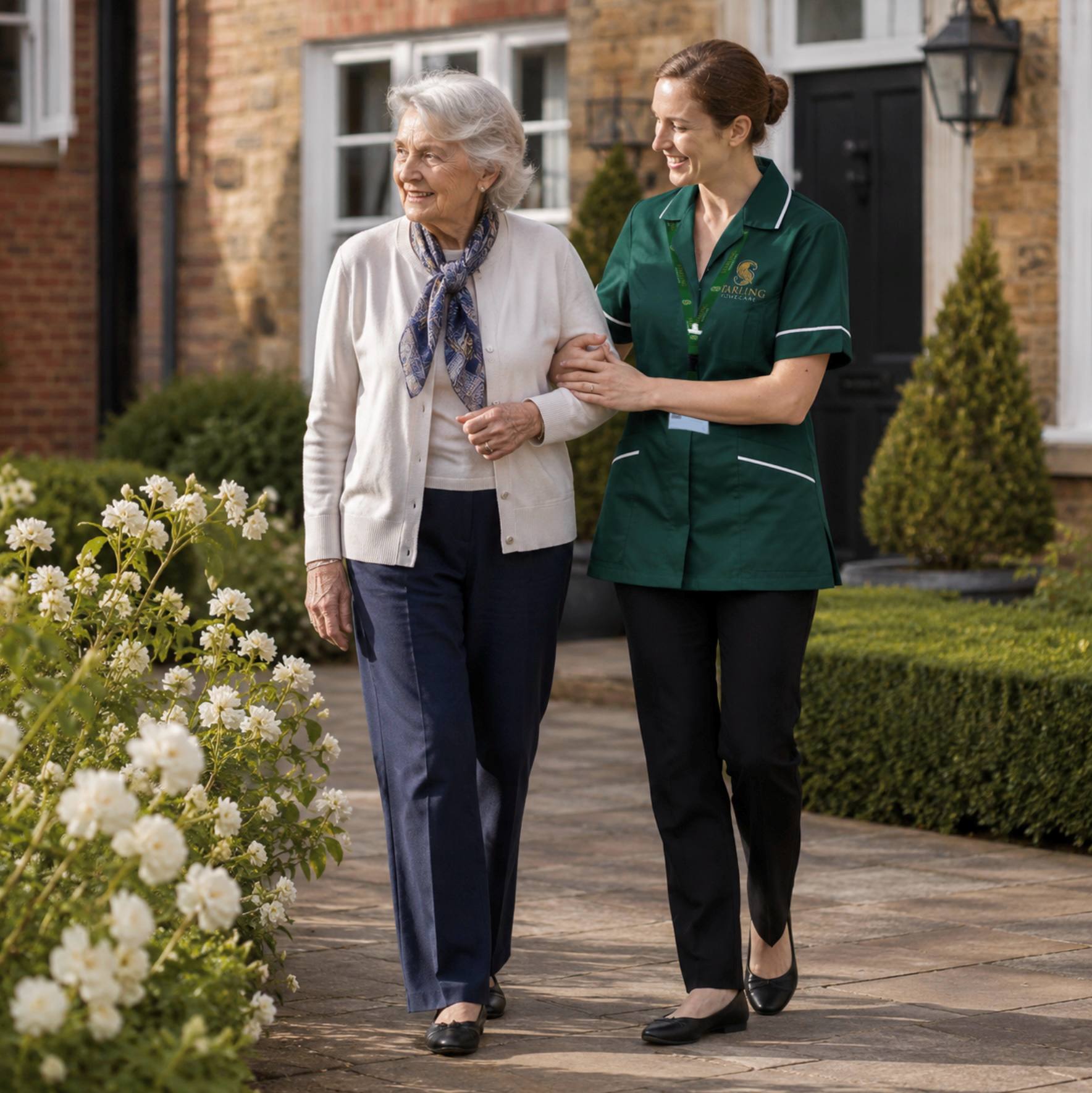
Stroke Care May Include:
- Help with washing, dressing and personal care, at a pace that respects effort
- Support with the exercises and practice set by therapists
- Steady, falls-aware help with moving and transferring safely
- Medication support after regimes change
- Meal preparation, including where swallowing needs care
- Patience with communication, where words have become harder
- Companionship on the frustrating days, and encouragement on the good ones
- Respite so a partner or family carer can rest
Support at Every Stage of Recovery
Coming home from hospital
Short, structured visits that hold the new routine together: medication, meals, personal care and reassurance, while everyone finds their feet.
Through rehabilitation
Support that backs the therapy plan: practice between sessions, honest notes on progress, and help pitched so the person does as much as they safely can themselves.
Living with lasting effects
Where a stroke leaves lasting changes, care settles into a rhythm: consistent carers, adapted routines, and more cover where it is needed, including overnight care or live-in care.
For partners and family
Recovery is a household effort. Respite care gives family carers a proper break with the routine protected.
Stroke Care FAQs
How much does stroke care at home cost?
Care visits start from 30 minutes, from £34, with no hidden fees, and every family receives a written quote before anything begins. Regulated home care is VAT exempt, and our care funding guide explains the help available, including NHS continuing healthcare where needs are complex.
Can care start straight after hospital discharge?
Yes, and the earlier we can plan it the smoother the handover. Where discharge is imminent we will be honest about timescales, and our post-hospital care is designed for exactly this transition.
Can carers help with therapy exercises?
Yes. We support the plan set by the therapy team: encouraging practice, helping with positioning and repetition, and reporting honestly on progress between appointments. We support therapy rather than provide it.
What if speech and communication have been affected?
Consistency helps enormously. The same carers learn how someone communicates now, allow proper time, and never talk over or around the person. We follow any guidance from the speech and language team.
Can you support someone with one-sided weakness safely?
Yes. Our carers provide steady, falls-aware support with transfers, washing and dressing, following any moving and handling plan, and we review the support as strength and confidence return.
What happens if another stroke is suspected?
Our carers know the signs and act immediately on them, calling 999 first and then family. Having someone present who knows what to look for is part of the reassurance of stroke care at home.
How quickly can stroke care start?
The right timing depends on your situation and on matching you with a suitable carer. We will talk through your needs and explain realistic timescales when you contact us, so you know what to expect.
Do we have to commit long term?
No. There are no long-term or fixed-term contracts, and every package carries our 90-day risk-free guarantee: you can cancel at any time.
Do you support other neurological conditions as well as stroke?
Yes. Alongside stroke, we support people living with acquired brain injury, multiple sclerosis, Parkinson's and functional neurological disorder at home. The approach is much the same: a small consistent team, a plan built around fatigue and the parts of recovery other people cannot see, and support that steps up and back as things change. Our pages on brain injury care at home, MS care and Parkinson's care explain each one.
How to Get Started
- Think about what type of help would make life easier
- Check if you or your loved one might be eligible for support
- Speak with us. We can guide you through options and next steps
Arranging Stroke Care Is Simple
Starting care can feel like a big step. We keep it calm and straightforward, and we are here from your very first call to help you explore what might feel right, whether that is with us or simply pointing you in the right direction.
1. Talk to us
Get in touch by phone or request a callback. We will listen, answer your questions and help you understand the options, so you can decide in your own time.
2. A home visit and initial consultation
We arrange a visit to understand your routines, your home and what matters most to you. Together we agree an initial consultation and shape the support that feels right.
3. Your care begins
A small, familiar team starts your care, arriving at the agreed times and staying involved as your needs change. We remain your trusted adviser throughout.
Whenever you are ready, we are here to help.

Recovery after a stroke asks a lot of everyone. The right support at home makes the asking feel manageable, and progress feel possible. If you are exploring stroke care, we are here to talk it through. Call us or complete our enquiry form. We would be glad to help.
Condition figures on this page were checked on 13 August 2026 against the Stroke Association. For the latest information and support, their website is the right place to start.