
Private Carer or Regulated Home Care: What Should Families Consider?

A fair look at both, first
There are three lawful ways to arrange care at home: hire a private carer directly, use an introduction agency, or use a regulated home care provider. Each can work well, and this guide is not here to tell you one is wrong. The differences are structural: who carries the legal responsibilities, who checks and supervises the carer, what happens when they are ill or away, and who answers if something goes wrong. If you are weighing up live-in care specifically, our guide to regulated live-in care or an introduction agency looks at the same questions for round-the-clock support.
Families choose private arrangements every day, often successfully. The point of this page is simply that the choice goes best when it is made with eyes open, so here is everything worth knowing, verified against official guidance, before you decide.
The Differences at a Glance
Seven things change depending on the route you choose:
- Regulation and independent oversight
- Who is legally the employer
- Background checks, and who can obtain them
- Cover when the carer is ill or on holiday
- Training and supervision
- Insurance
- What happens if something goes wrong
The table below compares the three routes on each.
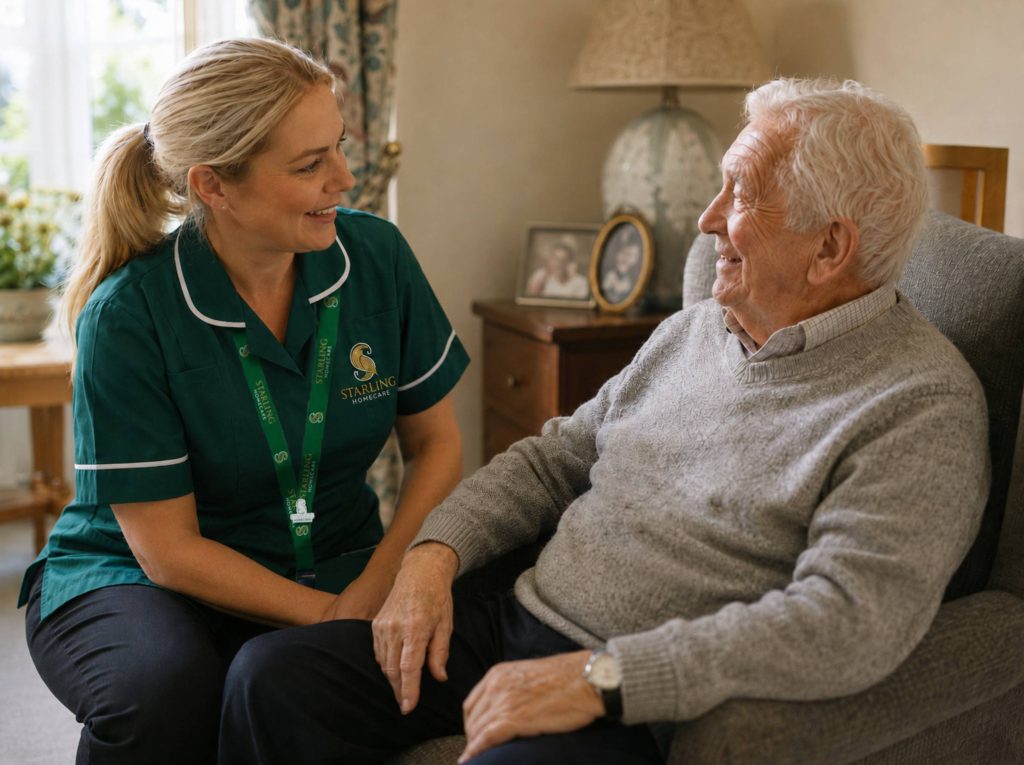
How the Three Routes Compare
All three columns describe lawful arrangements. The question is simply who carries each responsibility: you, the carer, or the provider.
| Directly employed private carer | Introduction agency | Regulated provider | |
|---|---|---|---|
| Regulation | Exempt from CQC registration when working wholly under your direction | Exempt from CQC registration where the role ends at the introduction | CQC registered and inspected |
| Who employs the carer | Usually you, in law, unless the carer is genuinely self-employed | Usually you or the carer themselves; the agency is not the employer | The provider employs, manages and supervises the carer |
| Background checks | Since January 2026 the carer can obtain an enhanced DBS check on themselves for you to view; you cannot apply for one on their behalf | Ask exactly which checks the agency has verified | Fit-and-proper recruitment, including criminal record checks, required by regulation |
| Cover when the carer is away | Yours to arrange, unless agreed otherwise | A replacement may carry a further fee; ask | Cover is arranged as part of the service |
| Training and supervision | Yours to arrange and judge | Ask what is verified at introduction | Required by regulation, with a registered manager accountable |
| Insurance | Employers liability insurance is legally required, minimum £5 million | Ask the carer about their own cover; it is not guaranteed | The provider carries employer cover for its staff |
| If something goes wrong | You manage it as the employer | The agency usually has no ongoing role | A complaints process is required by regulation, with CQC oversight |
Sources: CQC scope of registration guidance and gov.uk employment guidance, checked June 2026. Individual arrangements vary.
Gov.uk is clear: if you pay a carer directly and they are not genuinely self-employed, you become their employer, even if the money comes from council direct payments or the NHS. That brings real duties, all manageable, but worth knowing in advance:
- A written employment contract and payslips
- At least the National Living Wage, £12.71 an hour for those 21 and over from April 2026
- Registering with HMRC and running payroll, with Income Tax and National Insurance deducted, even if you pay cash
- 5.6 weeks of paid holiday a year, statutory sick pay and a workplace pension
- Employers liability insurance, legally required at a minimum of £5 million cover, with fines of up to £2,500 a day without it (close family members you employ are an exception)
- A right-to-work check
Two more points families often miss. You cannot ask an employee to become self-employed; whether a carer is genuinely self-employed depends on the real working relationship, not the label, and HMRC provides a free employment status tool to check. And while you cannot apply for a DBS check on a private carer yourself, since January 2026 they can obtain an enhanced check on themselves through an umbrella body and show you the original certificate, which is well worth asking for.
The honest case for a private carer
A directly employed carer can cost less per hour, and many families value having one consistent person and a direct relationship without an organisation in between. For families who are comfortable carrying the employment duties above, and who plan for cover and checks, it can work very well. The risks are not in the model itself; they are in taking it on without knowing what it involves.
A CQC-registered provider is inspected against national regulations that require a registered manager, safe care and safeguarding procedures, fit-and-proper recruitment including criminal record checks, ongoing training and supervision, good governance, a formal complaints process and a duty of candour when things go wrong. In short, the structure around the carer is somebody’s legal job.
That structure is what the difference in price pays for. With Starling Homecare, visits start from 30 minutes, from £34, with no hidden fees, and live-in care from £255 a day. Regulated home care is VAT exempt, and every family receives a written quote before anything begins. Our care funding guide explains the help available with the cost.
For a private carer: Are you genuinely self-employed, and have you checked with HMRC’s status tool? May I see an enhanced DBS certificate (possible since January 2026)? What insurance do you carry? What happens when you are ill or on holiday? What training have you had, and how is it kept current?
For an introduction agency: Exactly which checks do you verify before introducing a carer? What does your fee cover, and is there a further fee for a replacement? Where does your role end once the introduction is made?
For a regulated provider, including us: our guide to the questions to ask any home care provider sets out all thirteen, with what good answers sound like.
We help families think this through across St Albans, Harpenden, Radlett and Shenley, Berkhamsted, Tring and Hemel Hempstead, and the villages around them, from Redbourn and Wheathampstead to Aldbury and Kings Langley. The conversation is free, and our advice is honest, including when a private arrangement may genuinely suit your family better.

Common Questions About Private Carers
Do private carers need to be CQC registered?
Not always. An individual carer directly employed by you and working wholly under your direction is exempt from CQC registration, and so is a true introduction agency whose role ends at the introduction. A provider that organises, manages or supervises the care must register. All three models are lawful; the difference is who carries the oversight.
Can I get a DBS check on a private carer?
You cannot apply for one on their behalf. Since January 2026, however, a self-employed carer or personal employee can obtain an enhanced DBS check on themselves through an umbrella body where the role is eligible, and you can ask to see the original certificate. Anyone can also obtain a basic check showing unspent convictions.
Am I the employer if I pay a carer directly?
Usually, yes. Gov.uk is clear that if you pay a carer directly and they are not genuinely self-employed, you are their employer, with duties including payroll, paid holiday, a pension and employers liability insurance, and you cannot ask an employee to become self-employed. HMRC’s employment status tool can help you check your situation.
Do you charge for advice or building a care plan?
No. We never charge for initial advice or guidance. In fact, we encourage you to ask as many questions as you need.
We understand how important it is to have clear, honest information so you can make the decision that feels right for you.
We are always happy to talk things through by phone or visit you in person if that’s easier. There is never any extra cost for this support.
Can we begin with private care and switch to funded care later?
Yes. Many families start this way. If your situation changes, we will support you through the transition.
How much does care at Starling Homecare cost?
Care visits start from 30 minutes, from £34, and live-in care from £255 a day, with no hidden fees and a written quote before anything begins. Regulated home care is VAT exempt, so there is nothing to add on top.
How to Get Started
- Decide which responsibilities you are comfortable carrying yourself, and which you want carried for you
- Ask the same questions of every option, private or regulated
- Talk it through with us. The conversation is free, and our advice is honest, whichever route fits your family
We have shared this guide in good faith to help you weigh up your options. It is general information rather than advice for your particular situation, and the rules around care and regulation can change, so some details may have moved on by the time you read this. Please take your own independent advice before making any decision. You are also most welcome to give us a call, and we will try to guide you the best way we can.
Arranging Care Is Simple
Starting care can feel like a big step. We keep it calm and straightforward, and we are here from your very first call to help you explore what might feel right, whether that is with us or simply pointing you in the right direction.
1. Talk to us
Get in touch by phone or request a callback. We will listen, answer your questions and help you understand the options, so you can decide in your own time.
2. A home visit and initial consultation
We arrange a visit to understand your routines, your home and what matters most to you. Together we agree an initial consultation and shape the support that feels right.
3. Your care begins
A small, familiar team starts your care, arriving at the agreed times and staying involved as your needs change. We remain your trusted adviser throughout.
Whenever you are ready, we are here to help.