
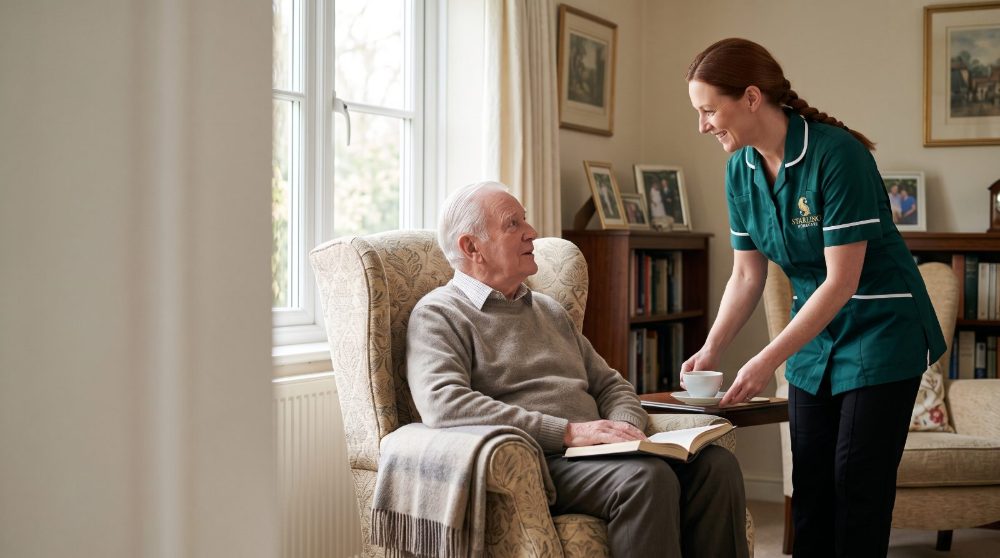
Fatigue after stroke is a deep, lasting tiredness that does not reliably get better with rest. The Stroke Association calls it very common. It often eases over time, so families help most by understanding it and planning each day around it.
To talk anything through with someone local, our St Albans team is on 01727 324 127.
What does fatigue after stroke feel like?
The Stroke Association describes it as a persistent lack of energy, felt in both body and mind. It is not the same as being tired after a busy day. Someone can sleep well and still wake up exhausted.
It can also bring brain fog, which makes it harder to think clearly. It can follow any type of stroke, and it can follow a TIA, sometimes called a mini stroke. If you are still finding your way around, our guide to help available after a stroke at home sets out the services.
Why does it happen?
There is rarely one cause. The Stroke Association's guide to tiredness and fatigue lists several that often overlap:
- the brain and body healing, especially in the early weeks and months
- rehabilitation itself, because relearning movement takes effort
- lost fitness or muscle weakness, so walking uses more energy
- low mood, anxiety or depression
- poor sleep, including insomnia or sleep apnoea
- pain, eating or swallowing problems, or other conditions such as anaemia, diabetes or an underactive thyroid
- side effects of some medicines
Some of these can be treated. So it is worth asking the GP to look, rather than assuming tiredness is just part of recovery.
What can families expect day to day?
It is often invisible
Your relative may look well and still be running on empty. As a result, visitors sometimes stay too long or expect too much. It helps to explain fatigue to friends and family before they call round.
Small things use up energy
The Stroke Association notes that gentle activities, such as a chat, a car journey or eating a meal, can be tiring. So a morning with a wash, getting dressed and a hospital appointment may be a full day's worth.
Good days can lead to bad ones
On a better day, it is tempting to do everything at once. However, overdoing it can leave someone exhausted for a day or two afterwards. Families often notice this pattern before the person does.
It can arrive later, and last
Fatigue can start soon after the stroke or appear months later. It can also continue after a good physical recovery. Our article on stroke recovery after the six-month review looks at that longer stretch.
How can fatigue after stroke be managed at home?
The Stroke Association's advice on managing fatigue centres on three Ps:
- Pace: break tasks into small steps, done at a comfortable speed.
- Plan: decide what to do, when, and how.
- Prioritise: choose what matters most, and what to drop or hand to someone else.
Proper rest breaks before or after activities help too. A simple energy diary can also show patterns over a few weeks, for example that mornings go better or that visitors in the afternoon lead to a poor evening.
Activity still matters. The advice is to build up slowly, for instance with a very short walk, and a physiotherapist can help set the level. Finally, patience counts: the charity says fatigue can take many months to start lifting.
Who should you speak to?
Start with the GP. They can check for treatable causes, review medicines and refer on. Never stop or change a medicine without speaking to the GP or pharmacist first.
Also tell the GP if your relative snores loudly, gasps or seems to stop breathing in their sleep, because these can be signs of sleep apnoea. Likewise, mention low mood. The NHS guide to stroke recovery notes that cognitive behavioural therapy (CBT) can help with anxiety, depression and tiredness.
Therapists and stroke nurses can advise as well, and the GP can say whether a local fatigue management service exists. NICE guidance on stroke rehabilitation includes assessment for fatigue, so it is fair to raise it at reviews. The Stroke Support Helpline is on 0303 3033 100.
Where does care at home help?
Visiting care can take on the tasks that drain energy, so your relative saves it for what they value. For example, a carer might help with a shower and dressing, then prepare lunch, leaving the afternoon free for a walk or a visit from grandchildren.
Visits can be timed around energy, too: a longer morning call, then a short check later on. Carers can keep a note of how each day went, which helps families and the GP see patterns. Our stroke care at home page explains how this support is arranged.
Frequently asked questions
Is fatigue a sign that the stroke recovery has stalled?
Not necessarily. Fatigue can continue even when movement and speech have improved well. Still, a sudden change in tiredness is worth raising with the GP.
Should my parent just sleep more?
Rest helps, but fatigue after a stroke does not reliably lift with sleep alone. Balanced days, with planned breaks and gentle activity built up slowly, tend to work better. A therapist can help set the balance.
Can fatigue affect thinking and mood?
Yes. Many people describe brain fog, and fatigue and low mood often go together. Fatigue may also cause low mood and anxiety, so both are worth mentioning to the GP.
How can I explain it to other relatives?
Describe it as an energy budget that runs out sooner than before. Suggest shorter visits, at the time of day that suits your relative best.
For families across Hertfordshire, Starling Homecare offers visiting care from 30 minute visits, and live-in care. We are a family run provider based in St Albans and registered with the Care Quality Commission.
Figures and guidance checked on 2 November 2026 against the Stroke Association and the NHS.
Arranging Care Is Simple
Starting care can feel like a big step. We keep it calm and straightforward, and we are here to guide you from your very first call.
1. Talk to us
Get in touch by phone or request a callback. We will listen, answer your questions and help you understand the options, so you can decide what feels right in your own time.
2. A home visit and initial consultation
We arrange a visit to understand your routines, your home and what matters most to you. Together we agree an initial consultation and shape the support that feels right.
3. Your care begins
A small, familiar team starts your care, arriving at the agreed times and staying involved as your needs change. We remain your trusted adviser throughout.
Whenever you are ready, we are here to help.