
Falls Prevention at Home
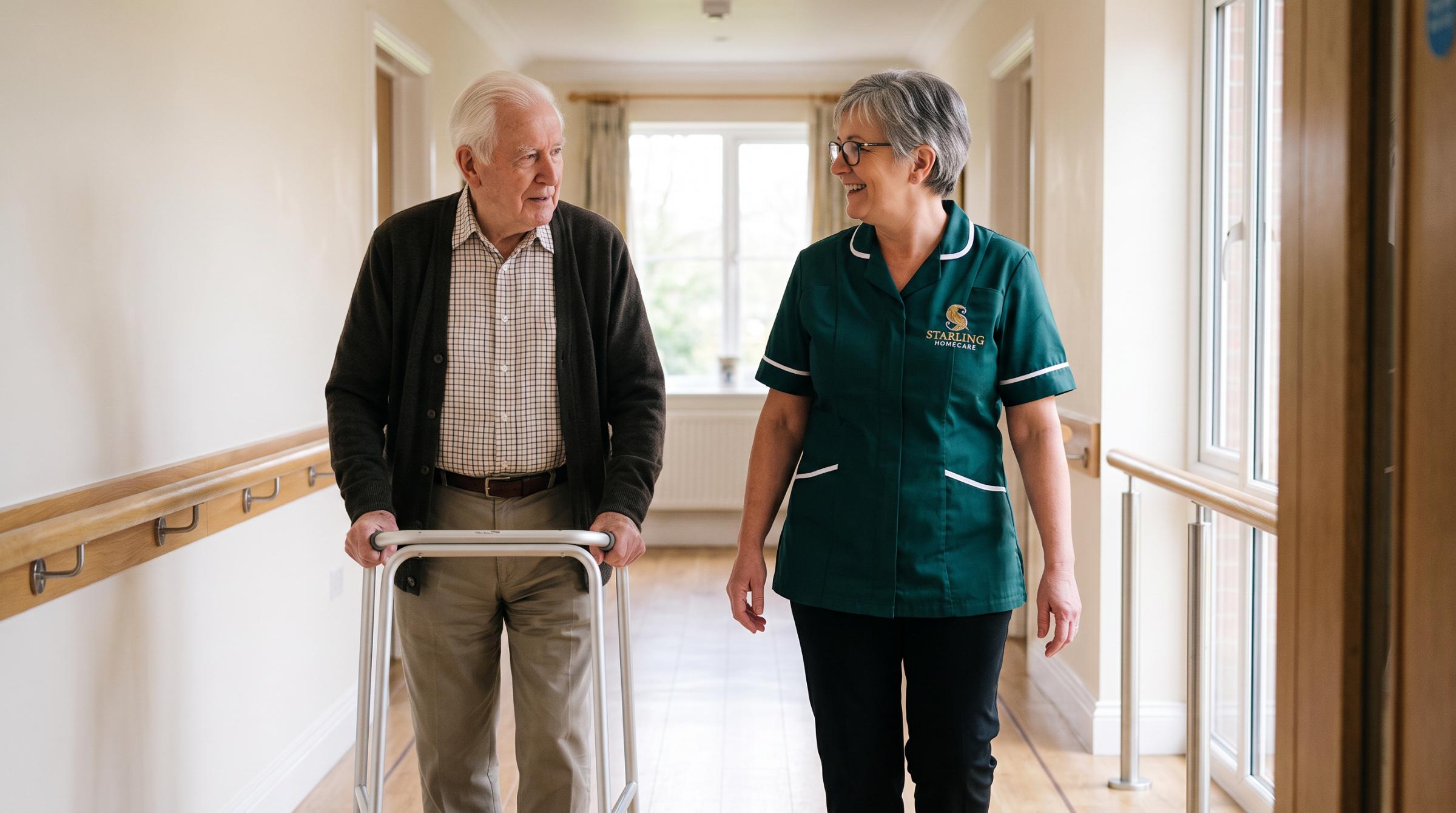
Reducing the risk before the fall, not after it
A fall is often the moment that changes everything for an older person and their family. Many are avoidable. We provide regulated home care with falls prevention at home built into every visit, across St Albans, Harpenden, Welwyn Hatfield, Hemel Hempstead and Potters Bar, with live-in care available across the whole of Hertfordshire. According to the NHS, around one in three adults over 65 and half of people over 80 have at least one fall a year, so if you are worried about a parent who has had a fall, a near miss or a loss of confidence, you are right to take it seriously, and there is a great deal that can be done.
Why Falls Prevention at Home Matters
Most falls happen in the home, in the places and at the times people feel safest: getting up in the night, reaching for something in the kitchen, hurrying to the door. The home is also where the risk can most easily be reduced, because the hazards are known, the routine is known, and a carer who visits regularly notices the small changes that come before a fall.

What a Carer Actually Does to Reduce Falls
Falls prevention is not a leaflet. It is the practical, repeated work of a carer who knows the home and the person. On every visit our carers keep walkways clear, check that lighting is used and working, make sure footwear and walking aids are to hand, encourage drinks so dehydration does not cause dizziness, and watch for the signs that something has changed, such as new unsteadiness, confusion, a dropped foot or a reluctance to move. Where we see a risk we talk to you and, with your consent, to the GP or the community team, so a small problem does not become a broken hip.
Confidence Is Part of the Prevention
After a fall, many people stop moving because they are frightened of falling again. That loss of activity weakens muscles and balance and makes the next fall more likely. Carers encourage safe movement every day, support the exercises set by a physiotherapist, accompany people on short walks and help them get out of the house, so confidence comes back rather than draining away. The aim is a person who is moving more safely, not a person who has stopped moving.

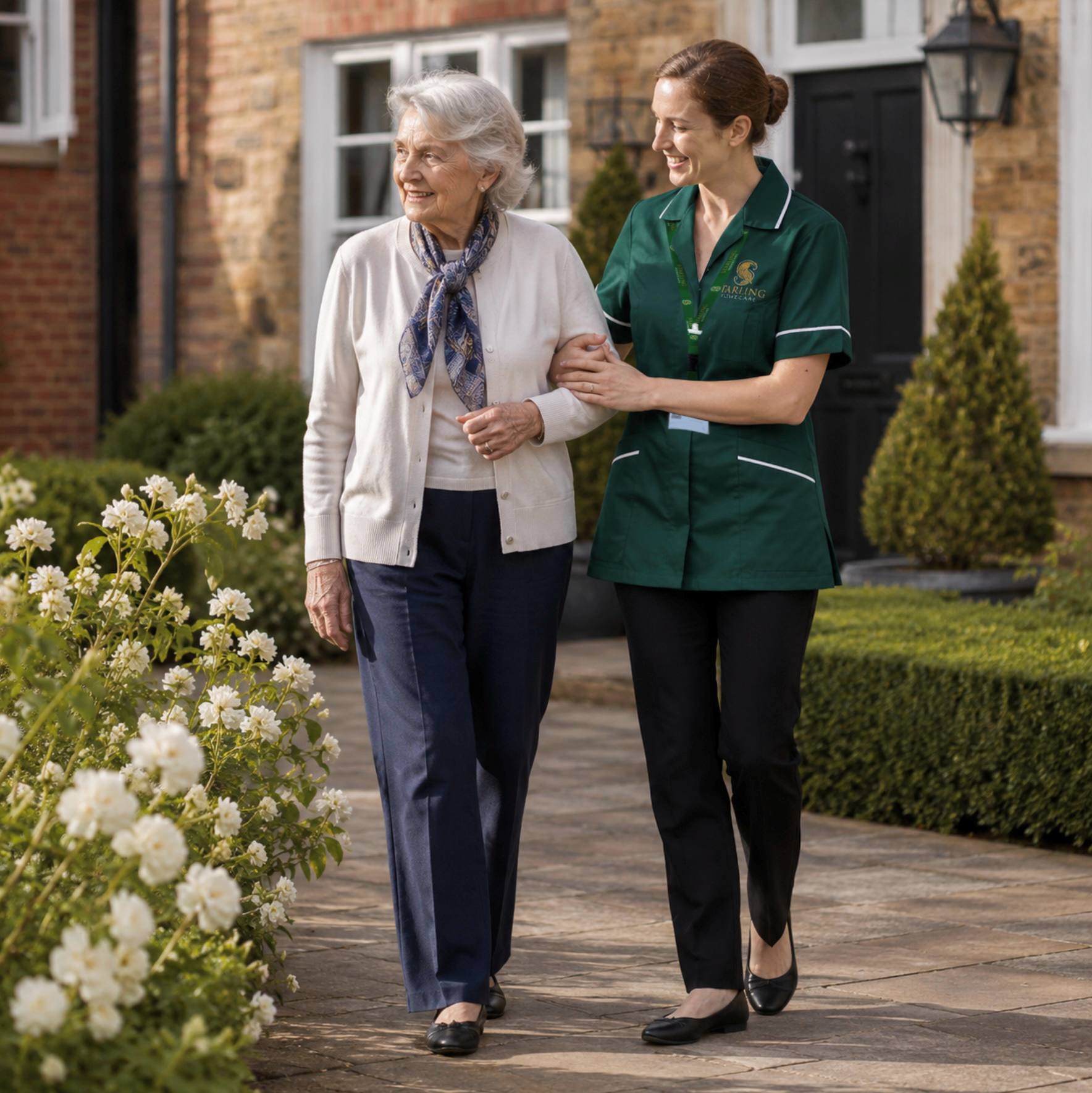
Falls Prevention Support May Include:
- A practical look around the home for trip hazards, poor lighting and awkward layouts
- Supervision and support at the riskiest moments, such as getting up, bathing and bedtime
- Encouraging good hydration, regular meals and medication taken on time
- Support with the strength and balance exercises set by a physiotherapist
- Making sure walking aids, glasses and footwear are used and in good condition
- Overnight care where night-time falls are the concern
- Spotting changes early and passing them on to the GP or community team
- Help to get out and keep active, safely
Support That Fits the Level of Risk
When the concern is early
A visit or two a week that keeps an experienced eye on the home and the person, with practical fixes made as they are spotted and a gentle routine of activity.
When there has been a fall
Daily visits around the riskiest points of the day, support with recovery and the exercise plan, and a clear line to the GP or falls service if anything changes.
When the risk is high
Longer visits, overnight care or full live-in care, so someone is there at the moments a fall would otherwise happen unseen.
Working alongside the NHS
Assessment of why someone is falling, including medication review, eyesight, blood pressure and balance, sits with the GP and the community falls and physiotherapy services. Our role is the everyday care at home that puts their advice into practice and keeps it going. Falls prevention runs through our post-hospital and rehabilitation care, our sight loss care and our Parkinson’s care in particular.
If you are arranging care on someone else’s behalf as a case manager, deputy or solicitor, our page for case managers, deputies and solicitors covers our registration, reporting and referral route.
Arranging Falls Prevention Support: Your Questions
How much does falls prevention support cost?
Falls prevention is built into our regulated home care rather than sold separately. Care visits start from 30 minutes, from £34, with no hidden fees, and every family receives a written quote before anything begins. Regulated home care is VAT exempt.
My mother has had one fall. Is that enough to be worried?
Yes, it is worth acting on. One fall is the strongest predictor of another, and the weeks afterwards are when confidence and activity tend to drop. A GP review and some practical changes at home, with a carer keeping an eye on things, can make a real difference early.
Will a carer stop every fall?
No one can promise that, and we will not. What a carer does is reduce the risk steadily: removing hazards, supporting the riskiest moments, keeping someone hydrated and active, and noticing change early. Fewer falls, and less serious ones, is the honest aim.
Can you help at night, when most of the falls happen?
Yes. Our overnight care puts a carer in the home through the night, either asleep nearby or awake, so trips to the bathroom and restless nights are supported rather than managed alone.
Do you look at the home itself?
Yes. At the first visit we look at the things that cause falls: loose rugs, trailing cables, poor lighting on stairs and landings, a bathroom without grab rails, chairs that are too low. We suggest practical changes and can help you ask the council or an occupational therapist about equipment and adaptations.
Can carers help with the exercises the physiotherapist gave us?
Yes. Strength and balance exercises only work if they are done regularly, and a carer who encourages and supports them on each visit makes that far more likely. We follow the programme the physiotherapist has set.
How quickly can support start?
Care can often be in place within a couple of working days, depending on availability and on matching you with a suitable carer. After a fall or a hospital discharge, tell us and we will do what we can to move quickly.
Do we have to commit long term?
No. There are no long-term or fixed-term contracts, and every package carries our 90-day risk-free guarantee: you can cancel at any time.
Falls and Support in Hertfordshire
Why do older people fall?
Usually several small things at once: weaker muscles and poorer balance, eyesight changes, low blood pressure on standing, dehydration, the side effects of some medicines, an unsafe home layout, and rushing. That is why falls prevention is practical and everyday rather than one single fix.
Who should I ask about a falls assessment in Hertfordshire?
Start with the GP, who can review medication and blood pressure and refer to the community falls or physiotherapy services. Hertfordshire County Council can also carry out a care needs assessment and advise on equipment and adaptations at home. We are happy to help you make those calls.
Which areas do you cover?
We provide visiting care in St Albans, Harpenden, Welwyn Hatfield, Hemel Hempstead and Potters Bar, and the villages around them. Live-in care is available across the whole of Hertfordshire.
What about personal alarms and Message in a Bottle?
Both are worth having. A pendant alarm means help can be called after a fall even if the phone is out of reach, and the free Message in a Bottle scheme keeps medical details where paramedics will look for them. Carers make sure both are in place and in use.
Staying Safe and Active at Home
My father will not use his walking frame. What can carers do?
Quite a lot, gently. Carers find out why, whether it is pride, the frame not fitting the house or simply habit, and work on it over time with encouragement rather than argument. Often it is a matter of building a routine where the frame is simply there and used without comment.
How is this kind of care funded?
Many families fund care privately. Council support may be available following a care needs assessment and a financial assessment from Hertfordshire County Council, and Direct Payments can be used to pay for care where someone is eligible. Attendance Allowance may also apply for people over State Pension age. Our care funding guide sets out the options.
Does fear of falling matter as much as falling?
Yes. Fear leads people to stop moving, which weakens them and raises the risk. Part of our job is to help someone move safely and often, so confidence returns and the home does not shrink to one chair.
What will the carer know before the first visit?
We write the care plan with you before care starts. It records any history of falls, what caused them, the risky moments in the day, the home layout, the aids used and the advice given by the GP or physiotherapist. The carers who visit work from that plan.
How to Get Started
- Think about what type of help would make life easier
- Check if you or your loved one might be eligible for support
- Speak with us. We can guide you through options and next steps
Arranging Falls Prevention Support Is Simple
Starting care can feel like a big step. We keep it calm and straightforward, and we are here from your very first call to help you explore what might feel right, whether that is with us or simply pointing you in the right direction.
1. Talk to us
Get in touch by phone or request a callback. We will listen, answer your questions and help you understand the options, so you can decide in your own time.
2. A home visit and initial consultation
We arrange a visit to understand your routines, your home and what matters most to you. Together we agree an initial consultation and shape the support that feels right.
3. Your care begins
A small, familiar team starts your care, arriving at the agreed times and staying involved as your needs change. We remain your trusted adviser throughout.
Whenever you are ready, we are here to help.

A fall is rarely bad luck. It usually has causes, and most of them can be reduced by someone who is paying attention. If you are worried about falls, we are here to talk it through. Call us or complete our enquiry form. We would be glad to help.
Information on this page was checked on 24 October 2026. For the latest advice on falls, the NHS falls page is the right place to start.