
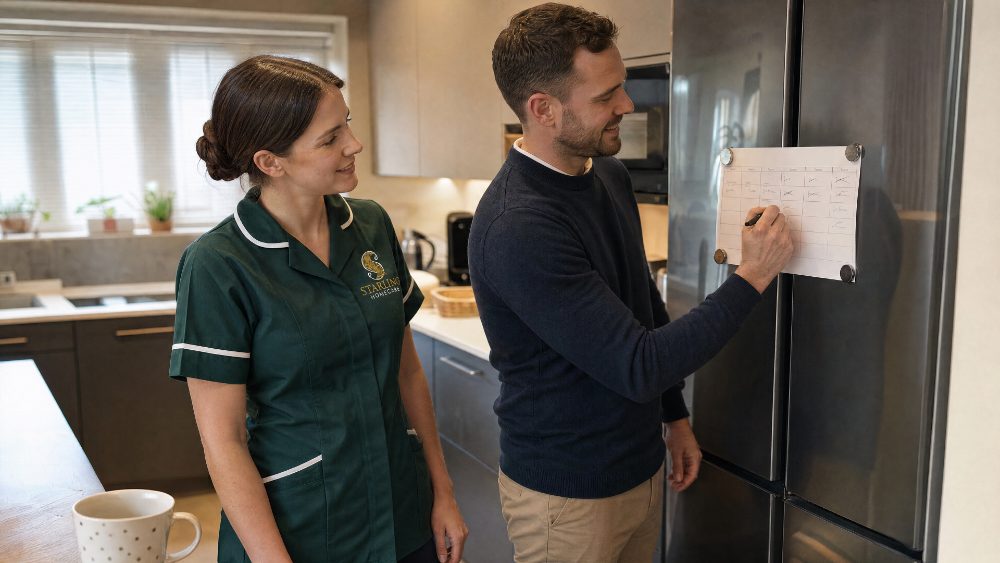
Many people with a brain injury live independently, often with some regular support in place. Whether that works usually depends less on the injury itself than on its everyday effects, such as fatigue, memory and planning, and on how well the right help is arranged around them.
To talk anything through with someone local, our St Albans team is on 01727 324 127.
What does "living independently" really mean after a brain injury?
Independence rarely means doing everything alone. For most people it means running their own home, making their own choices and keeping a life they recognise. Some tasks are shared, prompted or planned differently.
So the question families tend to ask is narrower. Which parts of the day can be managed safely, and which need a hand? Answering that honestly is the first step, and a council needs assessment is often where it becomes formal. Our guide to needs assessments in Hertfordshire explains how to ask for one.
Which effects of a brain injury make living alone harder?
Fatigue
Fatigue is one of the most common effects. Headway describes brain injury fatigue as extreme tiredness that is not relieved by sleep or rest. It can come and go, and busy places, paperwork and conversations in noisy places can bring it on.
In practice, this means a person might cope well in the morning and struggle by late afternoon. A plan that only works on a good day is not yet a plan.
Planning, starting and organising
Many survivors have difficulty with what are called executive functions. These are the thinking skills behind planning, starting a task, solving problems and noticing mistakes. Headway's guide to executive dysfunction notes that trouble getting started can be mistaken for laziness.
For example, someone may know exactly how to cook a meal, yet not begin. Bills may pile up, or spending may become impulsive.
Insight
Some people are not fully aware of their own difficulties. Headway points out that this can be frustrating for families, especially when help is refused. It is part of the injury, not stubbornness, and it shapes how support is offered.
What helps someone with a brain injury live independently?
Structure does a great deal of the work. Headway suggests a weekly routine for jobs like shopping and housework, so planning becomes easier. It also recommends alarms, calendars, bright notes and checklists that break tasks into steps.
Other practical steps can make a real difference:
- A fatigue diary. Headway suggests rating tiredness from 1 to 10 before and after activities, to spot what drains most.
- Fixed anchors in the day. Meals, medication prompts and a regular check-in at the same times.
- Fewer decisions at once. Large tasks split into smaller stages, done one at a time.
- A back-up plan. Who to call if something goes wrong, written down where it is easy to find.
Who can help in Hertfordshire?
NHS rehabilitation
Hertfordshire Community NHS Trust runs a neuro community therapy team at Danesbury Neurological Centre in Welwyn. It has an acquired brain injury pathway and works at home, in clinics or in groups. It covers adults registered with a GP in East or North Hertfordshire, and referral comes through the GP, hospital or another professional.
Danesbury also has a 24-bed inpatient rehabilitation unit for short stays of around five to six weeks. If you live in west Hertfordshire, ask the GP which community neurology team covers your address.
Recovery after a stroke follows a similar route through NHS teams. Our guide to stroke support in Hertfordshire sets out which service covers which part of the county.
Case managers
A brain injury case manager oversees and co-ordinates someone's care and rehabilitation. Headway notes that most are privately funded, often through interim payments in a compensation claim. If there is a claim, the solicitor can explain whether a case manager is appropriate.
Charities and peer support
Headway Hertfordshire, based in Hitchin, runs groups, peer support and counselling, with support for carers too. Its number is 0300 330 1455. The national Headway helpline is on 0808 800 2244.
Where does care at home fit?
Helping someone with a brain injury live independently often means filling the gaps that routines alone cannot. A carer might prompt the morning routine, help plan meals, go shopping together or remind someone about medication. The aim is to support the person to do things, not to take them over.
Visits can be short and regular, or longer on harder days. Some people need someone nearby overnight, and a few need live-in support for a while. Because fatigue and insight change over time, the plan should be reviewed rather than fixed.
Frequently asked questions
How long after a brain injury can someone go home?
There is no set timescale. It depends on the injury, the rehabilitation and the support available at home. The hospital or rehabilitation team plans discharge with the person and family, often with adult social care involved.
Can someone with a brain injury refuse help?
Yes. An adult is presumed able to make their own decisions unless shown otherwise. If you are worried about a specific decision, talk to the GP or the rehabilitation team.
Will fatigue after a brain injury get better?
For some people it eases over time, while others manage it for the long term. Pacing activities and planning rest usually help. The person's own clinical team is the right place to ask about their recovery.
Does living independently mean having no carers at all?
Not necessarily. Many people live in their own home with a few hours of support each week. The right amount is whatever keeps the person safe while protecting their choices.
Support from Starling Homecare
Our brain injury care at home ranges from short visiting calls to overnight and live-in care. Starling Homecare is family run, based in St Albans and registered with the Care Quality Commission.
Guidance checked on 25 October 2026 against Headway and Hertfordshire Community NHS Trust.
Arranging Care Is Simple
Starting care can feel like a big step. We keep it calm and straightforward, and we are here to guide you from your very first call.
1. Talk to us
Get in touch by phone or request a callback. We will listen, answer your questions and help you understand the options, so you can decide what feels right in your own time.
2. A home visit and initial consultation
We arrange a visit to understand your routines, your home and what matters most to you. Together we agree an initial consultation and shape the support that feels right.
3. Your care begins
A small, familiar team starts your care, arriving at the agreed times and staying involved as your needs change. We remain your trusted adviser throughout.
Whenever you are ready, we are here to help.