
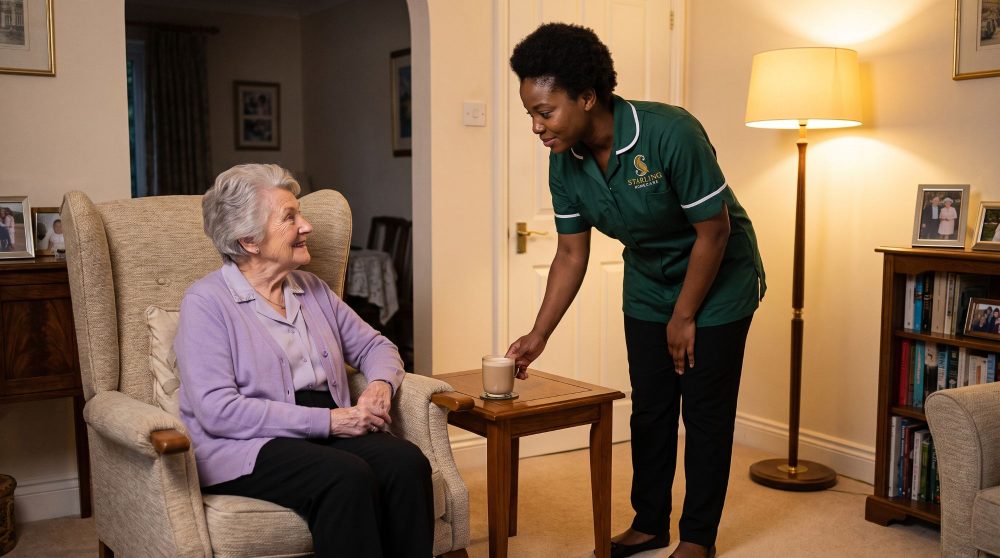
Overnight care in St Albans means a professional carer in the home from evening until morning, either sleeping nearby and getting up when needed, or awake and on duty all night. Families usually arrange it when the nights have become the hardest part of the day: someone is steady enough between breakfast and bedtime, but the hours in between have started to go wrong.
If that is where your family is, you are not overreacting. In our experience, nights are where relatives reach the limit of what they can safely cover, because nobody can be on watch until 3am and still work, drive and run their own home the next day.
Night cover at home is a well established service, not an unusual request. It can sit alongside daytime visits, or stand alone for someone whose days still run smoothly.
Why are nights the riskiest hours at home?
The National Institute for Health and Care Excellence (NICE) estimates that around 30 per cent of people over 65 living at home fall at least once a year, roughly 2.5 million people in England. Night-time stacks the odds. Waking suddenly, standing too quickly, a dark landing and a hurried walk to the bathroom are a difficult combination for anyone with unsteady balance.
Medication plays its part too. Tablets taken late in the evening can cause drowsiness or a drop in blood pressure exactly when someone is most likely to get up.
For a person living with dementia, waking at night can also bring real disorientation. The house they know well in daylight can feel unfamiliar at 2am, and that confusion is often when wandering or distress begins.
What a personal alarm does well, and where it stops
Many St Albans households already have a pendant alarm, often through Herts Careline, the community alarm and telecare service provided for Hertfordshire County Council. Its 24-hour monitoring centre, and options such as fall detectors, make it a sensible first step, and we would never talk a family out of one.
An alarm has one honest limit: it brings help after something has happened. It cannot steady the walk to the bathroom, and it cannot help someone who would not think to press it, or who takes it off at night because it is uncomfortable in bed.
That gap, between summoning help and preventing the fall in the first place, is exactly the ground an overnight carer covers.
What does an overnight carer actually do?
A good night starts before bedtime. The carer manages the settling routine properly: the evening medication prompt at the right hour, a last drink, the landing light on, everything the person needs within reach of the bed.
Through the night, the work is quiet and practical. A steadying arm for bathroom trips, calm reassurance if the person wakes confused, and small comforts, an extra blanket or a repositioned pillow, that let them settle back to sleep quickly.
In the morning there is a proper handover. The family knows how the night went, what changed and whether anything needs a closer look, rather than piecing it together from a worried phone call.
Sleeping nights, waking nights, and which one fits
On a sleeping night, the carer sleeps in a spare room and gets up when needed. It suits someone who wakes once or twice in a fairly predictable way.
On a waking night, the carer stays awake and alert for the whole shift. That is the right arrangement where waking is frequent, where dementia brings night-time activity, or where care cannot wait even a few minutes.
Our guide to overnight care at home explains both arrangements in more detail. And where days and nights both need cover, live-in care often becomes a simpler answer than assembling separate shifts.
How overnight care in St Albans usually starts
Three situations bring most St Albans families to us about nights. A stay in hospital ends and the first weeks back at home need watching. A night-time fall shakes everyone’s confidence, even when nothing was broken. Or a husband or wife has quietly stopped sleeping because they are listening for movement, and it is wearing them down.
Few families need every night covered. Starting with two or three nights a week is common, often the nights a relative cannot be there, and the pattern can change as needs change.
The change families mention first is rarely the practical one. It is that the person who had been doing the nights, often a spouse in their eighties, is sleeping again.
Our St Albans team arranges night cover across the city and the villages around it, from the same local team behind our daytime home care in St Albans. You can reach them on 01727 324 127 or at [email protected].
Common Questions About Overnight Care in St Albans
What does an overnight carer do during the night?
It depends on whether the night is a sleeping or a waking arrangement. In both, the carer manages the settling routine, helps with safe trips to the bathroom, prompts any night-time medication and reassures the person if they wake confused. The family receives a proper handover in the morning.
Is overnight care better than a personal alarm?
They do different jobs, and many homes sensibly have both. A pendant alarm summons help after something has happened. With overnight care in St Albans there is someone present before, during and after, so the fall or the frightening hour alone is far less likely in the first place.
Do we have to commit to every night of the week?
No. Many families start with two or three nights a week, often covering the nights a family member cannot, and adjust the pattern as needs change. Nights can also run alongside daytime visits or grow into live-in care if round-the-clock support becomes the right answer.
Nights are usually the first part of caring that a family cannot cover alone, and the part that responds fastest to proper help. If overnight care in St Albans is what your family needs, that is a reasonable place to start the conversation.
Arranging Care Is Simple
Starting care can feel like a big step. We keep it calm and straightforward, and we are here to guide you from your very first call.
1. Talk to us
Get in touch by phone or request a callback. We will listen, answer your questions and help you understand the options, so you can decide what feels right in your own time.
2. A home visit and initial consultation
We arrange a visit to understand your routines, your home and what matters most to you. Together we agree an initial consultation and shape the support that feels right.
3. Your care begins
A small, familiar team starts your care, arriving at the agreed times and staying involved as your needs change. We remain your trusted adviser throughout.
Whenever you are ready, we are here to help.