
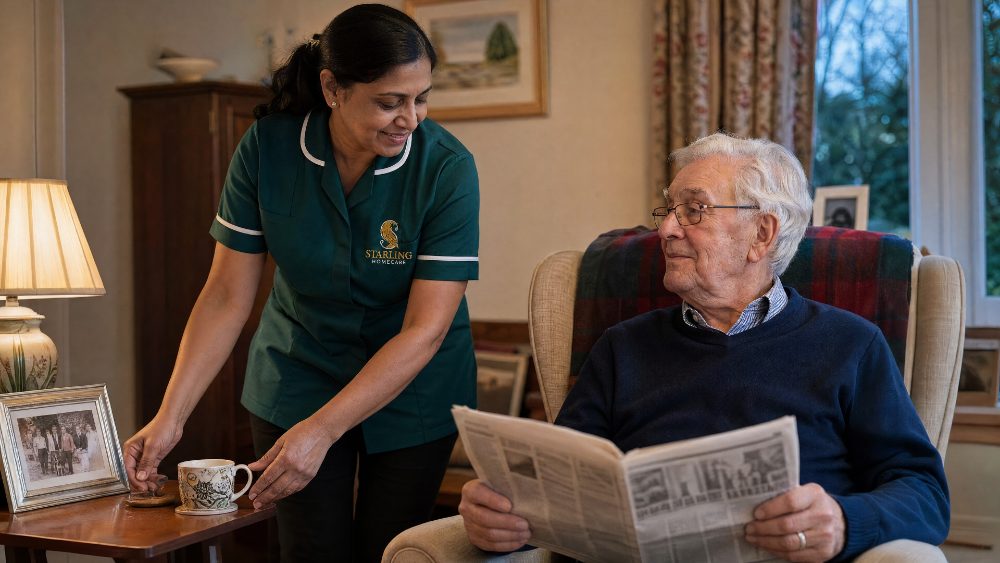
24-hour care in St Albans does not have to mean one particular service. It means someone is there whenever help is needed, day and night, and there are several ways to arrange that at home: a live-in carer, daytime visits with a night carer, or a team of carers working in shifts. The right one depends on what the nights actually look like and how much help the days need.
Families usually start asking about 24-hour care when something has changed. A fall, a hospital stay, or a run of difficult nights can make it clear that visits alone are no longer enough. It is a big step, and it helps to know the options before deciding anything.
Starling Homecare is an independent, family-run provider regulated by the Care Quality Commission. Our St Albans team arranges care across the city and nearby villages, including Marshalswick and Jersey Farm, and we set up each of the arrangements below. We have no reason to steer you towards one over another.
What does 24-hour care at home actually mean?
24-hour care means support is available around the clock, in the person's own home. It does not mean one carer stays awake for 24 hours. No carer can do that safely, so every arrangement builds in rest, breaks and handovers.
What changes from one arrangement to another is who is in the house, whether they are awake at night, and how the day is covered. Age UK confirms that 24-hour live-in care can be arranged through a care agency, and the same is true of night care and shift patterns. The question is which mix fits the person.
Option one: a live-in carer
A live-in carer moves into the home and is there through the day and the night. For many families this is the simplest form of 24-hour care in St Albans, because one familiar person runs the daily routine and is nearby after dark.
A live-in carer needs regular rest and time off during the day, and cover is arranged so support continues safely. In practice there is usually a main carer and a familiar second carer who covers the agreed breaks. The house needs a spare bedroom for the carer.
Live-in care works best when help at night is occasional: someone to hear a call, help to the bathroom once, or offer reassurance. Our live-in care starts from £255 a day. You can read more about how our live-in care works.
Option two: daytime visits with a night carer
Some people manage well in the day with visits, and it is the nights that have become the worry. In that case, visits during the day can be paired with a carer who stays overnight.
A night carer can work in one of two ways. A sleeping night means the carer sleeps at the home with the possibility of waking to help, which is how GOV.UK describes sleep-in shifts. A waking night means the carer stays awake all night, ready to help as often as needed. Our guide to overnight care in St Albans explains how families choose between the two.
This option suits someone who is fairly settled during the day, or who has family around in the daytime, but whose nights are broken or unsafe. Visiting care starts from £34 an hour, and night rates are agreed after an assessment.
Option three: carers working in shifts
When help is needed often through the night as well as the day, one live-in carer is not enough on their own, because they also need to sleep. The safer pattern is carers working in shifts, so there is always someone awake and fresh.
Shifts can be built in different ways. A live-in carer can be joined by a waking night carer, or a small team can cover the day and the night in set shifts. Some people also need two carers for certain tasks, such as moving safely, and that has to be planned in from the start.
This is the most intensive arrangement, so it is usually kept for people whose needs are high or unpredictable at any hour. It can also be used for a short spell, for example during the first weeks home from hospital, and then stepped down.
How do you choose the right kind of 24-hour care?
The right choice usually becomes clear from a few practical questions. It is worth talking them through as a family before an assessment.
- How often is help needed at night: rarely, once or twice, or many times?
- Is the need predictable, or can it arrive without warning?
- Does any task need two people to do it safely?
- Is there a spare room for a carer to live in?
- Is family nearby during the day, or are the days empty too?
Many families start with one arrangement and adjust it as things settle. If you are weighing live-in care against regular visits, our guide to live-in care or visiting care sets out the signs that point each way.
Paying for 24-hour care in St Albans
Most people arranging 24-hour care at home in St Albans pay privately, but it is worth checking what help is available first. Hertfordshire County Council can carry out a needs assessment, and the council says having one does not commit you to anything.
HertsHelp, the county's free advice service, can explain the next steps on 0300 123 4044. Age UK notes that a council can take its finances into account when deciding how to meet eligible needs, but not when deciding whether to meet them.
Prices in this article are our published starting rates, checked on 5 October 2026 against our live-in care costs guide. A firm price is always agreed after an assessment.
Common Questions About 24-Hour Care in St Albans
Does 24-hour care mean a carer is awake all night?
Not always. A live-in carer or a sleeping night carer rests at night and gets up when help is needed. If help is needed often, a waking night carer stays awake all night instead.
Can 24-hour care be arranged for a short time?
Yes. Some families arrange round-the-clock care for a few weeks, for example after a hospital stay or during a difficult patch. It can then be reduced to visits or nights only once things settle.
Who regulates 24-hour care agencies?
Every homecare agency in England must be registered with the Care Quality Commission, which inspects them and publishes its reports. It is worth checking an agency's latest report before you choose.
If you are in St Albans or nearby and would like to talk through which kind of 24-hour care might suit, our St Albans team is on 01727 324 127 or at [email protected]. You can also read more about home care in St Albans.
Arranging Care Is Simple
Starting care can feel like a big step. We keep it calm and straightforward, and we are here to guide you from your very first call.
1. Talk to us
Get in touch by phone or request a callback. We will listen, answer your questions and help you understand the options, so you can decide what feels right in your own time.
2. A home visit and initial consultation
We arrange a visit to understand your routines, your home and what matters most to you. Together we agree an initial consultation and shape the support that feels right.
3. Your care begins
A small, familiar team starts your care, arriving at the agreed times and staying involved as your needs change. We remain your trusted adviser throughout.
Whenever you are ready, we are here to help.