
The NHS opened its winter vaccination programme in England today, 1 September, and for most older people in Hertfordshire the date that matters is a month away. Winter vaccinations for people aged 65 and over begin on 1 October, and the invitation usually arrives before it.
Today's opening covers children and pregnant women, who are vaccinated first because flu spreads quickly among younger age groups.
If you are supporting someone at home, that gap between the two dates is the useful part. It is four weeks to sort out the things that actually stop people getting vaccinated, which are rarely the vaccine itself.
The two dates that matter this autumn
1 September. Flu vaccination opens for children and pregnant women. Most school-aged children will be offered it at school. Parents of two and three year olds, and of children in a clinical risk group, are invited through their GP practice.
1 October. Everyone else who is eligible. NHS England names the groups: people aged 65 and over, adults with some long-term conditions, care home residents, carers, close contacts of people who are immunocompromised, people experiencing homelessness, and frontline health and social care workers.
Flu usually peaks in December and January, which is why the older groups start in October rather than now. The Department of Health and Social Care says everyone eligible for a free vaccination will be notified by phone or in the post.
For scale, NHS England reports that nearly 19 million people in England had a flu vaccination last winter, and estimates around 104,000 hospitalisations were avoided as a result.
The line most family carers miss
Look again at that list of groups. Carers are on it.
Not paid carers only. Unpaid carers, meaning the husband, the daughter, the neighbour who does the shopping and the medication box. If you are looking after someone, you are eligible for a free flu vaccination in your own right from 1 October.
Almost nobody we speak to knows this. Families spend September organising an appointment for the person they care for and never book one for themselves, which is the wrong way round if you think about who would be hardest to replace for a fortnight.
It is the same blind spot the carer's leave rules run into: the support exists, and the person entitled to it is usually too busy to claim it.
If you are not sure the practice has you recorded as a carer, say so when you ring. It is a two-minute conversation and it also opens the door to a carer's assessment.
RSV: a smaller change, and who it now covers
Separately, from today the NHS year-round RSV vaccination programme has widened.
It now includes people aged 65 to 74 who have a weakened immune system, or certain long-term lung conditions. RSV is a viral infection that can make adults with long-term lung conditions seriously unwell and at risk of hospital admission.
Eligible people can be vaccinated through their GP practice or, in some parts of the country, a participating pharmacy, and should expect an invitation from the practice.
This one is worth checking rather than waiting on. It is a smaller group than the flu programme, so it gets less attention, and the people in it are precisely the ones a winter chest infection hits hardest.
Getting there is the part that usually goes wrong
In our experience, the vaccination itself is almost never the obstacle. The obstacle is the ordinary logistics around it.
An appointment offered at short notice, in a slot that does not fit. A pharmacy that means a bus. A letter that arrives and gets put behind the clock. A person who would rather not make a fuss and quietly does not go.
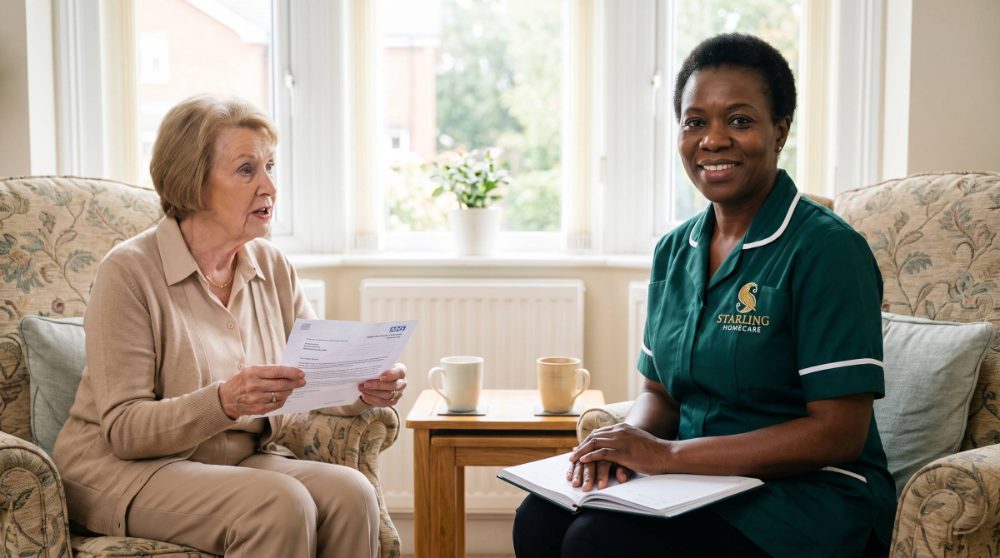
This is exactly the ground companionship care at home covers, and it is why we treat appointments as part of a care plan rather than an extra. Someone to notice the letter, ring the practice while the person is there to answer the questions, go along, and sit with them afterwards.
The week after is worth a thought too. Cold weather, shorter days and a slightly flat few days can be enough to change how steady someone is on their feet, and the ordinary risks around the house do not pause for it. Our guide to preventing falls at home sets out the practical checks.
What to do in the next four weeks
Four things, none of them urgent, all of them easier now than on 1 October.
- Check the GP practice has the right phone number and address for the person you support, and that it has you recorded as their carer.
- Work out in advance which appointment times would actually work, so you are not deciding on the phone.
- Sort transport now if getting there is a question, rather than the week the invitation lands.
- If the person has a long-term lung condition or a weakened immune system and is between 65 and 74, ask the practice about RSV rather than waiting for a letter.
None of this needs a decision about care. It needs a diary.
Common Questions About Winter Vaccinations in Hertfordshire
Do I need to book, or will the NHS contact me?
For most eligible people the invitation comes from the NHS, by phone or in the post, and eligible people can also book through the NHS website or the NHS App. If nothing has arrived by mid-October and you believe someone is eligible, ring the GP practice rather than assuming they have been missed on purpose.
Can a carer get a free flu vaccination?
Yes. NHS England lists carers among the groups eligible from 1 October, alongside people aged 65 and over, care home residents and frontline health and social care workers. Tell the GP practice you are a carer if it is not already on your record.
Can a home carer take someone to a vaccination appointment?
Yes, where it is part of the agreed care plan. Accompanying someone to appointments is ordinary companionship and personal care work, and for many families it is the difference between an invitation and an actual vaccination. What no care worker does is decide whether someone should have a vaccine. That is a conversation with the GP practice.
Where to start
If you take one thing from this, take the 1 October date and put it in a diary now, with a second line under it for yourself.
Nothing here is medical advice, and eligibility for any vaccine is a matter for the GP practice, which has the full picture. The NHS website carries the current eligibility detail and is the place to check anything specific.
For the practical side, arranging visits, appointments and the company to get to them, our St Albans office is on 01727 324 127 or [email protected].
Programme dates and figures checked on 1 September 2026 against NHS England's announcement of the same date, linked above. Eligibility can change; the NHS flu vaccine pages carry the current position.
Arranging Care Is Simple
Starting care can feel like a big step. We keep it calm and straightforward, and we are here to guide you from your very first call.
1. Talk to us
Get in touch by phone or request a callback. We will listen, answer your questions and help you understand the options, so you can decide what feels right in your own time.
2. A home visit and initial consultation
We arrange a visit to understand your routines, your home and what matters most to you. Together we agree an initial consultation and shape the support that feels right.
3. Your care begins
A small, familiar team starts your care, arriving at the agreed times and staying involved as your needs change. We remain your trusted adviser throughout.
Whenever you are ready, we are here to help.