
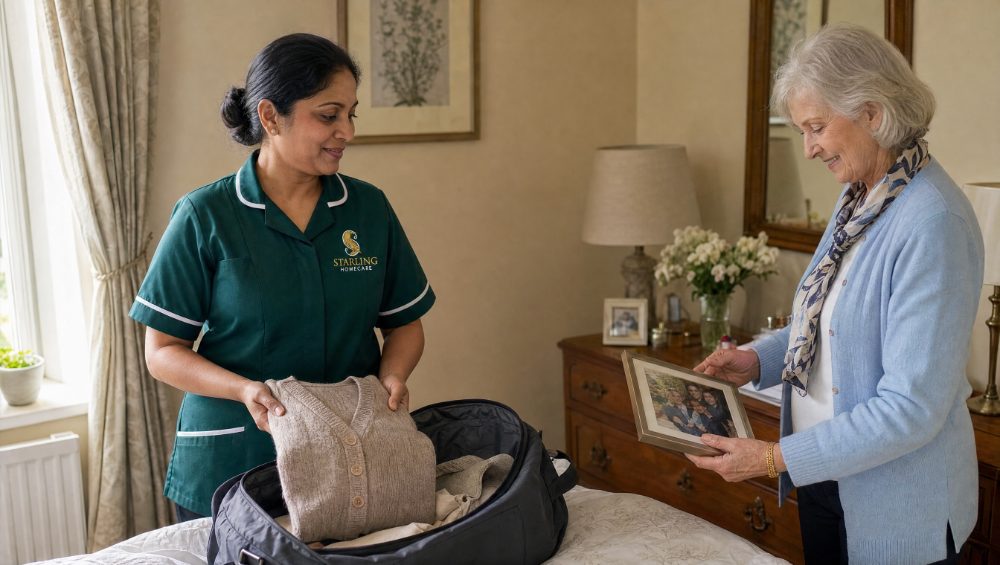
For a dementia hospital stay, take a completed "This is me" leaflet, a list of medicines, glasses, hearing aids, labelled clothes and one or two familiar things. Then tell the ward staff about the dementia straight away, along with anyone who visits or cares for your parent at home.
To talk anything through with someone local, our Harpenden team is on 01582 824 830.
Hospital can be frightening for someone with dementia, especially after a sudden admission. A little preparation makes a dementia hospital stay easier, because it helps staff see the person, not only the illness. If your parent is already waiting to come home, our guide to dementia and delayed hospital discharge picks up from there.
What should you pack for a dementia hospital stay?
Alzheimer's Society suggests packing with your parent where you can, so the bag feels like theirs. A short list works well:
- glasses and hearing aids
- nightwear and day clothes, each labelled with their name
- a list of current medicines, and any the hospital letter asks you to bring
- a photo album or music player to help them settle
- a copy of any lasting power of attorney or advance decision
However, leave anything irreplaceable at home. Also, keep a ready-made bag list somewhere obvious, because emergencies rarely give notice.
Why "This is me" matters
"This is me" is a free Alzheimer's Society leaflet about the person behind the diagnosis. It records their background, important people and places, routines, likes and dislikes. So a nurse who has never met Mum can learn that she settles with the radio on.
It works best when filled in by the people who know them well, with your parent involved where possible. Ideally, complete it before any hospital stay. You can download it from the Alzheimer's Society "This is me" page or call 0300 303 5933 for help getting one.
Your GP can also help with medical communication forms such as ReSPECT. These are completed with a clinician, so ask at a calm moment, not in a crisis.
Who should you tell on the ward?
First, tell the nurse in charge that your parent has dementia, and hand over "This is me". Then ask for the name of the nurse responsible for their care, so you know who to call. If staff seem busy, Alzheimer's Society suggests noting your questions and raising them at a quieter time.
West Hertfordshire Teaching Hospitals NHS Trust runs Watford General and St Albans City Hospital. It has a Dementia and Delirium Practitioner working Monday to Friday, 8am to 4pm. The trust also runs a Caring for Carers service. It can help you take part in treatment and discharge planning, and can refer you to Carers in Herts. The trust's dementia page also recommends "This is me" and familiar photos from home.
Also share any personal welfare lasting power of attorney or advance decision. That way, staff understand your parent's wishes from the start.
Can you visit and stay with them?
Since April 2024, CQC Regulation 9A has required hospitals to help inpatients receive visits. For outpatient and day appointments, people must be enabled to bring a family member, friend or someone else who supports them. A government review published in March 2026 kept the wording unchanged.
Alzheimer's Society adds that staff may let you stay beyond visiting hours to help, especially at mealtimes. So it is worth asking, and explaining what you can do.
What changes should you watch for?
Families often spot changes first. If your parent's behaviour changes suddenly, tell a nurse or doctor at once. It may be delirium. Offering drinks often matters too, since dehydration can make delirium worse.
If you believe your parent is getting worse and staff are not responding, Alzheimer's Society suggests asking about Martha's Rule.
Who should you tell at home during a dementia hospital stay?
Let the home care provider know, so visits can pause and the team can plan for the return. Also tell relatives, neighbours who usually check in, and any day centre or club.
Then start thinking about coming home early. Our guide to home care after hospital in Harpenden covers the first weeks back. It also helps to know what a care plan includes, as plans are often reviewed after a stay.
Frequently asked questions
Does Starling Homecare provide dementia care at home?
Yes. Starling Homecare is an independent, family run home care provider based in St Albans and registered with the Care Quality Commission. We support people living with dementia with visiting care in St Albans, Harpenden, Hemel Hempstead, Welwyn Garden City and Hatfield, Potters Bar and Cheshunt, and with live-in care across Hertfordshire.
Can I stay overnight on the ward?
Ask the nurse in charge. Hospitals must help inpatients receive visits, and staff may agree to longer hours if you are helping with care. Arrangements vary by ward and by circumstance.
Should I take Mum's own tablets in?
Follow the hospital letter for a planned stay, as it says what to bring. For an emergency, a written list of medicines and doses is the most useful thing you can hand over.
What if Dad is not eating in hospital?
Raise it with his named nurse. Alzheimer's Society says a person should never be forced to eat, and a dietitian can be involved if he is losing weight. It also suggests offering drinks and snacks often.
Is "This is me" still useful if Mum already has a care plan?
Yes. A home care plan stays with the care provider, while "This is me" travels with your parent.
Starling Homecare is an independent, family run home care provider in Hertfordshire, registered with the Care Quality Commission. We provide dementia care at home and support after a hospital stay, across Harpenden and Batford. Our Harpenden home care page explains how the local team works.
Guidance checked on 12 November 2026 against CQC Regulation 9A, Alzheimer's Society and West Hertfordshire Teaching Hospitals NHS Trust.
Arranging Care Is Simple
Starting care can feel like a big step. We keep it calm and straightforward, and we are here to guide you from your very first call.
1. Talk to us
Get in touch by phone or request a callback. We will listen, answer your questions and help you understand the options, so you can decide what feels right in your own time.
2. A home visit and initial consultation
We arrange a visit to understand your routines, your home and what matters most to you. Together we agree an initial consultation and shape the support that feels right.
3. Your care begins
A small, familiar team starts your care, arriving at the agreed times and staying involved as your needs change. We remain your trusted adviser throughout.
Whenever you are ready, we are here to help.