
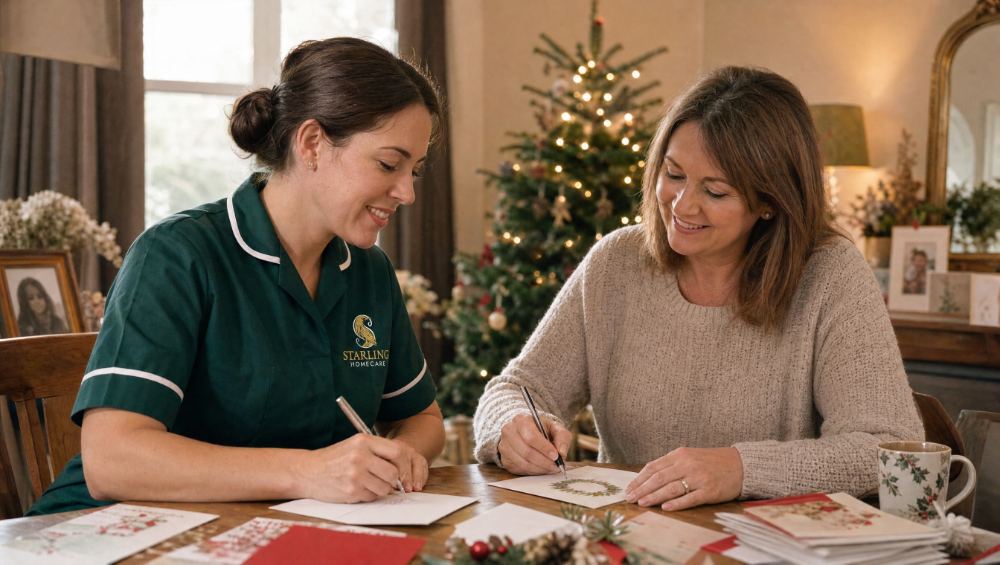
Planning FND at Christmas works best when you treat the season as several weeks to pace, rather than one big day to push through. Decide early what matters most, spread the effort across December, rest after busy days, and sort out medicines and support before the bank holidays.
To talk anything through with someone local, our St Albans team is on 01727 324 127.
This article is part of our guide to FND care at home.
Christmas brings more of almost everything: noise, travel, food, visitors and late nights. For someone with FND, that can mean a harder January. However, a little planning now can keep the good parts and soften the cost.
Why can Christmas be harder with FND?
Fatigue is a big part of it. The neurosymptoms.org page on FND fatigue explains that tiredness is often much worse after even a small amount of activity. Sometimes it arrives the next day, which catches people out after a lovely afternoon.
The same site lists common triggers for a flare. These include overdoing it, stress, another illness and a pattern of doing too much then crashing. December tends to offer all four.
Start with what matters most
First, ask the person with FND which two or three things they most want from the season. It might be the carol service, seeing a grandchild open a present, or simply a quiet Christmas morning.
Then build the plan around those moments and let other things go. Our everyday guide to FND fatigue and pacing explains the prioritise, plan and pace approach, and it works just as well for a whole month. Saying no to extras is part of the plan, not a failure.
Planning FND at Christmas across the whole of December
Spreading the load is the most useful single change. For example:
- shop online, or in short trips at quiet times
- write cards and wrap presents a few at a time, over several days
- leave a rest day after each big event
- let someone else cook, or keep the meal simple
- keep normal sleep and meal times as far as possible
Also, agree in advance what will happen if energy runs out. Knowing that a visit can end early, without fuss, often makes it easier to enjoy.
Hosting or visiting family
If you are hosting, set aside a quiet room where the person can rest without explaining themselves. Agree a simple signal for "I need a break", so nobody has to make a scene.
If you are travelling, plan rest stops and allow extra time. Then share the essentials with the hosts. A copy of the person's FND flare-up plan tells them what usually helps, and what does not.
Medicines and the bank holidays
In England, Christmas Day falls on Friday 25 December 2026. Boxing Day is a substitute bank holiday on Monday 28 December, and New Year's Day is Friday 1 January 2027, according to GOV.UK bank holidays. Many services work differently on bank holidays, so check opening times early.
So order repeat prescriptions well ahead. NHS Central East's Get Winter Ready advice says to order in good time, and notes the NHS App can be used for repeat prescriptions. It also suggests keeping everyday medicines at home, using Pharmacy First for many common conditions and calling NHS 111 when unsure.
Carers can help here by prompting medicines and checking supplies, as our guide to what home carers can do with medication explains. They never change doses or treatment.
If symptoms flare over the holiday
A flare at Christmas is disappointing, but it is not a disaster. Follow the usual plan, step back from the busiest part of the day and rest. The neurosymptoms.org guidance also warns against self-blame.
A symptom that is new, rather than familiar, still needs checking by a health professional, holiday or not. Use NHS 111 when you need urgent help and are unsure what to do, and 999 for an emergency.
Arranging support at home for the season
With FND at Christmas, a little extra help can make a real difference. Our FND care at home can take on the draining jobs, so the person saves energy for the moments they chose.
Where someone needs support through the day and night, live-in care can cover the whole season, including Christmas itself. It also gives the family carer a real break. Our page on the types of home care sets out how visiting and live-in care differ. Because December is busy for everyone, it helps to ask early.
Frequently asked questions
Does Starling Homecare provide fND care at home?
Yes. Starling Homecare is an independent, family run home care provider based in St Albans and registered with the Care Quality Commission. We support people living with functional neurological disorder (FND) with visiting care in St Albans, Harpenden, Hemel Hempstead, Welwyn Garden City and Hatfield, Potters Bar and Cheshunt, and with live-in care across Hertfordshire.
Should someone with FND skip Christmas events altogether?
Usually not. Choosing fewer events, going for shorter spells and resting afterwards often works better than missing out completely.
How do we explain FND to relatives we only see at Christmas?
Keep it short: the symptoms are real, they come and go, and rest helps. Then tell them one practical thing they can do, such as keeping the room quiet.
Can a carer come on Christmas Day?
That depends on what is arranged in advance. Live-in care is one way to make sure support is in place over the holiday itself.
Starling Homecare is an independent, family run home care provider based in St Albans, registered with the Care Quality Commission. We offer visiting care in St Albans, Harpenden, Hemel Hempstead, Welwyn Garden City and Hatfield, and Potters Bar, and live-in care across the rest of Hertfordshire. If a calmer December would help, we can talk through what support might look like and when it could start.
Figures and guidance checked on 12 November 2026 against GOV.UK bank holidays and NHS Central East.
Arranging Care Is Simple
Starting care can feel like a big step. We keep it calm and straightforward, and we are here to guide you from your very first call.
1. Talk to us
Get in touch by phone or request a callback. We will listen, answer your questions and help you understand the options, so you can decide what feels right in your own time.
2. A home visit and initial consultation
We arrange a visit to understand your routines, your home and what matters most to you. Together we agree an initial consultation and shape the support that feels right.
3. Your care begins
A small, familiar team starts your care, arriving at the agreed times and staying involved as your needs change. We remain your trusted adviser throughout.
Whenever you are ready, we are here to help.