
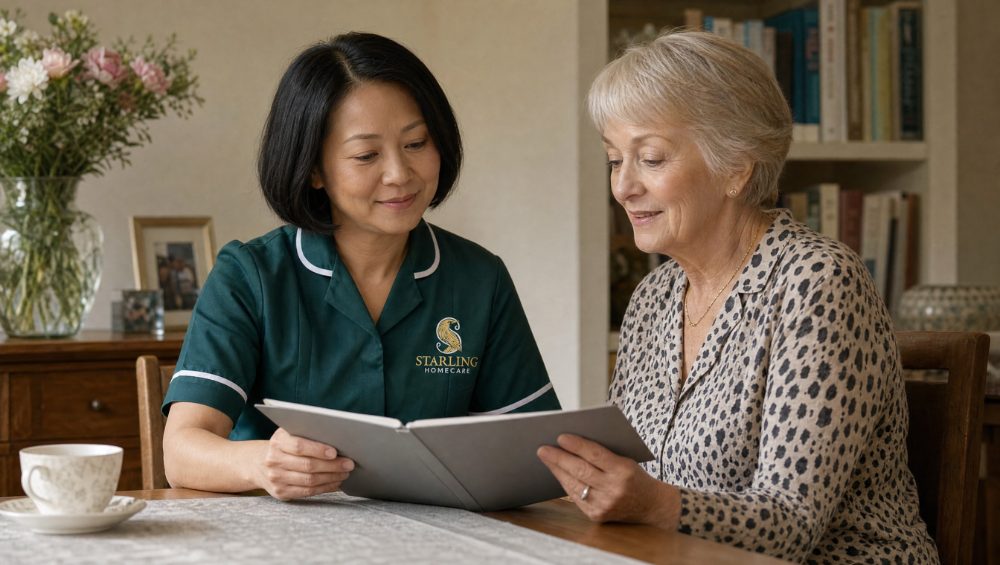
Stoma care at home from a paid carer should begin only after a stoma nurse has agreed what the carer will do, and that is how Starling works. In practice, a nurse sign-off means the carer helps with the bag in the way the nurse has set out, while the nurse keeps every clinical decision.
To talk anything through with someone local, our St Albans team is on 01727 324 127.
Coming home with a new stoma is a big change, for the person and for the family. So it helps to know who decides what, and where the carer's role starts and stops. For the practical side of supplies, our guide to ordering stoma supplies explains how prescriptions and deliveries work.
What does the stoma nurse do?
The stoma nurse is the specialist for the stoma itself. Before someone leaves hospital, the NHS says the stoma nurse makes sure they are comfortable wearing and changing their bag. After that, the nurse can advise on ordering bags and offer support.
Colostomy UK advises contacting the stoma care nurse about leaks and sore skin that does not settle, and says the nurse can suggest other bags or accessories. So for problems like these, the stoma nurse is the person to call.
In East and North Hertfordshire, the hospital trust's stoma care team advises patients and relatives in hospital and in the community. People can refer themselves, and the team advises an annual check-up. Its clinics run Monday to Friday, on 01438 284133. Elsewhere in the county, contact the stoma team at the hospital that cared for your relative.
What does a nurse sign-off mean for stoma care at home?
Skills for Care describes a delegated healthcare activity as one that a regulated professional, such as a nurse, hands to a paid care worker. In our service, stoma bag care is treated in this way.
For us, sign-off means the stoma nurse has seen the person and agreed the routine. That covers which products are used, how the bag is emptied or changed, and what normal looks like for that person. Then the carer follows that routine, and nothing else.
So a carer does not choose new products, change the routine or treat sore skin. Our carers do not insert anything or carry out clinical procedures. Anything outside the agreed routine goes back to the stoma nurse, the GP or NHS 111. You can read more about who does what in home care in our guide.
What does day to day help look like?
Much of it is about dignity and routine. Colostomy UK says bag changes are best done in the bathroom. Also, the person may want to do as much as they can themselves, so the carer may only fetch supplies, steady a mirror or tidy up afterwards.
Other people need more hands-on help. For example, a carer might empty a drainable bag, or change a closed bag, exactly as the nurse has shown. The NHS notes that how often a bag is changed varies from person to person.
Then there is disposal. Colostomy UK advises sealing a used bag in a disposal bag. It also suggests checking whether the local council offers a clinical waste collection.
What changes should carers report?
Carers watch, record and pass things on. Colostomy UK says a healthy stoma is pinkish red and moist, and that it is not normal for bags to leak. Sore or inflamed skin that does not settle should go to the stoma nurse.
The NHS guidance on colostomy complications sets out when to get help. For example, it says to speak to the stoma nurse urgently about cramps, feeling sick or swelling around the stoma. It also says to ask for an urgent GP appointment, or use NHS 111, for signs such as:
- a very high temperature, or feeling hot, cold or shivery
- a lot of blood from the stoma or in the bag
- signs of dehydration
- no output for much longer than normal for that person
- severe tummy pain, or being sick
What should families ask before care starts?
A few questions before stoma care at home begins save confusion later. First, who is the stoma nurse, and how do you reach them? Then, which products are used, where are they kept and who orders more?
Also ask what is normal for your relative, and what the person wants to do for themselves. Finally, agree who updates the plan after a nurse review. The same thinking applies to catheters, which our piece on living alone with a catheter covers.
Frequently asked questions
Does Starling Homecare provide stoma and catheter care at home?
Yes. Starling Homecare is an independent, family run home care provider based in St Albans and registered with the Care Quality Commission. We support people living with a stoma or catheter with visiting care in St Albans, Harpenden, Hemel Hempstead, Welwyn Garden City and Hatfield, Potters Bar and Cheshunt, and with live-in care across Hertfordshire.
Can a home carer change a stoma bag?
At Starling, yes, once a stoma nurse has signed off the routine for that person. The carer then follows the nurse's method. Anything clinical stays with the nurse or GP.
Who should we call if the bag keeps leaking?
The stoma nurse. Colostomy UK says bags should not leak, and the nurse can look at fit and products. A carer can note when leaks happen to help that conversation.
Are stoma bags free on prescription?
For a permanent colostomy, the NHS says the GP will prescribe bags free of charge. With a temporary colostomy, the NHS says you may need to pay.
Is there support for family carers?
Yes. Colostomy UK runs a Stoma Helpline on 0800 328 4257, 9am to 10pm, 365 days a year. It also runs workshops for professional and family carers.
Starling Homecare is an independent, family run home care provider based in St Albans and registered with the Care Quality Commission. Our stoma and catheter care sits within everyday personal care, with visiting care in and around St Albans, Harpenden, Hemel Hempstead, Welwyn Hatfield and Potters Bar, and live-in care across Hertfordshire. We work to the routine the stoma nurse sets, and we tell the family when something changes.
Figures and guidance checked on 12 November 2026 against the NHS, the East and North Herts stoma care team, Colostomy UK and Skills for Care.
Arranging Care Is Simple
Starting care can feel like a big step. We keep it calm and straightforward, and we are here to guide you from your very first call.
1. Talk to us
Get in touch by phone or request a callback. We will listen, answer your questions and help you understand the options, so you can decide what feels right in your own time.
2. A home visit and initial consultation
We arrange a visit to understand your routines, your home and what matters most to you. Together we agree an initial consultation and shape the support that feels right.
3. Your care begins
A small, familiar team starts your care, arriving at the agreed times and staying involved as your needs change. We remain your trusted adviser throughout.
Whenever you are ready, we are here to help.