
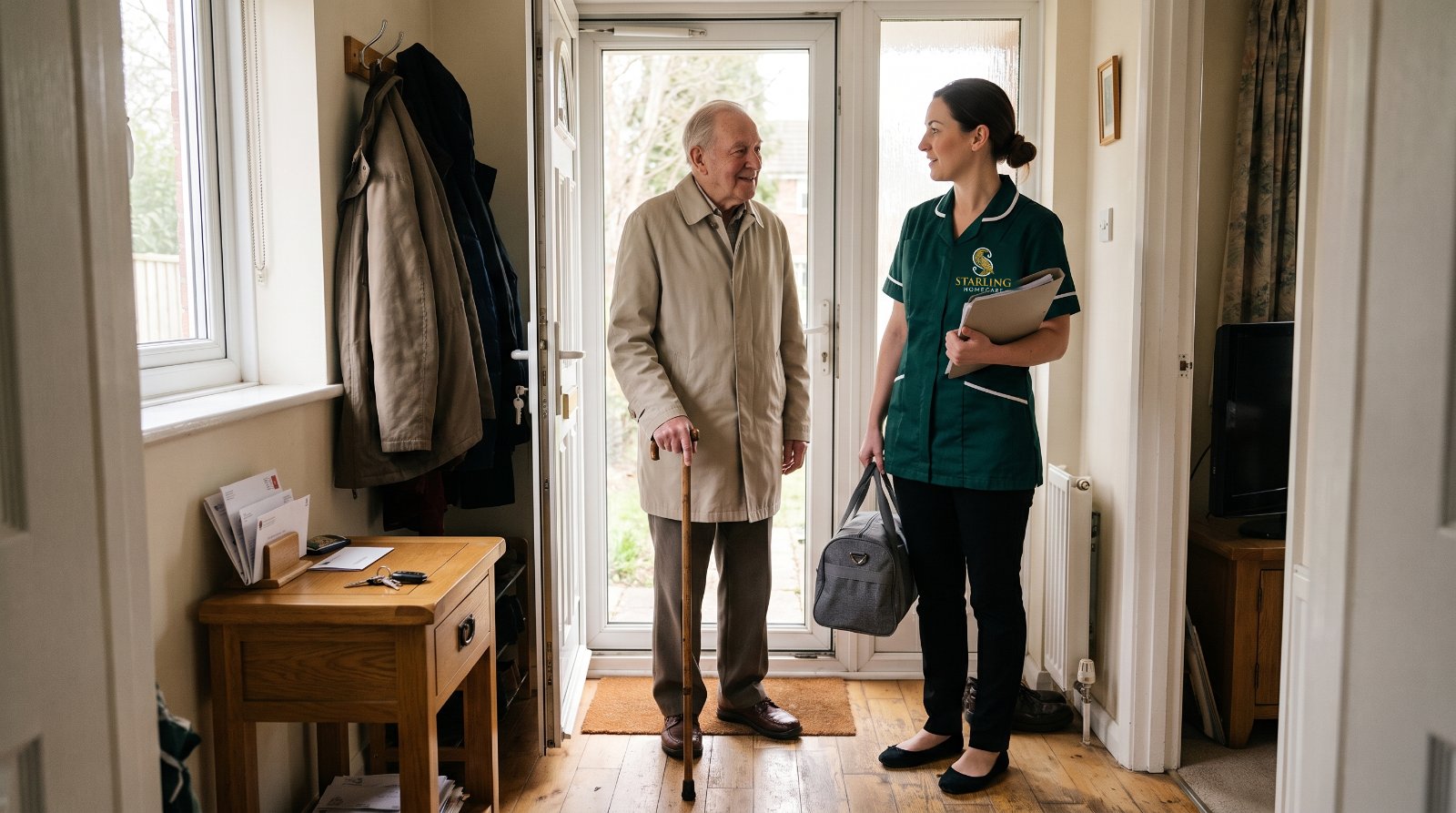
Families can help a dementia hospital discharge go smoothly by getting involved early, asking which discharge pathway is planned and having support at home ready for the day the person is fit to leave. That matters, because delays are common: in 2025 almost 29,000 people with dementia stayed in hospital at least a week after they were declared fit to leave.
To talk anything through with someone local, our Hitchin team is on 01462 534739.
That figure comes from Alzheimer's Society. A long stay on a busy ward can be hard for anyone, and especially for someone living with dementia. The good news is that much of what helps is in a family's hands, and it starts in the first days of an admission.
Why do people with dementia stay in hospital longer?
On 19 October 2026, Alzheimer's Society published analysis with HSJ Information. It found those delays added up to 584,080 bed days in 2025, at a cost of £328 million. The charity welcomed new winter funding and asked for action on discharge delays for people with dementia.
It also points to a Modern Service Framework for Dementia and Frailty, which the charity says is due before the end of 2026. Our explainer on how discharge to assess works covers that model in more detail.
What is changing at Lister Hospital this winter?
On 18 October 2026, the government announced almost £140 million for urgent care this winter. Lister Hospital in Stevenage receives £2 million. The money is for more escalation, general and acute beds, so patients can move from A&E to a ward more quickly at busy times.
That helps at the front door. However, leaving hospital still depends on the right support being ready at home, which is where families can make a difference.
Do families have a say in discharge?
Yes. The government's hospital discharge guidance explains that NHS trusts must involve patients and unpaid carers in discharge planning as soon as feasible, where appropriate. This duty comes from the Health and Care Act 2022.
Also, Alzheimer's Society is clear that you cannot be made to provide care, whatever your relationship. So be honest with staff about what you can manage, and for how long. If the person lacks capacity for a decision, it must be made in their best interests under the Mental Capacity Act.
Which dementia hospital discharge pathway applies?
The guidance describes four discharge pathways:
- Pathway 0: home with no new care needs.
- Pathway 1: home with new or extra health or social care support.
- Pathway 2: a short stay in a community bed with recovery support.
- Pathway 3: a care home for people likely to need long-term care, which the guidance says should be rare.
Alzheimer's Society notes that someone should not be excluded from intermediate care because of a dementia diagnosis alone. That support generally lasts up to six weeks and is free.
What should you ask the ward?
For any dementia hospital discharge, a short list of questions asked early saves a lot of chasing later:
- Who is the case manager or discharge coordinator, and how do we reach them?
- Which pathway is planned, and why?
- Has the council been asked to assess care needs? This is a right even if the person will pay for their own care.
- Will any care that stopped on admission be restarted?
- Will the person's communication needs and routines be shared with whoever supports them next?
- Is there a local home from hospital scheme for shopping or cleaning?
How can care at home be ready on the day?
For someone with dementia, a calm first day home counts for a lot. First, agree the arrival time so the first visit is there to meet them. Then tell the care team about routines, favourite foods and what tends to unsettle them.
Alzheimer's Society notes that moving more than once in a short time can be unsettling. So, where it is safe, going straight home with the right support is often worth discussing. Carers can help with washing and dressing and prompt medicines. Our guide to home care after hospital in Hitchin covers the first weeks.
Frequently asked questions
Can the hospital discharge Dad without telling us?
Hospitals should ask early who the patient wants involved, and must involve unpaid carers where appropriate. Tell the ward on day one that you are his carer, and ask to be kept informed about discharge plans.
Who pays for care after discharge?
Short-term intermediate care is generally free for up to six weeks. After that, longer-term support is usually assessed by the council and means tested. Alzheimer's Society says that in most cases people with dementia do not qualify for NHS continuing healthcare, but you can still ask for an assessment.
What if I cannot look after Mum at home?
Say so to the discharge team as early as possible. You cannot be made to provide care.
Where can I get dementia advice by phone?
The Alzheimer's Society Dementia Support Line is on 0333 150 3456.
Starling Homecare is an independent, family run home care provider registered with the Care Quality Commission, with a team covering home care in Hitchin and the surrounding villages. We provide post-hospital care at home, dementia care and live-in care.
Figures and guidance checked on 2 November 2026 against Alzheimer's Society and GOV.UK.
Arranging Care Is Simple
Starting care can feel like a big step. We keep it calm and straightforward, and we are here to guide you from your very first call.
1. Talk to us
Get in touch by phone or request a callback. We will listen, answer your questions and help you understand the options, so you can decide what feels right in your own time.
2. A home visit and initial consultation
We arrange a visit to understand your routines, your home and what matters most to you. Together we agree an initial consultation and shape the support that feels right.
3. Your care begins
A small, familiar team starts your care, arriving at the agreed times and staying involved as your needs change. We remain your trusted adviser throughout.
Whenever you are ready, we are here to help.