
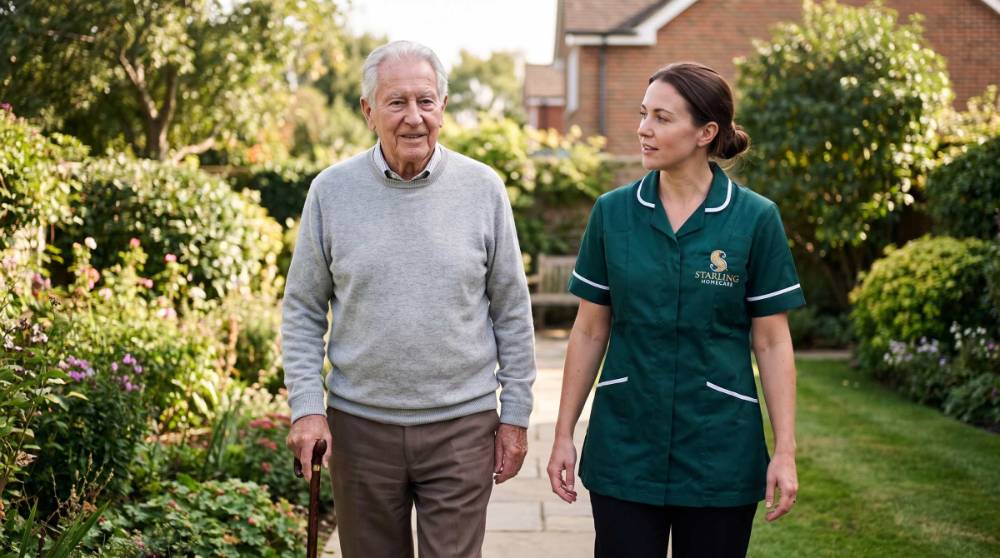
Preventing falls at home comes down to a handful of practical changes. Clear floors, good lighting, footwear that grips and regular strength and balance activity all count. So does honest help with the tasks that have become risky. None of them is complicated, and together they make a real difference.
Falls become more likely as people get older. A bad one can shake confidence long after the bruises have faded. Many families we support first picked up the phone in the week after a fall.
The reassuring part is that a fall is rarely just bad luck. You can spot and deal with most of the things that raise the risk. This guide sets out where to start.
What makes a fall more likely?
The NHS falls guidance lists the common causes plainly:
- muscles getting weaker with age
- conditions that affect mobility or balance, such as arthritis, stroke or Parkinson's
- low blood pressure
- side effects of some medicines
- problems with eyesight or hearing
- dementia
Notice that almost nothing on that list is about carelessness. Falls usually happen when several small things line up. That is why prevention means several small changes rather than one big one.
It also means a fall is worth mentioning to a GP even when nothing is broken, because the cause may be treatable.
Preventing falls at home: the changes worth making first
Start with the floor. The NHS advice is to keep clutter down and remove the things feet catch on. That means loose rugs, trailing wires and anything left on the stairs.
Then the smaller items that punch above their weight. Shoes and slippers should fit well, stay on and grip. A non-slip mat belongs in the bath or shower. Grab rails earn their place in the bathroom and on steps. And keep a personal alarm or mobile phone with you, not charging in another room.
Finally, arrange the home so everyday things need no climbing or stretching. Ask for help with lifting and reaching rather than chancing it. In our experience the hard part of preventing falls at home is not knowing what to change. It is that often nobody is in the house regularly enough to notice what needs changing.
In Berkhamsted, where many homes still have the only bedroom and bathroom upstairs, the stairs themselves are very often where this first becomes obvious; our piece on later life care at home in Berkhamsted looks at what that usually means.
Why strength and balance matter most in preventing falls
The NHS guidance for older adults recommends being active every day. It also recommends strength and balance activities at least twice a week. That can be as ordinary as walking, or a class built for the purpose.
Hertfordshire has real help here. The Hertfordshire Care Providers Association runs the StopFalls programme, funded by Hertfordshire County Council. It offers falls resources and chair-based exercise for older people across the county. Age UK also runs a free national advice line on 0800 678 1602.
Eating and drinking enough matters too, because being underfed or dehydrated can make anyone lightheaded. So do calcium and vitamin D for bone strength, plus regular eye and hearing checks. If balance has changed, ask a GP or pharmacist to look at the medicines.
When to involve the GP or a falls service
See a GP if you or a relative are worried about balance, or after any fall. They can run simple balance checks and refer on to a specialist falls service. A falls service can look for muscle weakness or weak bones and provide strength and balance training. It can also review medicines and check the home is safe.
In some areas you can refer yourself to a falls service without going through the GP first. The surgery's reception team or website will say whether that exists locally.
If someone has fallen and cannot get up, or may have hurt their head, back, neck or hip, call 999. If they are in pain or unwell after a fall, NHS 111 is the right door.
The free Hertfordshire help with preventing falls at home
If you are worried about falls, you can ask Hertfordshire County Council for a care needs assessment. It is free and anyone can ask for one. It looks at what help might be needed, including changes to make the home safer. We have written a plain guide to care needs assessments in Hertfordshire that walks through how to ask.
Where regular help at home is part of the answer, this is quiet work our carers do on every visit. They notice the curling rug, the slippers gone loose, the stairs taking more effort than last month. A familiar face who comes regularly is often the first to spot a risk rising. Our later life care at home is built around that kind of steady attention.
A carer does not replace a falls service, and we would never claim otherwise. What regular care adds is presence at the riskier moments of the day. It adds someone who notices change early enough to act on it.
If your bigger worry is a parent who lives alone, we have written separately about caring for someone living alone. Being alone changes what a fall means. If you would like to talk through what steady help at home looks like, we are on 01727 324 127.
Common Questions About Preventing Falls at Home
What is the most effective way of preventing falls at home?
No single change does it on its own. The NHS puts regular strength and balance activity at the centre, at least twice a week. Alongside it come clear floors, good footwear, grab rails where needed, and a medicines review if balance has changed.
Who should I contact after a fall?
Call 999 if the person may have injured their head, back, neck or hip, or cannot get up. Contact NHS 111 if they are in pain or unwell. After any fall, even one that seems harmless, see the GP. They can check balance and refer to a falls service.
Is there free help with falls prevention in Hertfordshire?
Yes. A care needs assessment from Hertfordshire County Council is free and open to anyone. It can recommend changes to make the home safer. The county-funded StopFalls programme offers falls resources and exercise support, and Age UK's free advice line is 0800 678 1602.
A fall is never something you can rule out, but it is something you can make far less likely. A few practical changes this week, and the right eyes on the situation, shift the odds.
Guidance on this page was checked on 20 August 2026 against the NHS falls guide, last reviewed by the NHS in March 2025, and the Hertfordshire Care Providers Association's StopFalls pages.
Arranging Care Is Simple
Starting care can feel like a big step. We keep it calm and straightforward, and we are here to guide you from your very first call.
1. Talk to us
Get in touch by phone or request a callback. We will listen, answer your questions and help you understand the options, so you can decide what feels right in your own time.
2. A home visit and initial consultation
We arrange a visit to understand your routines, your home and what matters most to you. Together we agree an initial consultation and shape the support that feels right.
3. Your care begins
A small, familiar team starts your care, arriving at the agreed times and staying involved as your needs change. We remain your trusted adviser throughout.
Whenever you are ready, we are here to help.