
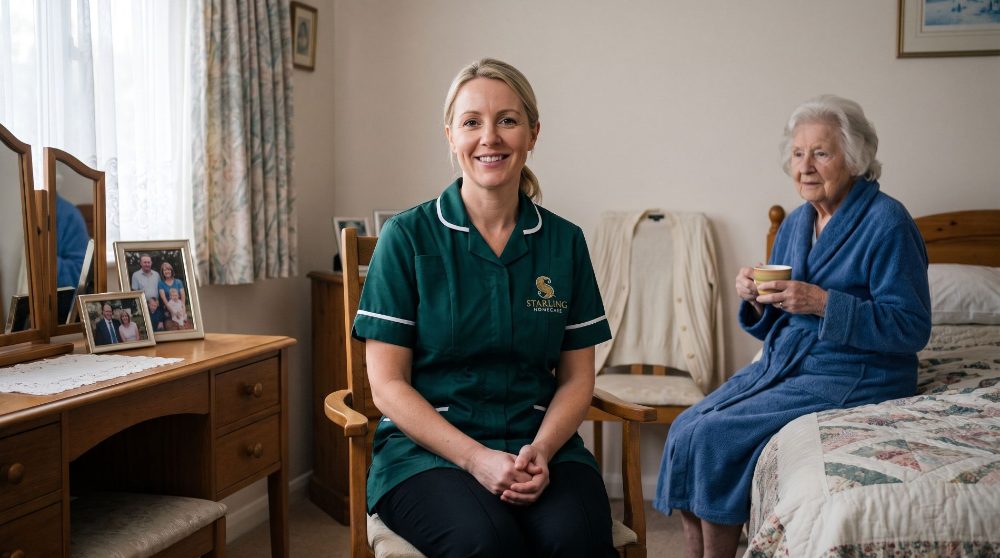
Rheumatoid arthritis morning stiffness often makes the first part of the day the hardest, and the NHS notes it often lasts longer than the half hour typical of osteoarthritis. What helps most is a slower, warmer and better planned start: heat, gentle movement, things laid out the night before, and help with the jobs that need a strong grip.
To talk anything through with someone local, our Harpenden team is on 01582 824 830.
Mornings matter because they set the tone. A rushed, painful start can leave someone tired and sore by lunchtime. A calm one can make the rest of the day feel possible. For the wider picture of daily life, our guide to helping someone with arthritis at home covers the jobs that quietly stop getting done.
Why are mornings so hard with rheumatoid arthritis?
Rheumatoid arthritis causes pain, swelling and stiffness in the joints, most often the hands, feet and wrists. According to the NHS guide to rheumatoid arthritis symptoms, stiffness is often worse in the morning or after a period of inactivity. A night's sleep is, of course, the longest inactive stretch of the day.
Symptoms also come and go. Flares, when the condition worsens for a time, are hard to predict. So a routine that works on a good day needs a gentler version for the bad ones.
If rheumatoid arthritis morning stiffness changes, lasts noticeably longer or flares become frequent, that is worth raising with the GP or rheumatology team. NRAS, the National Rheumatoid Arthritis Society, advises speaking to the team about regular flares or ones that do not settle.
Easing rheumatoid arthritis morning stiffness: what helps
Warmth first
Heat is the simplest tool. NRAS says hot baths or showers can ease early-morning stiffness and pain. It also suggests soaking stiff fingers in warm water, or using a microwavable wheat bag, to loosen them before trying buttons or taps.
In practice, a warm bedroom helps too. If the heating comes on before waking, the first movements are often easier.
Gentle movement before the busy part
Movement eases stiffness, while too little of it lets joints stiffen further. The NHS describes a balance between rest and activity. Arthritis UK suggests a few simple stretches, and finding activity the person enjoys. A physiotherapist can advise on what suits each person.
Time, and a plan made the night before
Rushing makes everything harder. In its tips for coping with morning pain and stiffness, Arthritis UK suggests laying out clothes and preparing breakfast the evening before, then waking a little earlier than needed.
Questions about when medicines are taken belong with the GP, pharmacist or rheumatology team. Families should not change timings themselves.
Small changes in the bathroom, bedroom and kitchen
Simple aids take the strain off stiff hands. NRAS collects many from people living with the condition, including:
- an electric toothbrush, soap dispensers for shampoo instead of squeezy bottles, and lever taps
- a lightweight microfibre towel or towelling dressing gown, so drying takes less effort
- tops with Velcro or poppers instead of buttons, elastic laces and a long-handled shoehorn
- a piece of ribbon or elastic on the end of zips for an easier grip
- a small jug for filling the kettle, and a kettle tipper for pouring
Getting equipment in Hertfordshire
Many small items are sold in high street shops. For more complex needs, Hertfordshire County Council's equipment service can assess daily life at home. Items recommended after an assessment, such as a grab rail, perching stool or chair raiser, can be loaned free of charge. For walking aids, the council suggests speaking to the GP.
How a morning care visit can be shaped
When rheumatoid arthritis morning stiffness is part of every day, a care visit should fit the person's own pattern. Some people like a carer to arrive after a warm shower has loosened things up. Others want help from the moment they get out of bed. Either way, the timing can be agreed at the start and adjusted as everyone learns what works.
During the visit, a carer can help with washing and dressing at an unhurried pace, make breakfast and prompt medication as agreed. They can also set up the rest of the day. For example, they can open jars, fill a light jug and leave lunch ready, so nothing later needs a hard grip.
On flare days the same visit simply does more, and on good days it steps back. The aim is to keep the person doing what they can, not to take over. In Batford, Southdown and across Harpenden, a morning visit can also be paired with an evening visit, as our article on morning and evening personal care visits in Harpenden describes.
Frequently asked questions
How long does morning stiffness last with rheumatoid arthritis?
It varies from person to person and from day to day. The NHS says it often lasts longer than 30 minutes, unlike osteoarthritis. Any change in the pattern is worth mentioning to the GP or rheumatology team.
Is it safe to rely on a hot shower when joints are stiff?
Warmth helps many people, but getting in and out can be the risky part. A grab rail or perching stool may make it safer, and the council can assess for these. Some people prefer to have a carer nearby for the shower itself.
Where can we get advice from people who live with rheumatoid arthritis?
NRAS runs a free helpline on 0800 298 7650, Monday to Friday. The NHS also points to its self-management programme and to local support groups.
Our Harpenden carers work for an independent, family run provider regulated by the Care Quality Commission. Visits start from 30 minutes, and our arthritis care at home can be arranged around the times of day that are hardest. Our home care team in Harpenden can talk through what a calmer morning might look like.
Figures and guidance checked on 2 November 2026 against the NHS, NRAS guidance on managing flares, Arthritis UK and Hertfordshire County Council.
Arranging Care Is Simple
Starting care can feel like a big step. We keep it calm and straightforward, and we are here to guide you from your very first call.
1. Talk to us
Get in touch by phone or request a callback. We will listen, answer your questions and help you understand the options, so you can decide what feels right in your own time.
2. A home visit and initial consultation
We arrange a visit to understand your routines, your home and what matters most to you. Together we agree an initial consultation and shape the support that feels right.
3. Your care begins
A small, familiar team starts your care, arriving at the agreed times and staying involved as your needs change. We remain your trusted adviser throughout.
Whenever you are ready, we are here to help.