
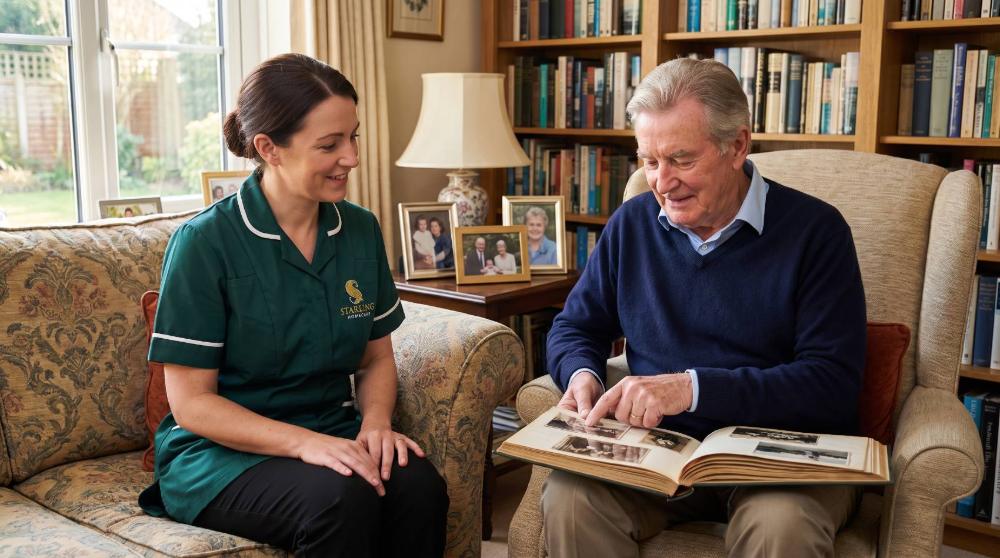
Support for older veterans in Hertfordshire comes from three places: NHS veteran services reached through the GP, armed forces charities such as the Royal British Legion and SSAFA, and the county's own Armed Forces Covenant partnership. Anyone who served for at least one day can ask. Families can also make the first contact for them.
To talk anything through with someone local, our St Albans team is on 01727 324 127.
Why is Remembrance a good time to ask?
Remembrance Sunday falls on 8 November, with the two-minute silence at 11am. Armistice Day follows on Wednesday 11 November. GOV.UK confirms the Cenotaph service will be shown on BBC, Sky and ITV.
For many families, this is also the week when a parent or grandparent talks about their service. That conversation is worth noticing. Many do not know that support exists just for veterans.
A quieter November can also bring loneliness into view. If that is part of the picture, our guide to companionship care across Hertfordshire explains how regular visits work.
How many older veterans live in Hertfordshire?
The Hertfordshire Armed Forces Covenant Board's 2025 to 2026 annual report records 25,849 veterans in the county, using Census 2021 figures. About half are aged 75 or over.
The same report draws on the county's 2025 needs assessment. It found that older veterans have higher rates of long-term physical health conditions and mobility problems. It also found that veterans are not always identified in health settings. Awareness of what they are entitled to is limited too, so the first step is often a simple one.
What NHS support for older veterans is available?
Tell the GP about their service
The NHS guidance for veterans says anyone who served for at least one day should tell their GP practice. It does not matter how long they served or when they left. Recording it helps the practice refer them to veteran services where relevant.
Locally, the board's report says over 70 Hertfordshire GP practices are accredited as veteran friendly.
Op RESTORE for physical health problems
Op RESTORE is the NHS service for physical health problems caused by military service. The GP makes the referral, and the person does not need to have been medically discharged. The Royal British Legion's guide to Op RESTORE explains who it is for.
Op COURAGE for mental health
Op COURAGE is the NHS mental health and wellbeing service for veterans and their families. The NHS also lists the Combat Stress helpline, 0800 138 1619, open 24 hours a day.
Which charities help veterans living at home?
These national lines are often the most useful first call:
- Royal British Legion: helpline 0808 802 8080, 8am to 8pm every day, with online chat at the same hours.
- SSAFA, the Armed Forces charity: Forcesline 0800 260 6780, Monday to Thursday 9am to 5pm and Friday 9am to 4pm. Its support for older veterans includes help with mobility and support after a bereavement.
- Veterans Welfare Service: one-to-one support for veterans and their immediate families, including bereaved families, on behalf of the Ministry of Defence. Call 0808 1914 218 and choose option 6, Monday to Friday 8am to 4pm.
It can help to make the first call together, with your relative in the room. That way they stay in charge of what is shared, and you can note down any next steps.
Where can families find local help in Hertfordshire?
Local support for older veterans starts with Hertfordshire Heroes, the public name of the county's Armed Forces Covenant Board. It brings together around 45 organisations, including councils, the NHS and charities. The site signposts local support and has a section for people caring for a veteran.
The board's report also notes that Carers in Herts received funding to support unpaid carers in the veteran community. For anything else, HertsHelp (0300 123 4044, weekdays 8am to 6pm) can point the way.
How does care at home fit alongside veteran support?
Veteran services and charities handle health referrals, welfare, money and advice. Day to day, however, many older veterans simply want to stay at home, among their own routines and memories.
That is where visiting care fits. A regular carer can help with washing and dressing, meals, medication prompting and getting out. They also notice small changes early and tell the family. Our companionship visits at home add time for conversation or a walk to the shops.
If your relative lives on their own, it is worth reading what to put in place when someone lives alone. On Remembrance Sunday, a carer can help them get ready and sit with them for the silence.
Frequently asked questions
Does my father need to have served in a war to count as a veteran?
No. The NHS counts anyone who served in the UK armed forces for at least one day as a veteran. That includes non-mobilised reservists, and it makes no difference how long ago they left.
Can family members get support as well?
Yes. NHS veteran services include families and carers, and the Veterans Welfare Service supports immediate family, including after a death. Hertfordshire Heroes also has information for people caring for a veteran.
Is Op RESTORE only for combat injuries?
No. It covers physical health problems caused by military service, whenever the problem appeared and whenever the person left. A GP in England makes the referral.
Can a home carer help with Remembrance at home?
Yes. A carer can help with dressing in good time and pinning on medals or a poppy. Above all, they can simply be there for the two minutes.
Starling Homecare is an independent, family run home care provider based in St Albans and registered with the Care Quality Commission. We offer visiting care from 30 minute visits upwards, and live-in care across Hertfordshire. We are not a veterans' charity, and we do not replace the services above. However, we can sit alongside them, so the person who served stays comfortable, connected and well supported at home.
Figures and guidance checked on 2 November 2026 against GOV.UK, the NHS and the Hertfordshire Armed Forces Covenant Board.
Arranging Care Is Simple
Starting care can feel like a big step. We keep it calm and straightforward, and we are here to guide you from your very first call.
1. Talk to us
Get in touch by phone or request a callback. We will listen, answer your questions and help you understand the options, so you can decide what feels right in your own time.
2. A home visit and initial consultation
We arrange a visit to understand your routines, your home and what matters most to you. Together we agree an initial consultation and shape the support that feels right.
3. Your care begins
A small, familiar team starts your care, arriving at the agreed times and staying involved as your needs change. We remain your trusted adviser throughout.
Whenever you are ready, we are here to help.