
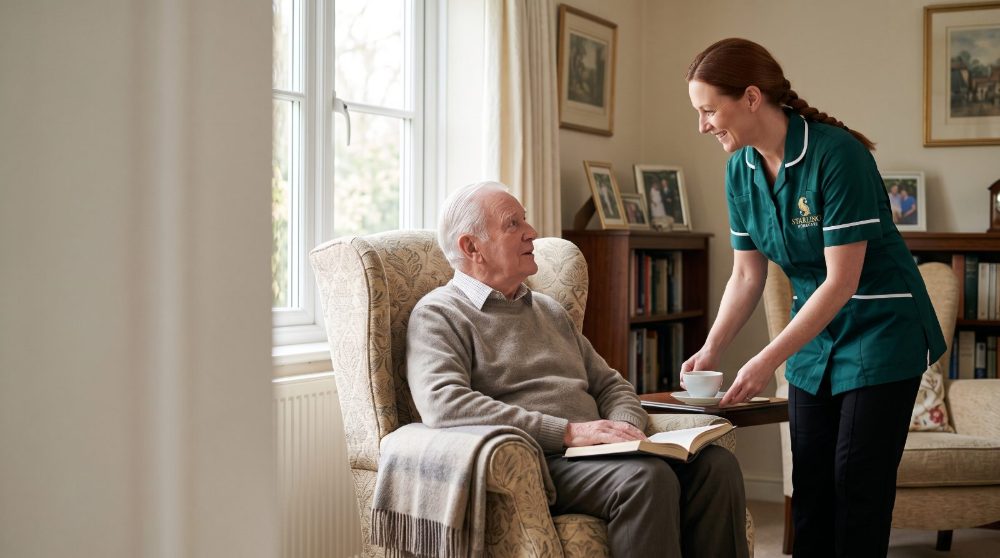
Home care after hospital in Tring means practical, personal support at home while someone finds their feet again. That can mean help with washing and dressing, medication reminders and gentle encouragement to move safely. It often bridges the point where short-term NHS support ends but recovery is not yet finished.
Coming home from hospital is a relief, but it can also feel daunting. The ward had staff on hand around the clock. Suddenly the house is quiet and the responsibility falls to the family.
This is one of the most common moments families in Tring contact us about. A little reliable help in the first weeks can make the difference between a steady recovery and a return trip to hospital.
What happens when someone comes home from hospital
Most NHS hospitals now use a model called discharge to assess. Rather than judging long-term needs from a hospital bed, the hospital sends the person home first and assesses their needs in their own surroundings.
This is usually better for older people, who tend to recover faster at home than on a ward. But it does mean the family must get support ready at home quickly, which can catch people off guard.
In the first days back, the priorities are simple: staying safe, eating and drinking well, taking medicines correctly and moving a little more each day.
What NHS reablement covers, and where it stops
If an assessment shows you need it, the NHS provides short-term reablement, also called intermediate care, free of charge. According to Age UK, this usually lasts up to six weeks and aims to help someone relearn daily tasks like washing, dressing and cooking.
Reablement is genuinely useful, but it is time limited. When the six weeks end, any ongoing help becomes the responsibility of the person or, if they qualify for support, the local council after a needs assessment.
This is where families often feel a gap. Recovery rarely runs to a neat timetable, and many people still need a steadying hand once the free period finishes.
How home care helps recovery after hospital in Tring
Private home care can start straight away, fill the gap when reablement ends, or run alongside NHS support for extra reassurance. The point is continuity, so you keep the progress made in those first weeks.
Day to day, that might mean help getting up and dressed, preparing meals, collecting prescriptions and prompting medicines at the right times. It also means someone keeping an eye out for warning signs, like a new infection or a loss of appetite.
For someone who needs support through the night as well as the day, our post-hospital and rehabilitation care can work as visiting calls or, where someone needs round-the-clock cover, as live-in care in Tring.
Reducing the risk of going back into hospital
Many readmissions are avoidable. They often come down to small things: a missed dose, a fall, dehydration or a problem that no one spotted in time.
Consistent home care reduces those risks by building a routine and noticing change early. A carer who sees the same person regularly will often pick up that something is not right before it becomes serious.
That early warning, combined with safe movement and good nutrition, is one of the most practical ways to help a recovery hold.
Local support for getting home from hospital in Hertfordshire
You do not have to manage the practical side alone. The Hospital and Community Navigation Service offers free help across Hertfordshire for people recently discharged, from wellbeing checks to collecting prescriptions and arranging equipment.
Age UK Hertfordshire runs hospital-to-home support for older residents, and HertsHelp can point you to local services on 0300 123 4044. People in Tring usually go to the West Hertfordshire hospitals, including Watford General, before coming home.
These services work well alongside home care, covering the early practical gaps while a carer supports the daily recovery.
How to arrange home care after hospital in Tring
It usually starts with a quick chat about what the person needs and how soon support could begin. We can often arrange care at short notice, which matters when a discharge date arrives suddenly.
We then agree a clear plan and match familiar carers, so the same people support the recovery week to week. As a CQC registered, family run provider, we keep the care steady and the standards high. You can read more about home care in Tring on the area page.
If someone is coming home to Tring and you would like to talk it through, our Tring team is on 01442 954 137 or [email protected].
Common Questions About Home Care After Hospital in Tring
How long does NHS care last after a hospital discharge?
Free NHS reablement or intermediate care usually lasts up to six weeks, according to Age UK. It aims to help someone regain independence after illness or injury. After that, you arrange any continuing care privately or, for those who qualify, through the council following a needs assessment.
What is reablement?
Reablement is short-term support that helps a person relearn everyday skills after a hospital stay, such as washing, dressing and preparing food. Rather than doing everything for someone, it encourages them to do as much as they safely can. The goal is to rebuild confidence and independence at home.
Do you have to pay for care after leaving hospital?
The initial NHS reablement period is free. Means testing covers any care needed beyond that, so whether you pay depends on income and savings. A needs assessment from Hertfordshire County Council will set out what support you may be entitled to.
In closing
Coming home should feel like the start of getting better, not the moment the help disappears. With a little steady support, most people recover more comfortably and safely in their own home than anywhere else.
If a hospital stay is ending and you would like to plan ahead, our home care team in Tring is here to help, on 01442 954 137.
Arranging Care Is Simple
Starting care can feel like a big step. We keep it calm and straightforward, and we are here to guide you from your very first call.
1. Talk to us
Get in touch by phone or request a callback. We will listen, answer your questions and help you understand the options, so you can decide what feels right in your own time.
2. A home visit and initial consultation
We arrange a visit to understand your routines, your home and what matters most to you. Together we agree an initial consultation and shape the support that feels right.
3. Your care begins
A small, familiar team starts your care, arriving at the agreed times and staying involved as your needs change. We remain your trusted adviser throughout.
Whenever you are ready, we are here to help.