
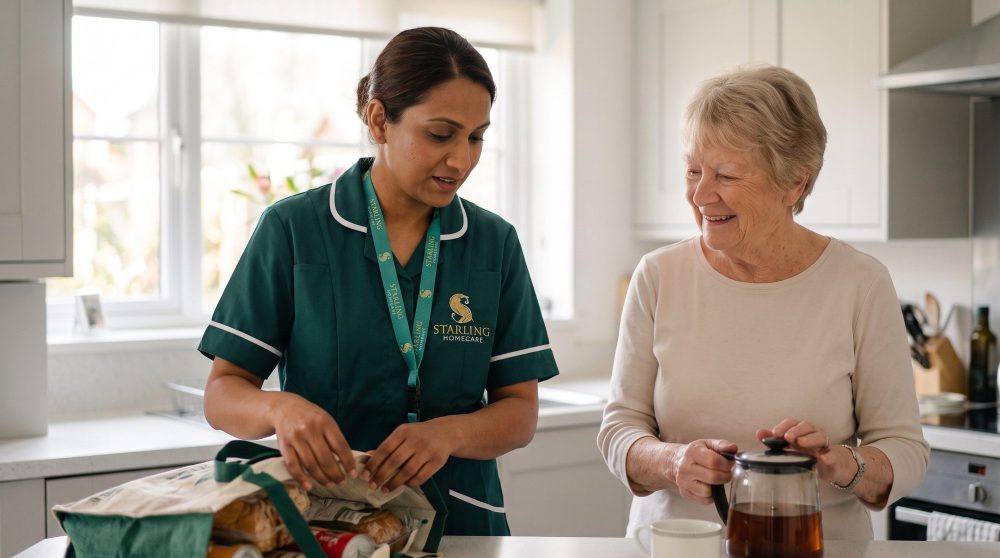
Help at home in Hitchin usually begins with something small: shopping brought in, a hot meal made, a lift to an appointment, a familiar face through the week. It does not have to start with a big decision about care. In our experience, support works best when it starts early and grows gently, shaped around the life someone already has.
Most families notice change slowly. The garden gets harder, the fridge a little emptier, the week a little quieter. None of it feels like an emergency, so nothing gets arranged.
That middle ground is exactly where help at home belongs. A few well-chosen hours each week can keep someone eating well, seeing people and staying on top of the house, long before anything more is needed.
We arrange this kind of support every day across Hitchin, so we know what a good starting point looks like. This guide explains what help at home means, why starting small matters, and what local support sits alongside it.
What does help at home actually mean?
Help at home is everyday, practical support that keeps daily life running. It covers things like shopping and meal preparation, light housework and laundry, collecting prescriptions, help with appointments and regular company.
It is not the same as personal care, which involves support with washing, dressing or medicines. Many people start with everyday help only, and add personal or later life care at home if health or confidence changes later.
Because the same visits bring company as well as practical help, the difference they make is often bigger than the task list suggests. Families we support often tell us the regular chat matters as much as the shopping.
Why does starting small make a difference?
Small, steady support protects independence rather than replacing it. Someone who keeps eating well, moving about and seeing a friendly face each week is far better placed to stay in their own home on their own terms.
The national direction of travel points the same way. Age UK's January 2026 analysis of the year ahead describes a health service committed to moving care from hospitals into communities, so that older people can stay independent for longer, keep good wellbeing and avoid crisis care, with new neighbourhood health services and a national programme to improve frailty care.
In plain terms, the system now recognises what families have long known. The right help at home, early, prevents bigger problems later.
What local support is there in Hitchin?
Hitchin is well served, and paid help works best alongside what the town already offers. The North Herts Healthy Hub, run by North Herts Council, is a free service offering wellbeing support and advice, with help that ranges from staying active to feeling less isolated; you can reach it on 01462 474111 or by emailing [email protected].
Herts Careline, also signposted by the council, provides community alarms and telecare, a reassuring backstop for someone living alone. Family, neighbours and community groups all add their own threads.
Visiting support ties those threads together. A carer who comes regularly can spot when something is off, prompt the right appointment and keep everyone in the picture, alongside everything else Hitchin offers. You can read more about our local team on our Hitchin area page.
How does visiting help fit around your week?
We build support around the week someone already keeps, not the other way round. Visits might be two mornings for shopping and lunch, or an hour each day to keep the house ticking over and share a cup of tea.
The same small team visits each time, so trust builds quickly and changes get noticed. As a CQC regulated provider, we plan every visit properly, review it regularly and keep families informed.
If needs grow, the plan grows with them, without starting again from scratch. Our guide to home care in Hitchin explains what fuller day-to-day support looks like when that time comes.
When should you think about more than everyday help?
Some signs suggest the level of support should rise: meals being skipped, medicines muddled, a fall or a near miss, or growing worry about the nights. Our guide to the signs your elderly parent needs help at home goes through these in more detail. None of these mean home stops being the right place.
They usually mean the plan needs another look, sooner rather than later. It often helps to talk it through with someone who arranges care every day, so you know what good support looks like before anything is decided.
Common Questions About Help at Home in Hitchin
What is the difference between help at home and home care?
Help at home covers everyday practical support such as shopping, meals, housework and company. Home care usually also includes personal care, such as help with washing, dressing or medicines. Many people start with everyday help and add more only if and when it is needed.
How do I arrange help at home in Hitchin?
Start with a conversation about what a good week looks like and where the gaps are. We then suggest a visiting pattern, introduce the small team who would come, and put a clear plan in writing. Support can usually begin with a handful of hours and adjust as you learn what helps most.
Can help at home start with just a few hours a week?
Yes. Many of the people we support in Hitchin began with two or three visits a week, often around shopping, meals or company. Starting small lets someone get used to a new face at their own pace, and the plan can grow later if it needs to.
Everyday support is often the step that keeps later life feeling like your own. If you are in Hitchin, Ickleford, Great Offley or nearby and would like to think it through, our Hitchin team is on 01462 534739 and at [email protected].
Arranging Care Is Simple
Starting care can feel like a big step. We keep it calm and straightforward, and we are here to guide you from your very first call.
1. Talk to us
Get in touch by phone or request a callback. We will listen, answer your questions and help you understand the options, so you can decide what feels right in your own time.
2. A home visit and initial consultation
We arrange a visit to understand your routines, your home and what matters most to you. Together we agree an initial consultation and shape the support that feels right.
3. Your care begins
A small, familiar team starts your care, arriving at the agreed times and staying involved as your needs change. We remain your trusted adviser throughout.
Whenever you are ready, we are here to help.