
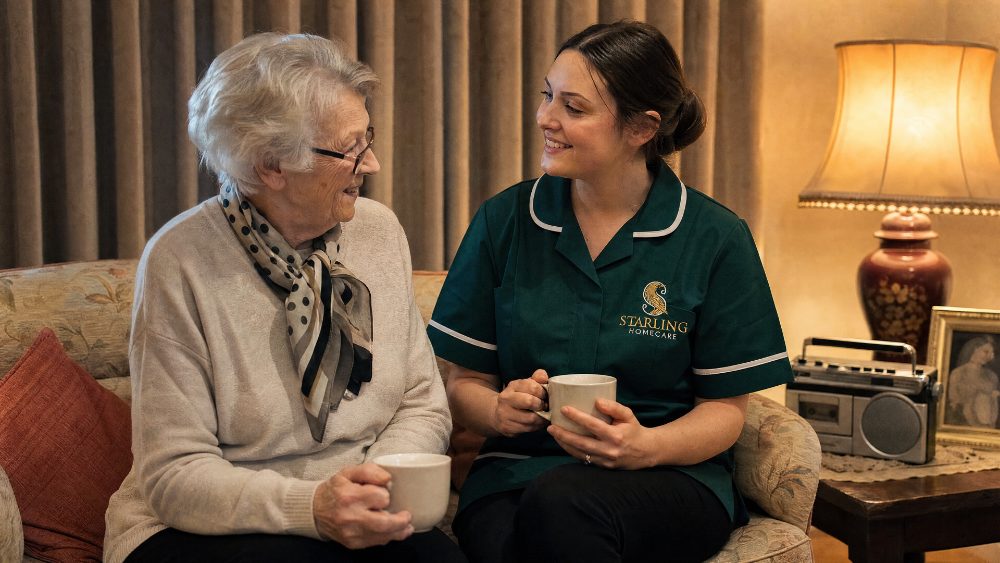
Fireworks and dementia can be a difficult mix, because sudden bangs and flashes may frighten someone who cannot work out where they are coming from. The kindest approach is to plan the evenings around Bonfire Night in advance, so your parent is somewhere familiar, warm and quiet, with a person they trust nearby.
To talk anything through with someone local, our Hemel Hempstead team is on 01442 954 137.
Why fireworks can be so frightening
The Alzheimer's Society explains that loud noises can confuse or scare a person with dementia, and can trigger unwanted memories. A bang outside may sound like a threat when the person cannot place it. Flashes through a window can be just as unsettling.
Timing adds to the strain. Fireworks tend to start once it is dark, which is often when a person living with dementia is already more tired. So a noise that a younger relative barely notices can feel much bigger to them. If the evenings are already a hard part of the day, our guide to dementia care at home in Hemel Hempstead covers how a settled routine helps.
When are fireworks likely this year?
Bonfire Night is Thursday 5 November 2026. However, displays and garden fireworks rarely stick to one night. Expect some noise on the weekends either side, so check local listings for the Old Town, Gadebridge and nearby areas.
The law gives families a rough idea of when it should stop. Under the rules on setting off fireworks, they must not be let off between 11pm and 7am. On Bonfire Night the cut-off is midnight. For New Year's Eve, Diwali and Chinese New Year it is 1am.
Planning ahead for fireworks and dementia
A little preparation makes the evening far easier to manage. The Alzheimer's Society suggests a few simple steps.
- Mention it beforehand. Tell your parent that fireworks are coming, and see how they feel about joining in or staying away.
- Ask the neighbours. If someone nearby is planning a garden display, your parent may prefer to be elsewhere that evening.
- Choose who will be there. Some people do not want to be alone, yet do not want to go out either. So plan an activity you can do together.
- Agree an exit plan. If you do go to a display, decide in advance who will take your parent home if it gets too much.
Setting up a calm evening at home
For many families, staying in is the right call. The aim is a room that feels ordinary and safe. Then the noise outside matters less.
The room
Draw the curtains before it gets dark, so flashes are hidden. Put the lights on early and keep familiar music or the radio playing at a comfortable level. Also, a warm layer helps, because the Alzheimer's Society notes that people may feel the cold more than you realise.
Something to do
Plan the evening around something your parent enjoys. A favourite film, an audiobook or a meal they love can all fill the time. The Alzheimer's Society even suggests a Bonfire Night dinner with favourite foods, which can help bring back good memories.
Watching from a distance
Some people still enjoy fireworks, as long as they are not too close. Watching from indoors, or on television or online, keeps the colour without the shock. Ear defenders or earplugs may help too, if your parent is happy to wear them.
If your parent becomes distressed
Even with good planning, a sudden bang can still cause alarm. Stay calm yourself, because your tone matters more than your words. Speak slowly, reassure them, and offer a hand or a hug if that is welcome.
Try not to argue or explain too much. For example, "It is only fireworks, you are safe with me" usually works better than a long reason. Then gently move attention back to the music, a drink or the photographs on the table. If hot drinks are part of the evening, check the temperature first.
Keeping the house safe as well as calm
Safety and calm go together. Hertfordshire Fire and Rescue Service recommends going to an organised display rather than holding one at home. Its firework safety advice also says to keep pets indoors throughout.
That matters if your parent has a dog or cat. A frightened pet can unsettle a person with dementia, and the reverse is also true. In practice, keep both together in the quiet room, with doors and windows shut.
Frequently asked questions
Should someone with dementia go to a fireworks display?
It depends on the person and the stage of their dementia. Some enjoy a professionally run display, especially one with low-noise fireworks. Others find crowds and bangs overwhelming, so a quieter night in suits them better.
Do ear defenders help with fireworks and dementia?
They can, if the person is comfortable wearing them. Try them on a quiet afternoon first, so they feel familiar. If your parent pulls them off, do not insist; closed curtains and music may do more.
Who can I ask for advice before Bonfire Night?
The Alzheimer's Society has Dementia Advisers on 0333 150 3456 who can give tailored advice. Your parent's GP or memory service can also help if distress is becoming a pattern. Our local team is happy to talk through practical options for the evenings.
Can a carer stay with my parent on fireworks night?
Yes, an evening visit or overnight care can be arranged, depending on what your parent needs. It helps to plan this a little ahead of the busiest nights.
How Starling Homecare can help
Starling Homecare is a family run, CQC registered home care provider based in St Albans, and our Hemel Hempstead team visits families across the town. Our dementia care at home can include a calm evening visit, companionship through the noisiest hours, or overnight care when nights are unsettled. You can read more about our work locally on our home care in Hemel Hempstead page.
Figures and guidance checked on 25 October 2026 against the Alzheimer's Society and GOV.UK fireworks rules.
Arranging Care Is Simple
Starting care can feel like a big step. We keep it calm and straightforward, and we are here to guide you from your very first call.
1. Talk to us
Get in touch by phone or request a callback. We will listen, answer your questions and help you understand the options, so you can decide what feels right in your own time.
2. A home visit and initial consultation
We arrange a visit to understand your routines, your home and what matters most to you. Together we agree an initial consultation and shape the support that feels right.
3. Your care begins
A small, familiar team starts your care, arriving at the agreed times and staying involved as your needs change. We remain your trusted adviser throughout.
Whenever you are ready, we are here to help.