
Eye injection appointments usually take longer than the injection itself, often one to two hours, and your parent will not be able to drive home afterwards. So the main things to arrange are a lift or other transport both ways, someone to keep them company, and a quiet rest of the day.
To talk anything through with someone local, our St Albans team is on 01727 324 127.
What happens at eye injection appointments?
Injections into the eye are used for conditions such as wet macular degeneration. The injection is quick. However, the visit around it is not.
In a Macular Society article, one patient describes his visits as a sight test, then a scan, then a talk with the consultant, and then the injection, and clinics differ slightly. The Macular Society says the whole appointment typically takes around one to two hours. Waiting times vary between clinics, so it is worth allowing longer.
Before the injection, the clinic usually puts drops in to widen the pupil. Guy's and St Thomas' NHS Foundation Trust, for example, says vision can be blurred for about four hours afterwards. That blurring is the main reason the journey home needs planning. Our article on helping a parent with hospital appointments covers the wider picture of outpatient visits.
How often will the appointments be?
This is often the bigger surprise for families. The Macular Society says treatment usually starts with injections every month for three or four months. After that, they are often every six to eight weeks, depending on how the eyes respond.
So this is rarely a one off trip. It is a regular commitment, sometimes for a long time, and the plan needs to be one the family can keep up.
Can my parent drive to their eye injection appointments?
Not on the way home. Guy's and St Thomas' says not to drive until the drops have worn off and the pupil is back to normal. The Macular Society adds that most people wait until the next day, and that the clinic's own advice comes first.
In practice, families often arrange one of these:
- a relative or friend who drives them and waits
- a taxi both ways, ideally with the same firm each time
- someone travelling with them on the bus or train, if your parent is comfortable with that
What about NHS patient transport?
In Hertfordshire, non-emergency patient transport is run by the East of England Ambulance Service. It is for people with a medical need for support during the journey. The local NHS says people who can travel by car or public transport without harm to their health are not eligible.
To check, call the booking line on 0345 605 1208. Have the NHS number, GP surgery details and both addresses ready. The NHS number is often on the appointment letter.
Should someone go with them?
Yes, if at all possible. The Macular Society suggests bringing someone, at least for the first appointment. In another Macular Society article, a patient who has the injections also recommends having someone with you.
A companion helps in practical ways, too. They can read signs and forms when vision is blurred, listen to what the consultant says, and note the date of the next appointment. On the way out, a steady arm through a busy hospital corridor is worth a lot.
How can you make the day itself easier?
A little preparation the evening before takes the rush out of the morning.
- Put everything by the door. The letter, glasses, a list of current medicines and any questions for the consultant.
- Pack for waiting. A drink, a snack and something to listen to, since reading may be hard after the drops.
- Keep the clinic's aftercare leaflet handy. It lists what to look out for and who to call. Put it by the phone at home.
Afterwards, plan a quiet afternoon. Have a simple meal ready, and avoid booking anything else that day.
What if family cannot get there every time?
With appointments every month or two, few families can cover every one. Some share them out on a calendar. Others arrange support for the dates nobody can manage.
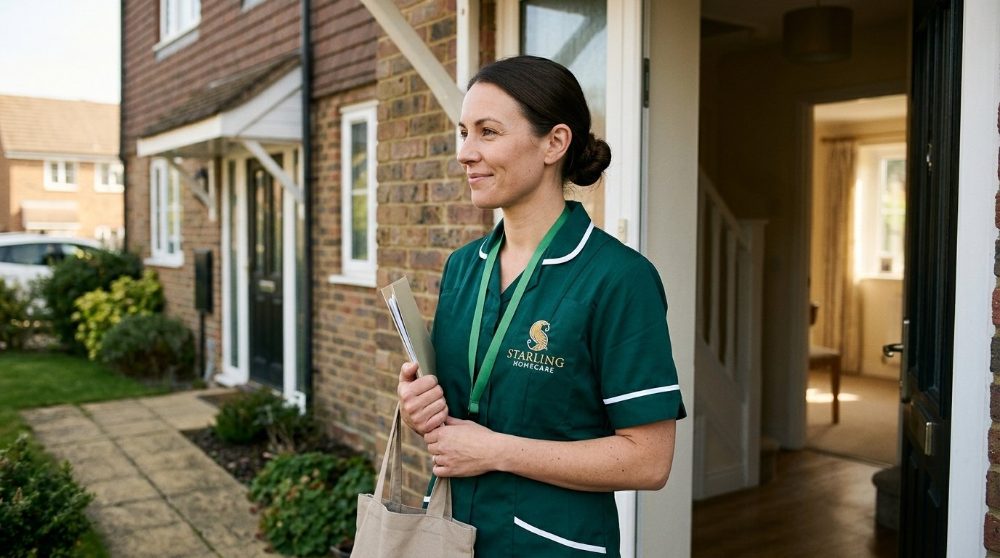
A carer from a home care service can travel with your parent, stay with them at the clinic and settle them back at home. How the journey is made is agreed in advance. Our guide to who does what in home care explains where a carer's role ends and the clinic's begins. For example, the eye team gives the treatment; the carer offers company and practical help. At home, small changes also help, and our piece on making a home safer with macular degeneration has ideas.
Frequently asked questions
Does Starling Homecare provide sight loss care in Hertfordshire?
Yes. Starling Homecare is an independent, family run provider based in St Albans and registered with the Care Quality Commission. We provide sight loss care at home in Hertfordshire, through visiting care and live-in care. You can read more on our sight loss care page.
Can my parent go to the appointment alone?
That is for your parent and the clinic to decide. Either way, they still cannot drive themselves home. The Macular Society suggests having company at least the first time, when everything is new.
Is there support for someone nervous about the injections?
Yes. The Macular Society runs a Treatment Buddy service, which matches people with someone who has had eye injections. Its helpline is on 0300 3030 111, Monday to Friday from 9am to 5pm.
Can we claim help with travel costs?
Possibly. The NHS says some people referred for specialist treatment can claim through the Healthcare Travel Costs Scheme. Ask the clinic whether your parent might qualify and how to claim.
What if my parent's sight gets worse between appointments?
Follow the clinic's aftercare leaflet and call the number it gives. The leaflet explains which signs mean calling straight away, rather than waiting for the next appointment.
Starling Homecare provides visiting care in St Albans, Harpenden, Hemel Hempstead, Welwyn Hatfield, Potters Bar and Cheshunt, and live-in care across Hertfordshire. Our pages on sight loss care at home and companionship care explain the help available, and our team can talk through dates and travel with you.
Figures and guidance checked on 8 November 2026 against the Macular Society's guide to eye injections, Guy's and St Thomas' eye injection leaflet and NHS Central East patient transport information.
Arranging Care Is Simple
Starting care can feel like a big step. We keep it calm and straightforward, and we are here to guide you from your very first call.
1. Talk to us
Get in touch by phone or request a callback. We will listen, answer your questions and help you understand the options, so you can decide what feels right in your own time.
2. A home visit and initial consultation
We arrange a visit to understand your routines, your home and what matters most to you. Together we agree an initial consultation and shape the support that feels right.
3. Your care begins
A small, familiar team starts your care, arriving at the agreed times and staying involved as your needs change. We remain your trusted adviser throughout.
Whenever you are ready, we are here to help.