
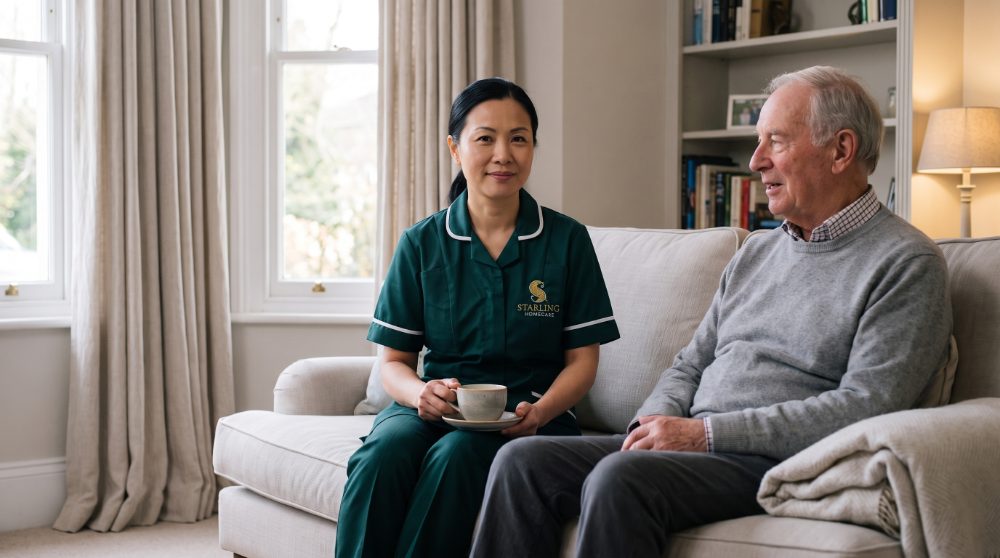
Diabetes foot checks matter because diabetes can dull feeling in the feet and affect circulation. So a small cut or blister can go unnoticed until it becomes an ulcer or an infection. A calm daily look, with any change reported quickly to the GP or foot team, is one of the simplest things a family or carer can do.
To talk anything through with someone local, our Radlett team is on 01923 988 550.
Why do diabetes foot checks matter so much?
The risk is real. Diabetes UK says people with diabetes are up to 20 times more likely to have an amputation, and the NHS lists foot ulcers and infections among the main complications.
The difficulty is that the warning signs are easy to miss. If feeling is reduced, a stone in a shoe or a rubbing seam may cause no pain at all. So the eyes have to do the work the nerves no longer can.
For an older parent, this often sits alongside other changes. For example, if memory is also slipping, our guide to diabetes and memory loss at home covers routines that help with meals and medicines too.
World Diabetes Day falls on 14 November, and this year's theme from the World Health Organization is "early action on diabetes". In practice, early action for feet means noticing a problem on the day it appears.
What happens at the yearly foot check?
NICE guidance says adults with diabetes should have their feet checked when diabetes is diagnosed and at least once a year after that. Diabetes UK says the check is arranged by the GP practice or diabetes clinic.
Shoes, socks and any dressings come off. The professional then looks at the skin, the shape of the feet and the footwear, and tests feeling and the pulses. Finally, they rate the risk of a foot problem as low, moderate or high.
Someone at moderate or high risk may be referred to the foot protection service. Because of this, it helps to ask two questions at the end of the appointment: what is my risk, and who do I call if something changes?
What does a good daily foot check look like?
Diabetes UK suggests looking at the feet before socks go on in the morning and again before bed. A mirror helps with the soles, used while sitting or lying down. Alternatively, someone else can do the looking.
A short, unhurried check covers:
- the tops, soles and heels, and between every toe
- any new redness, swelling or change in colour or shape
- blisters, cuts, cracks or hard skin
- any part of the foot that feels much warmer or colder than usual
- the inside of shoes, before they go on, for stones or rough patches
- socks that are not too tight and have no holes or thick seams
Diabetes UK also advises testing wash water with a wrist or elbow, avoiding soaking the feet, and keeping cream away from between the toes.
Which changes need a call within 24 hours?
Diabetes UK lists signs that need the local foot team urgently, within 24 hours:
- a change in colour or shape, especially a red, hot, swollen toe, ankle or foot
- part of the foot feeling much colder or hotter than usual
- a new blister, cut or wound, especially one the person cannot feel
- a wound that smells or leaks fluid or pus
- new or unexplained pain in the foot
If any of these appear, the person should sit or lie down and take the weight off the foot. Then contact the GP or foot protection team straight away, or the out-of-hours service if neither is available. However, signs of sepsis, such as confusion, blue, grey or pale skin, or fast breathing, mean calling 999.
Where does podiatry fit in Hertfordshire?
In west Hertfordshire, Hertfordshire Community NHS Trust runs a diabetes podiatry service for people who need foot treatment. Its listed clinics include St Albans, Borehamwood and Potters Bar.
Urgent referrals, for an infection or open wound, come through the GP surgery. Non-urgent referrals can come from the GP or through self-referral. The GP surgery can carry out routine foot screening, so families in Radlett and Shenley should start there if they are unsure which service applies.
What carers do with diabetes foot checks
In practice, a foot check fits naturally into a morning or evening visit, alongside washing, drying carefully between the toes and putting on clean socks. This is part of our personal care.
This steady observation is the core of our diabetes support at home, along with meals and prompting medicines.
Frequently asked questions
Can a family member test whether feeling has changed?
Yes. Diabetes UK's Touch the Toes test needs one helper and takes only a few minutes. If the person feels four or fewer of the six light touches, they should book a GP appointment for a full foot examination.
My dad says his feet are fine. Should we still look?
It is worth looking anyway. Reduced feeling is exactly what lets a problem go unnoticed, so "they feel fine" is not the same as "they are fine". A brief look framed as part of getting dressed usually feels less intrusive.
Is it safe to cut toenails at home?
Diabetes UK advises cutting nails often, but not too short or down the sides. If feeling in the feet is reduced, or there are worries such as ingrown toenails, Diabetes UK suggests seeing a foot specialist.
Should we use corn plasters or creams from the chemist?
Diabetes UK advises against products for removing corns or verrucas, because they can burn the skin and cause ulcers. For help with corns or other skin problems, it suggests speaking to a podiatrist.
How Starling Homecare can help
Starling Homecare is an independent, family run provider registered with the Care Quality Commission. Through our live-in care in Radlett and Shenley, live-in carers support people living with diabetes in their daily routines.
Figures and guidance checked on 2 November 2026 against NICE NG19 and Diabetes UK.
Arranging Care Is Simple
Starting care can feel like a big step. We keep it calm and straightforward, and we are here to guide you from your very first call.
1. Talk to us
Get in touch by phone or request a callback. We will listen, answer your questions and help you understand the options, so you can decide what feels right in your own time.
2. A home visit and initial consultation
We arrange a visit to understand your routines, your home and what matters most to you. Together we agree an initial consultation and shape the support that feels right.
3. Your care begins
A small, familiar team starts your care, arriving at the agreed times and staying involved as your needs change. We remain your trusted adviser throughout.
Whenever you are ready, we are here to help.