
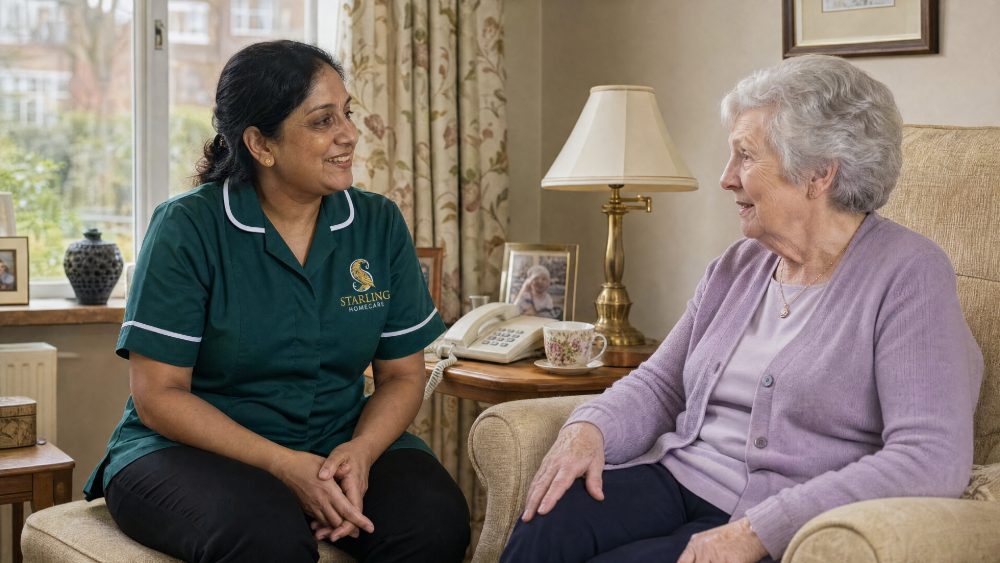
Heart failure help at home usually means practical support with what breathlessness and tiredness make hard, such as washing, meals and housework, plus someone who notices changes. The NHS says heart failure does not mean the heart has stopped or is about to, and treatment can keep it stable for many years. Call 999 for severe breathing difficulty.
To talk anything through with someone local, our Radlett and Shenley team is on 01923 988 550.
Hearing the words "heart failure" about your dad or mum can be frightening, even when the doctor explains them calmly. You might find yourself watching their breathing on every visit, or wondering whether the tiredness is new. If you live some distance away, or a brother or sister sees it differently, it can be hard to know what is normal and what needs a call.
Supporting someone living with a long-term heart condition at home is something our team knows well, and much of what helps is practical and steady.
What is heart failure, in plain words?
The NHS guide to heart failure says it is when the heart cannot pump blood properly. It does not mean the heart has stopped working or is about to. There is no cure, but treatment and lifestyle changes can help.
The NHS lists symptoms including breathlessness during everyday activities or lying down, feeling weak or very tired, swelling in the feet, ankles, legs or tummy, and sudden weight gain.
What helps day to day?
Most of what helps is routine. The NHS suggests:
- Taking medicine as the doctor has prescribed.
- Weighing regularly, because a build-up of fluid can cause sudden weight gain that may need treatment.
- Having any vaccinations offered.
- Staying active and eating a balanced diet.
The British Heart Foundation's guide to living with heart failure adds that pacing helps: breaking up activities with rest, and resting on the days before and after a busier one. It says propping up with pillows at night may help breathing, and that family and friends can help with shopping, cooking and errands. The BHF also says not to just stop taking medicines; any change to a dose is for the doctor or specialist heart failure nurse.
When should you get urgent help?
The NHS says to ask for an urgent GP appointment or get help from NHS 111 if your parent:
- Feels breathless when lying down or from everyday activity.
- Is coughing up frothy pink phlegm.
- Has suddenly gained weight.
It says to call 999 if they are having severe difficulty breathing (gasping, choking or not able to get words out), if their lips or skin are pale, blue or grey, or if someone has passed out and is not responding normally.
How do you raise help at home with your parent?
People with heart failure often push on until they are exhausted. Linking help to energy, rather than to illness, can make it easier to accept:
- "If someone does the hoovering, you'll have the energy for lunch with your friends."
- "The nurse said pacing helps. What if we got someone in for the heavy jobs?"
- "Would you be happy to meet someone for a chat? No decisions on the day."
When a parent is unsure about help, it can start with someone from Starling simply coming round for a chat. It does not have to be formal, and it often breaks the ice.
Who can help in Hertfordshire?
- Their GP or specialist heart failure nurse, for anything about symptoms or medicines.
- The BHF Heart Helpline on 0808 802 1234, freephone, Monday to Friday 9am to 5pm, where you can speak to a cardiac nurse.
- HertsHelp on 0300 123 4044, Hertfordshire County Council's free advice service. The BHF says social services can carry out a needs assessment and a carer's assessment.
How Starling Homecare can help
We are often called by sons and daughters, by husbands and wives, and by people arranging care for themselves. On the first call, our priority is to understand what is going on and what a day looks like for your parent now. Usually we then come out for an informal chat at home, and from there propose a care plan with your involvement and theirs, so they can live independently on their own terms.
Our later life care takes on the tiring jobs so your parent's energy goes on what they enjoy. It can include:
- Personal care: help with bathing, dressing and moving around the home.
- Meal preparation and help with drinks, in line with any advice from their health team.
- Light housekeeping and laundry, the heavier jobs that leave people breathless.
- Medication prompting and support, and wellbeing checks.
- Companionship, so pacing does not have to mean staying in alone.
- Visiting care in St Albans, Harpenden, Hemel Hempstead, Welwyn Hatfield, Potters Bar and Cheshunt, from 30 minute visits, with overnight or live-in care if needs grow.
Carers notice changes, keep you informed and pass concerns to the GP. They do not give injections or carry out clinical tasks, and they never change medicines. Support can rise or fall with need, every family receives a written quote, and there are no long-term or fixed-term contracts. Our guide to medication management at home explains how prompting works, and our article on later life care in Hertfordshire covers everyday support more broadly.
Areas we cover
Starling Homecare's carers visit people at home in St Albans, Harpenden, Hemel Hempstead, Welwyn Garden City and Hatfield, Potters Bar and Cheshunt, and the villages around them. Elsewhere in Hertfordshire, including Berkhamsted, Tring, Radlett and Shenley, Hitchin and Hertford, we arrange live-in care.
For more on the early stages, see our guide for families worried about an elderly parent. Locally, here is how we arrange live-in care in Radlett and Shenley.
Frequently asked questions
Can someone with heart failure keep living at home?
Many people do. The NHS says that while there is no cure, treatment and lifestyle changes can help manage symptoms and keep heart failure stable for many years. Practical help with washing, meals and housework can make pacing easier, and the GP or heart failure nurse remains the person to ask about any change in symptoms.
What does a home carer do for someone with heart failure?
A carer helps with the everyday tasks that breathlessness and tiredness make hard, such as washing, dressing, meals, laundry and housework. They prompt medication, notice changes and pass concerns to the GP or family. Starling Homecare's carers do not give injections, carry out clinical tasks or change medicines.
Can we get help at home for heart failure in Radlett or Shenley?
Yes. Our Radlett and Shenley team, on 01923 988 550, arranges live-in care across both villages and nearby Letchmore Heath and Aldenham. We would usually start with a phone call and an informal chat at your parent's home. In urgent situations care can usually start within a day or two.
If your mum or dad in Radlett or Shenley is living with heart failure and the days are getting harder, it can help to talk it through with someone nearby. Our Radlett and Shenley team is on 01923 988 550. You will be talking to someone who arranges care every day, so you know what good support looks like before you decide anything.
Guidance checked on 26 October 2026 against the NHS, the British Heart Foundation and Hertfordshire County Council.
Arranging Care Is Simple
Starting care can feel like a big step. We keep it calm and straightforward, and we are here to guide you from your very first call.
1. Talk to us
Get in touch by phone or request a callback. We will listen, answer your questions and help you understand the options, so you can decide what feels right in your own time.
2. A home visit and initial consultation
We arrange a visit to understand your routines, your home and what matters most to you. Together we agree an initial consultation and shape the support that feels right.
3. Your care begins
A small, familiar team starts your care, arriving at the agreed times and staying involved as your needs change. We remain your trusted adviser throughout.
Whenever you are ready, we are here to help.