
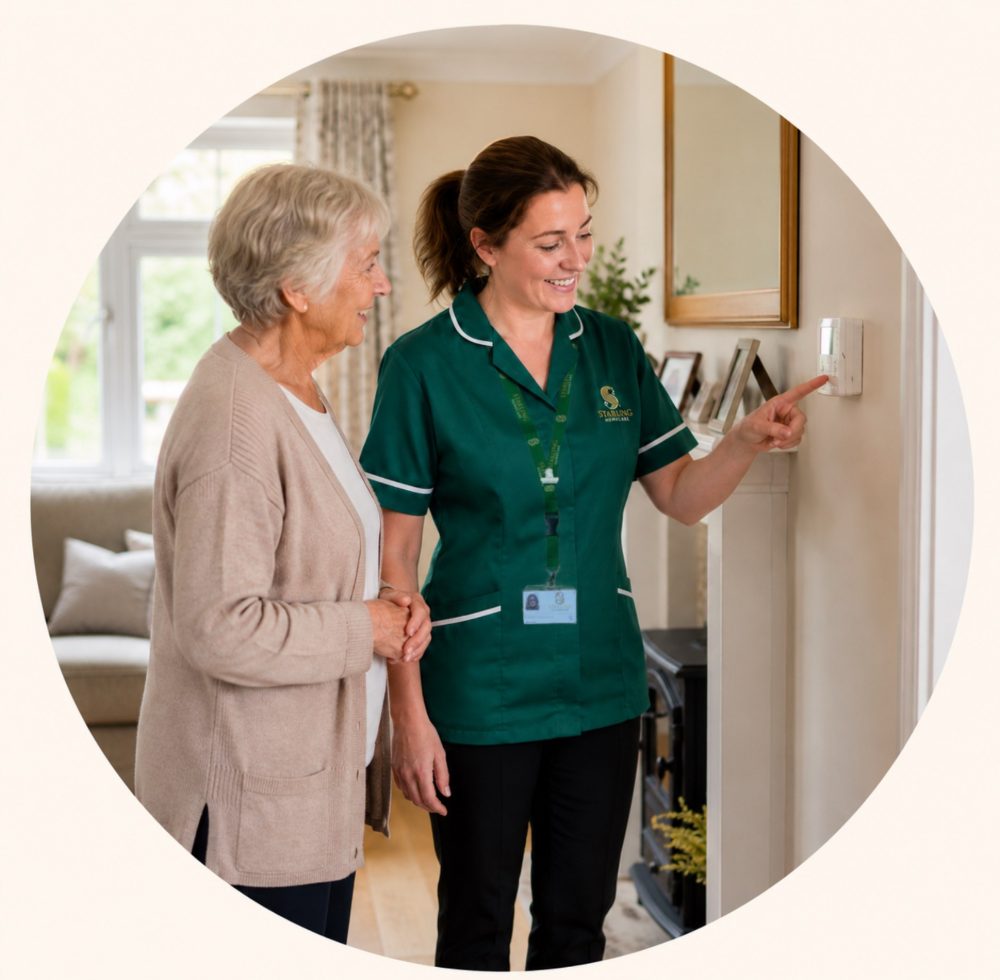
Managing medication safely at home rests on one dependable routine, so the right medicines reach the right person at the right time with someone keeping watch. Good medication management at home is what prevents missed doses, double doses and the small errors that quietly add up when someone takes several medicines a day.
Most people manage their own medicines well for years. The difficulty tends to arrive slowly, usually when a list grows longer or memory becomes less reliable.
This guide explains what good medication management at home looks like in practice, and how families can lower the risk of a mistake. It is general guidance, not medical advice. Decisions about medicines always rest with the person, their GP and their pharmacist.
Why medicines get harder to manage with age
The problem is rarely a single tablet. It is the number of them, and the different rules attached to each one.
Many older people take several medicines a day. Some need food, some an empty stomach, some only at night. Add eye drops, an inhaler or a weekly tablet and the routine becomes hard to hold in your head.
Doctors call this polypharmacy, and it is common in later life. In our experience, the first sign a family notices is small. A pile of muddled boxes, tablets still in last week's blister pack, or a repeat prescription that has run out.
None of this means someone has failed. It usually means the system has simply outgrown what one person can track alone.
What does medication management at home involve?
Medication management at home is the practical support that keeps the routine safe and on track. It covers far more than handing someone a tablet.
Day to day, it can mean reminding a person when a dose is due, or helping with awkward packaging. Where more is needed, a carer can give the medicine and record that it was taken.
It also covers ordering repeat prescriptions, collecting them, storing medicines safely, and watching for side effects to report to the GP.
Good support lives in a written record, not in memory. Carers keep a medication administration record, often called a MAR chart, so anyone involved can see each dose and its timing. As a CQC registered provider, we train our carers in safe medication support, and they follow a clear policy.
Prompting, assisting or administering: why the difference matters
Not everyone needs the same level of help. Matching the support to the person is the heart of doing this well.
Prompting is a reminder, where the medicines stay the person's own responsibility. Assisting is practical help, such as opening a bottle, while they still direct it. Administering is when the carer takes responsibility for giving the medicine, which calls for trained staff and proper records.
The right level can change over time, and it can differ from one medicine to another. Reviewing it honestly, rather than assuming, keeps a person both safe and in control.
How careful support reduces medication mistakes
A few simple habits, done consistently, prevent most everyday errors.
One routine and one written record mean nothing is guessed at. A small, familiar team helps too. Carers who know someone spot when things change, a new drowsiness or a skipped meal, and can raise it early.
Checking each dose against the pharmacy label is a quiet habit that catches problems early. Where a pharmacist provides a blister pack or dosette box, it can make the week clearer, though it does not suit every medicine.
A regular medicines review is worth asking for, especially once a list has grown long. The NHS offers structured medicines reviews for exactly this purpose.
Working alongside the GP, pharmacy and wider team
Medication support at home works best as part of a wider circle, not on its own.
Repeat prescriptions, dose changes and reviews sit with the GP and pharmacist. Good carers keep them informed rather than working around them, and for some medicines district nurses stay involved.
NICE, the body that sets care standards, publishes guidance on managing medicines for people receiving social care at home, and reputable providers work to it. This coordination is often what families find most reassuring, because one person is no longer holding the whole picture alone.
When to ask for help with medication at home
It is worth looking again at the routine when the early signs appear.
Missed or doubled doses, uncertainty about what each medicine is for, loose tablets around the house, or prescriptions that keep running out are all gentle signals. So is a new reluctance to talk about medicines at all.
Bringing in support early, while things are still manageable, is far easier than waiting for a fall or a hospital stay to force it. If you are weighing this up for someone you love, our guide to help with medication at home when tablets get missed walks through the practical next steps.
Common Questions About Medication Management at Home
What does medication management in home care involve?
It is the support that keeps a person's medicines safe and on schedule at home. Depending on need, it ranges from reminders and help with packaging to giving and recording each dose. It also covers repeat prescriptions, safe storage, and watching for side effects to report to the GP.
Can a home carer give medication?
Yes, trained carers can give medication where that level of support is needed and agreed. With a CQC registered provider, staff are trained in safe medication support, follow a policy and record each dose on a MAR chart. The level of help should always match the person's own needs and wishes.
How can families reduce medication mistakes at home?
A single clear routine, a written record and a familiar care team prevent most everyday errors. Checking each dose against the pharmacy label, asking for a medicines review, and using a pharmacist-prepared blister pack where suitable all help. The aim is to make the week simpler, not to take over.
Arranging medication support that fits
Medicines are one of the most common reasons a confident life at home starts to feel precarious, and one of the most fixable. With a calm routine, a clear record and the right level of support, most people can keep managing their medication at home safely for a long time.
If you would like to talk through medication support for someone in Hertfordshire, our medication management and support team is glad to help, and our care funding guide explains how to pay for home care. You can reach our St Albans head office on 01727 324 127 or at [email protected].
Arranging Care Is Simple
Starting care can feel like a big step. We keep it calm and straightforward, and we are here to guide you from your very first call.
1. Talk to us
Get in touch by phone or request a callback. We will listen, answer your questions and help you understand the options, so you can decide what feels right in your own time.
2. A home visit and initial consultation
We arrange a visit to understand your routines, your home and what matters most to you. Together we agree an initial consultation and shape the support that feels right.
3. Your care begins
A small, familiar team starts your care, arriving at the agreed times and staying involved as your needs change. We remain your trusted adviser throughout.
Whenever you are ready, we are here to help.