
Elderly parent hoarding is taken seriously by the NHS. It describes hoarding disorder as a mental health condition, and suggests encouraging the person to see their GP. The charity Mind advises going gently: focus on safety, such as fire safety and emergency access, rather than a full clear-out. If anyone is in immediate danger, call 999.
To talk anything through with someone local, our Harpenden team is on 01582 824 830.
You might have walked into your mum's or dad's house and felt your heart sink. It can be sad to see a home become hard to move around. It can also be frustrating when help is turned down. You may also worry about a fire, while a brother or sister sees no problem at all.
This is a situation our team knows well, and there is a calm, respectful way through it.
What can elderly parent hoarding mean?
It can mean more than untidiness. The NHS page on hoarding disorder says a person with the condition collects so much that daily life is affected. Letting things go feels very hard.
The NHS says it can make cooking, cleaning and paying bills difficult, and cause disagreements with family. It lists grief, bereavement and other major life changes among the possible risk factors.
The NHS also says many people with hoarding disorder are not aware of it. Family, friends or neighbours often notice first.
What should I do first about elderly parent hoarding?
Start with safety, not stuff. Mind's guide to helping someone who hoards says focusing on things such as fire safety and emergency access can make the home safer, without completely clearing everything.
Here is a safety first checklist, built from Mind and Hertfordshire Fire and Rescue guidance:
- Today: check there is a clear route out of the house, and that door and window keys are within easy reach. Hertfordshire Fire and Rescue says to keep the escape route clear of obstructions.
- Today: test the smoke alarms. The fire service advises testing each one monthly.
- This week: complete the fire service's online home fire safety self-check together. It takes about 15 minutes and may lead to a free home visit.
- This week: encourage your parent to see their GP, as the NHS suggests.
- This month: ask your parent what would help, such as sitting with them while they clean. Mind suggests letting them decide.
What should I avoid doing?
Mind is clear that a secret or sudden clear-out is not the answer. It says clearing, throwing away or tidying someone's things without their consent rarely helps in the long term and can make the problem worse.
Mind also advises against:
- pressuring, tricking or forcing them to clear items
- moving or touching things without permission
- threatening to cut contact or to call the council
- expecting quick results, because decisions about items can take months or years
That can feel slow when you are worried. However, going at their pace keeps you as their son or daughter, not the person who took their things.
How do I raise it with my parent?
Use respectful words and lead with care. Mind suggests avoiding words like "junk" or "rubbish", and remembering that the things they keep matter to them. You could try:
- "I'm not here to throw anything out. I'd just like to make sure you can get to the front door easily."
- "Is there one room you'd like to be able to use again? I could help, at your pace."
- "Would you come with me to see the GP? I'd feel better if we asked together."
Mind also says to respect boundaries about visits, and to celebrate small steps when they come.
Who can help in Hertfordshire?
Several services can help, and the GP is the usual starting point.
- Their GP: the NHS says a GP usually refers the person to a mental health specialist. Talking therapy can help, but may take time.
- Hertfordshire Fire and Rescue: free home fire safety visits for residents at greater risk, including older people and people living alone.
- Mind: the NHS lists Mind's helpline on 0300 123 3393 for information and support.
- HertsHelp on 0300 123 4044, Hertfordshire County Council's free advice service.
- Hertfordshire adult safeguarding on 0300 123 4042, day or night, if you are worried an adult cannot look after themselves. Mind suggests discussing this with your parent first, unless there is a serious safety risk. In immediate danger, the council says call 999.
How Starling Homecare can help
With elderly parent hoarding, Starling Homecare offers steady, practical help at your parent's pace. Our role is not a clear-out. A regular carer helps with the things your parent agrees to, and trust builds over time.
Our domestic support and housekeeping visits start from 30 minutes and can include:
- tidying and light cleaning, in the spaces your parent is happy for us to help with
- laundry and changing bed linen
- meal preparation and help with the food shop
- taking the bins out and basic recycling
- errands, such as a trip to the post office
We can add companionship care for conversation and company. At each visit, a carer does a wellbeing and safety check and passes on concerns quickly. With your parent's permission, you can read the visit notes on your phone. Carers do not give injections or carry out clinical tasks.
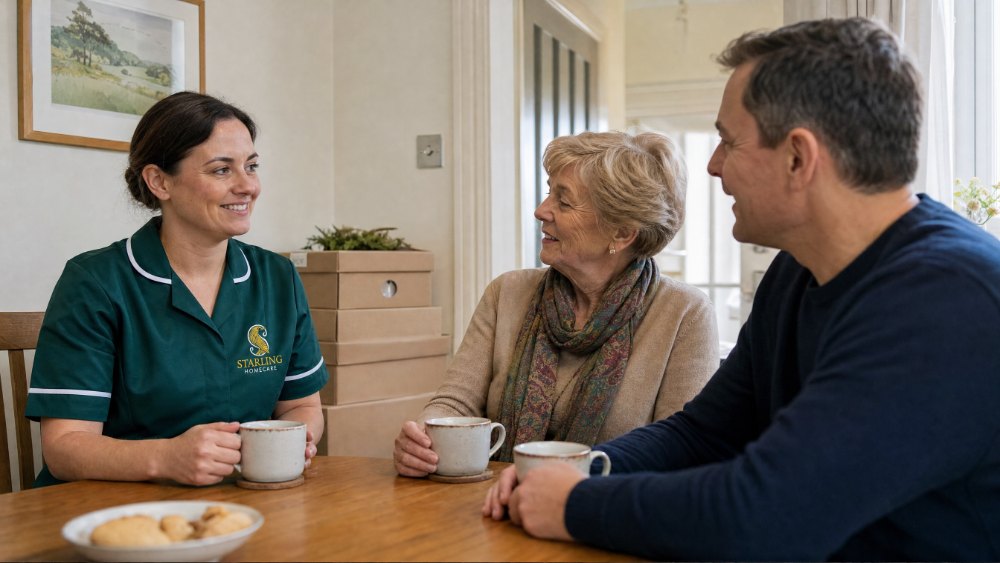
When a parent is unsure about help, it can start with someone from Starling simply coming round for a chat. It does not have to be formal. It is a conversation to get to know them and find out what matters to them, and that often breaks the ice. It is something we have a lot of experience with. Our article on what to try when elderly parents refuse help has more ideas, and our guide to domestic support in Harpenden explains what to hand over first. As needs change, visits can increase.
Areas we cover
Starling Homecare's carers visit people at home in St Albans, Harpenden, Hemel Hempstead, Welwyn Garden City and Hatfield, Potters Bar and Cheshunt, and the villages around them. Elsewhere in Hertfordshire, including Berkhamsted, Tring, Radlett and Shenley, Hitchin and Hertford, we arrange live-in care.
For other early worries, see our guide for families worried about an elderly parent. Locally, here is how we provide home care in Harpenden.
Frequently asked questions
Should I clear my mum's house while she is away or in hospital?
Mind advises against it. It says clearing or tidying someone's things without their consent rarely helps in the long term and can make the problem worse. Instead, Mind suggests focusing on safety, such as fire safety and emergency access, and asking your mum what help she would accept.
Can the fire service check my dad's house in Hertfordshire?
Yes. Hertfordshire Fire and Rescue offers free home fire safety visits to residents at greater risk, including older people. It starts with an online self-check of about 15 minutes, which may recommend a visit. The visit looks at escape routes, gas and electrical appliances, and smoke alarms.
Can I get help for my mum in Harpenden quickly?
Usually, yes. At Starling Homecare, in urgent situations care can usually start within a day or two. Visits start from 30 minutes. Our Harpenden team can talk through what your mum would be comfortable with, starting with an informal chat at home.
Wherever you live, a first call can help you see the next step. Our Harpenden team is on 01582 824 830. You will be talking to someone who arranges care every day, so you can find out what good support looks like before you decide anything.
Guidance checked on 26 October 2026 against the NHS, Mind, Hertfordshire Fire and Rescue and Hertfordshire County Council.
Arranging Care Is Simple
Starting care can feel like a big step. We keep it calm and straightforward, and we are here to guide you from your very first call.
1. Talk to us
Get in touch by phone or request a callback. We will listen, answer your questions and help you understand the options, so you can decide what feels right in your own time.
2. A home visit and initial consultation
We arrange a visit to understand your routines, your home and what matters most to you. Together we agree an initial consultation and shape the support that feels right.
3. Your care begins
A small, familiar team starts your care, arriving at the agreed times and staying involved as your needs change. We remain your trusted adviser throughout.
Whenever you are ready, we are here to help.