
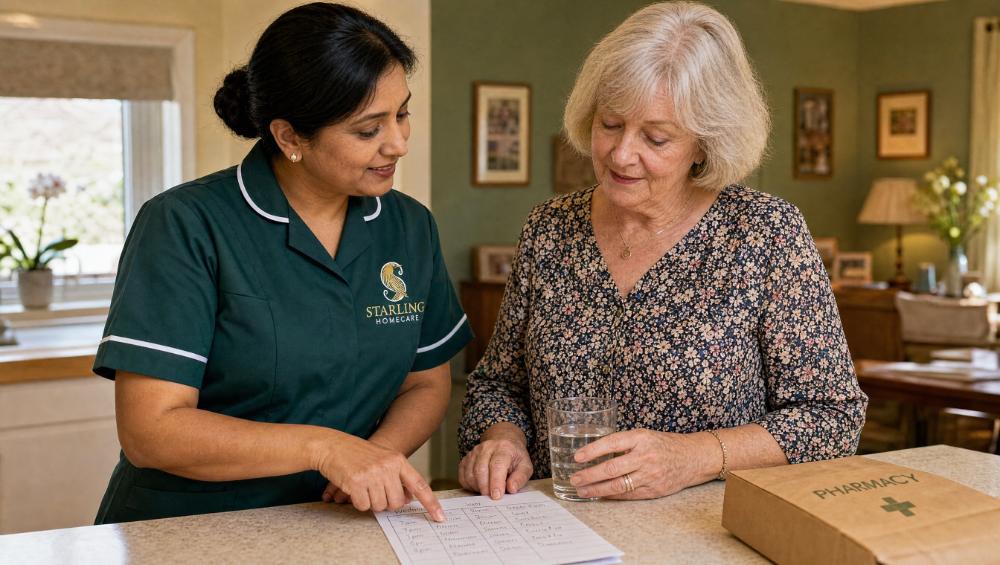
Taking antibiotics as prescribed means following the directions on the label or leaflet exactly, at the times given, for as long as the prescriber says, and never saving or sharing them. For an older parent, families help most by making those times easy to keep and by asking the pharmacist whenever something is unclear.
To talk anything through with someone local, our St Albans team is on 01727 324 127.
Why is this in the news this week?
World Antimicrobial Resistance Awareness Week runs from 18 to 24 November 2026. The World Health Organization's theme this year is "One Health, one action: Prevent AMR now".
NHS England has gathered national events and resources for the week. On Friday 20 November, a webinar for pharmacy teams, GPs and nurse practitioners shares preliminary findings from the Phased-In trial, which tests whether community pharmacies can take on a greater role in managing common infections.
In winter, chest and urine infections are a common worry for families. We have also written about keeping a parent well through winter bugs in St Albans. This piece is about what happens once an antibiotic has been prescribed.
Why does taking antibiotics as prescribed matter?
The NHS calls antibiotic resistance "a big problem". Taking antibiotics when they are not needed can mean they do not work in future.
The UK Health Security Agency gives three plain messages. First, take antibiotics exactly as your GP, nurse or pharmacist directs. Second, never save antibiotics for later, because they will not work properly. Third, they do not help colds or flu, which are caused by viruses.
For an older person, taking antibiotics as prescribed can be harder than it sounds. A course can easily slip when someone feels unwell, sleeps more or has several other medicines to manage.
What does the label tell you?
The NHS says to take antibiotics as directed on the packet or the leaflet, and to follow the GP's or pharmacist's instructions. So the label is the starting point for everything else.
- How many times a day, and roughly when.
- Whether to take it with food or on an empty stomach.
- How many days the course lasts.
- Anything to avoid while taking it, which the leaflet lists.
If any of this is unclear, ask the pharmacist before the first dose. Also, the NHS says only to take antibiotics prescribed for you, and never to borrow them from family or friends.
What if a dose is missed or taken twice?
The NHS says to check the leaflet, or ask a pharmacist or GP if unsure. It says never to take a double dose to make up for a missed one.
If more than one extra dose has been taken, or there are severe side effects, the NHS advises speaking to a GP or calling NHS 111 as soon as possible. Families should not try to work out the next step alone.
Side effects and urgent signs
The NHS says serious side effects are rare. Common ones include feeling sick, bloating, indigestion and diarrhoea. However, signs of a serious allergic reaction, such as a swollen face or throat, wheezing or trouble breathing, mean calling 999 straight away.
How can families make it easier at home?
- Write the dose times on a simple chart and tick each one.
- Keep the pack in one place where it will be seen, away from older medicines.
- Agree who in the family checks in, and when.
- Take anything left over back to a pharmacy, rather than keeping it.
Community Pharmacy England says pharmacies accept unwanted medicines from households, although a pharmacy can pause returns if it runs out of storage.
What about Pharmacy First?
The NHS Pharmacy First service lets community pharmacies help with seven conditions, supplying some prescription medicines only if appropriate. Ask your local St Albans pharmacy whether it takes part. Each condition has an age range. For example, the urine infection pathway is for women aged 16 to 64, so an older parent may still need the GP.
How do home carers help with antibiotics?
Carers at Starling prompt and support; they never decide doses, change timings or stop a course. Our page on what home carers can and cannot do with medication explains where that line sits.
In practice, taking antibiotics as prescribed is easier with a second pair of eyes. A carer can remind your parent at each dose time, record that it was taken, and notice if the pack is not going down. If your parent seems worse, is not eating or has a new rash, the carer tells the family and, where agreed, the GP or pharmacy.
Our medication management and support covers this kind of short course as well as longer routines. If tablets are already being missed, our article on help with medication at home in St Albans may also help. Short visiting care calls can be timed to match the doses.
Frequently asked questions
Mum feels better. Can she stop the antibiotics early?
That is a question for whoever prescribed them, not for the family or a carer. The NHS asks people to take antibiotics as directed. If she wants to stop, ring the pharmacist or GP first.
What should we do with leftover antibiotics?
Do not keep them for next time or pass them on. UKHSA says antibiotics saved for later will not work properly. Take them back to a pharmacy instead.
Will antibiotics help Dad's cold?
No. UKHSA explains that colds and flu are caused by viruses, so antibiotics will not help them. If in doubt, UKHSA suggests asking your local pharmacy for advice.
Can a home carer give the antibiotics?
Our carers prompt and support people to take medicines as prescribed and record it. They do not decide doses or change what has been prescribed. Anything unclear goes back to the pharmacist or GP.
Starling Homecare is an independent, family run home care provider in St Albans, registered with the Care Quality Commission. We plan visits from 30 minutes upwards around medicine times. Our St Albans home care team can talk through what a short course of support would look like.
Figures and guidance checked on 12 November 2026 against NHS antibiotics guidance, the World Health Organization and NHS England Pharmacy First.
Arranging Care Is Simple
Starting care can feel like a big step. We keep it calm and straightforward, and we are here to guide you from your very first call.
1. Talk to us
Get in touch by phone or request a callback. We will listen, answer your questions and help you understand the options, so you can decide what feels right in your own time.
2. A home visit and initial consultation
We arrange a visit to understand your routines, your home and what matters most to you. Together we agree an initial consultation and shape the support that feels right.
3. Your care begins
A small, familiar team starts your care, arriving at the agreed times and staying involved as your needs change. We remain your trusted adviser throughout.
Whenever you are ready, we are here to help.