
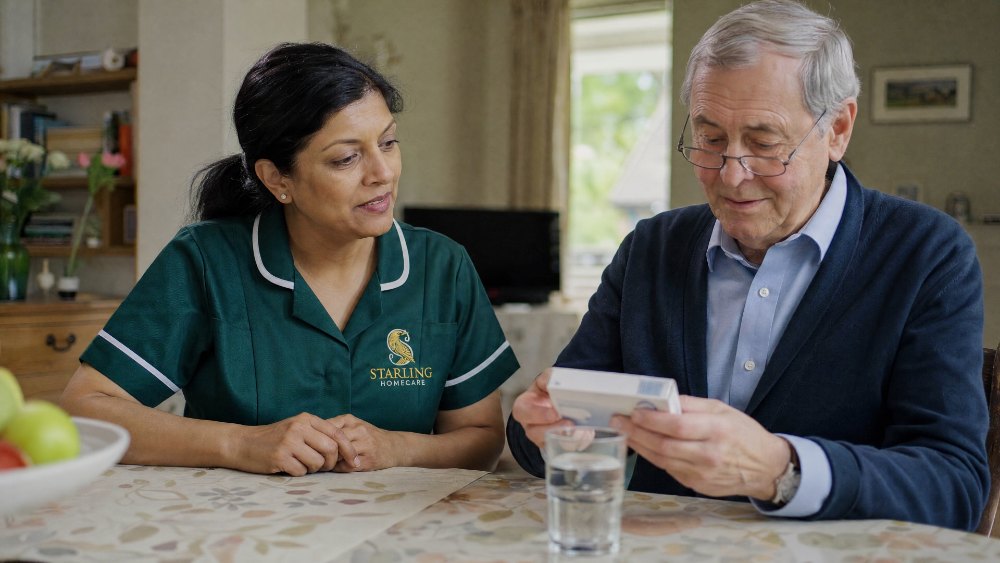
When an elderly parent won't take medication, the NHS advice is to talk to their GP or pharmacist, so this is not something you have to solve on your own. Never give medicine without their consent or try to force them to take it. If your dad suddenly becomes confused, the NHS advice on confusion is to go to A&E or call 999.
To talk anything through with someone local, our Harpenden team is on 01582 824 830.
Perhaps you found a pile of untouched blister packs on your last visit, or heard "I've stopped those" on the phone. It can be worrying and frustrating at the same time, especially if you are not sure how much it matters. You might also feel torn between respecting his wishes and wanting him well, and that can be harder still if you live some way off or are juggling work.
Tablets left in the pack are a situation our team knows well, and there are calm, practical steps from here.
You will want to handle it without a row, and this page is here to help with that. The NHS and Age UK both point families to the GP and the pharmacist, who can help work out what is getting in the way.
Why an elderly parent won't take medication
The NHS and Age UK describe several practical reasons people struggle with medicines.
- Swallowing. Some people find tablets hard to swallow. The NHS says to ask the GP or pharmacist whether a soluble or liquid form is available.
- Side effects. Age UK suggests asking about any side effects or risks of a medicine.
- Several medicines. Age UK notes that some people have difficulties managing multiple medicines.
- Remembering, and opening packs. Age UK mentions remembering a dose and opening child-proof bottles as common difficulties.
Finally, an adult who can make their own decisions has the right to refuse a medicine. The NHS guidance for carers is clear: never give medicine to someone without their consent, or try to force them to take it. That can be hard to accept when you are worried about him, which is one more reason to bring in his GP or pharmacist.
What to do this week
- Find out which medicine, and since when. Write down what he has stopped and the reason he gives.
- Do not stop, change or crush anything yourself. Age UK warns that suddenly stopping certain medicines can cause side effects or make a condition worse. The NHS says check with a doctor or pharmacist before crushing tablets or opening capsules.
- Tell the GP or pharmacist. The NHS advises talking to them if someone refuses their medicine.
- Ask about a structured medication review. His GP surgery may offer a free structured medication review with a pharmacist. Our guide to what happens at a medication review explains how to prepare.
- Ask about easier routines. A pharmacist can talk through reminders, compartment boxes and automatic dispensers. Prescriptions can also be sent straight to the pharmacy, and some pharmacies deliver.
How to raise it with your dad
Raising tablets with a parent can feel like stepping into a role neither of you asked for. Keeping it light helps you stay his son or daughter, not the one checking up. You might try words like these, keeping the focus on how he feels:
- "I noticed the evening tablets are still in the pack. Are they giving you any trouble?"
- "Would you be happy for me to come along when you see the pharmacist? Two pairs of ears are better than one."
- "If one of them makes you feel rough, it's worth asking the GP or pharmacist about it."
If he lives in Harpenden and you are juggling work in London, a phone call ahead of his appointment can help too. If he agrees, let the surgery know you would like to be involved.
If he is wary of help at home, that is understandable, and it can begin with someone from our team simply coming round for a chat, as described below.
Who to call in Hertfordshire
His GP surgery is the first call. According to Age UK, structured medication reviews are carried out by a pharmacist. People who are frail or take 10 or more medicines may be prioritised. They may also be offered one after a hospital admission where medicines could have played a part, or if someone raises concerns about the number of medicines they take.
His community pharmacy can help with practical problems, such as swallowing, packaging or reminders.
NHS 111 can help when the surgery is closed. The NHS 111 page also says 111 online can arrange an emergency supply of a regularly prescribed medicine through a local pharmacy.
HertsHelp, on 0300 123 4044, is Hertfordshire County Council's free advice service. It can help you find support at home.
How Starling Homecare can help with medication at home
Not being there at every tablet time is simply a practical fact, and it is what visiting care is designed around. Having someone call in keeps the routine your dad's own, and leaves your phone calls free for everything else.
Our medication prompting and support is part of our visiting care, which starts from 30 minute visits. Visits can be timed around his tablets and can also include personal care, meal preparation and help around the house. We can also help coordinate prescription deliveries.
The carer's role depends on what is agreed. It might be a prompt at the right time, help opening the pack, or giving tablets from a pharmacy labelled pack. Every dose given, refused or missed is recorded, with the reason, and you are kept informed.
A person who can make their own decisions can refuse a medicine. If your dad declines one, the carer records it and tells our office, so the GP can be informed. A carer cannot change a dose, decide to stop or start a medicine, or give injections. Our page on whether home carers can give medication explains the levels of support.
If your dad is unsure, we would usually begin with someone from our team coming round for an informal chat. It is a conversation to get to know him and what matters to him, and that often breaks the ice. After that, we stay in touch with you as things change: visits can be added if he needs more, and overnight or live-in care is there later if it is ever needed.
Areas we cover
Starling Homecare's carers visit people at home in St Albans, Harpenden, Hemel Hempstead, Berkhamsted, Tring, Radlett and Shenley, Welwyn Garden City and Hatfield, Potters Bar, Hitchin and Hertford, and we arrange live-in care across Hertfordshire.
For a wider look at the signs and first steps, see our guide for families worried about an elderly parent.
Our home care team in Harpenden supports families across the town and nearby.
Frequently asked questions
Can I hide Dad's tablets in his food?
No. The NHS says never to give medicine without someone's consent. It also says to check with a doctor or pharmacist before crushing tablets or opening capsules, so speak to them first.
Are dosette boxes free?
Not always. The NHS notes that compartment boxes are not always free on the NHS, and are not suitable for every medicine. Ask his pharmacist what would work for his prescription.
Will a carer report it if Dad refuses his tablets?
Yes. At Starling, a refusal is written on his medication record and passed to our office. With his agreement, we can then let the GP or pharmacist know.
Starling Homecare is a family run home care provider, registered with the Care Quality Commission. If an elderly parent won't take medication and you would like a calm, regular presence at tablet times, just give our Harpenden team a ring on 01582 824 830. You will be talking to someone who arranges care every day, who can explain simply how prompting and support visits work.
Guidance checked on 26 October 2026 against NHS: medicines tips for carers and Age UK: getting the most from your medicines.
Arranging Care Is Simple
Starting care can feel like a big step. We keep it calm and straightforward, and we are here to guide you from your very first call.
1. Talk to us
Get in touch by phone or request a callback. We will listen, answer your questions and help you understand the options, so you can decide what feels right in your own time.
2. A home visit and initial consultation
We arrange a visit to understand your routines, your home and what matters most to you. Together we agree an initial consultation and shape the support that feels right.
3. Your care begins
A small, familiar team starts your care, arriving at the agreed times and staying involved as your needs change. We remain your trusted adviser throughout.
Whenever you are ready, we are here to help.