
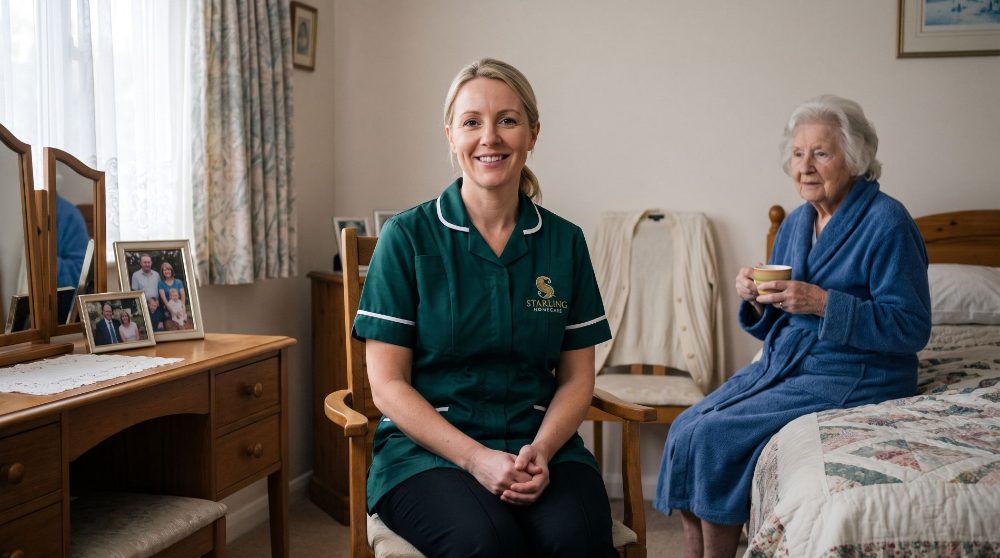
Personal care in Potters Bar usually starts with one visit a day, and the decision that matters is which one. Morning, evening or bedtime each solve a different problem. The right first visit is the one that lands where the day is breaking. Get that right and a single daily call can hold things steady for months.
This piece is for the family trying to decide where to begin. Most people assume personal care means a carer several times a day from the outset. In our experience it more often means one well-placed visit. A second follows only when the first has proved its worth.
Starling Homecare is a family run, CQC registered provider. Our Potters Bar team covers the town, South Mimms and Northaw from the same office that looks after Welwyn Hatfield. The carers are local, and we build the rota around EN6 rather than driving it in from elsewhere.
What personal care actually covers
The NHS lists the things a paid carer can help with at home. The personal care part of that list is specific. Getting out of bed in the morning, washing and dressing, brushing hair, using the toilet, and getting settled in the evening and ready for bed. Meals, medicines, shopping and getting out to a lunch club sit alongside it.
The NHS also makes the point that homecare is flexible. It can be an hour a week or several hours a day or at night. That flexibility is the reason the first visit is worth choosing carefully rather than defaulting to a package.
Where is the day breaking?
Ask one question before anything else: at what point in the day does the person stop managing? The answer is nearly always one of three.
The morning breaks when getting up, washed and dressed takes so long that breakfast is at eleven. Nothing really starts. The evening breaks when the meal is skipped because cooking is too much. Or the tablets are missed because nobody prompted them. Bedtime breaks when someone sleeps in a chair. The stairs, the undressing or the bathroom trip feel like too much at the end of the day.
Families we support often tell us the person is fine once they are up, or fine once they are in bed. That is the clue. Personal care in Potters Bar works best when the first visit is placed exactly at the point where fine stops.
The morning visit: the most common first choice
A morning visit is right when the person cannot get started. A carer arrives at an agreed time, helps with washing and dressing, makes breakfast, and prompts the morning medicines. The rest of the day then belongs to the person. It often goes better than the family expected once it starts on time.
The question to answer for a morning call is what time the person actually wants to be up. A visit at half past seven suits someone who has always been an early riser and hates lying in bed. The same visit for someone who has woken at nine all their life is an intrusion. We ask, and we build the rota around the answer rather than the other way round.
The evening visit: for the meal and the medicines
An evening visit is the right first choice when mornings are manageable but the day fades badly. Teatime is when a hot meal quietly turns into a biscuit, and when the evening tablets are most often forgotten. A carer who arrives at five or six cooks something proper and sits with the person while they eat it. They check the medicines have gone down. If the morning was never the problem, that does more for a person's health than a morning visit would.
It also gives the family a daily set of eyes at the end of the day. That is when a bad day shows.
The bedtime visit: when the night is the risk
A bedtime visit suits the person who is managing by day and struggling to end it. Undressing, a wash, the last bathroom trip and the stairs are the four things that stop someone going to bed properly. Sleeping in a chair is where a lot of falls and pressure sores begin. A visit at eight or nine sees the person safely into bed, with the lamp on and a drink within reach. It removes that risk without touching the rest of the day.
If the worry is what happens between that visit and the morning, that is a different service. Our overnight care page covers the night itself. Our companionship care in Potters Bar guide covers the days when the difficulty is company and getting about, not washing and dressing.
How the first visit tells you what comes next
One visit a day for a fortnight tells a family more about personal care in Potters Bar than any assessment. If the morning call is working and the evening is fine, nothing changes. Should the carer notice that the person has not eaten since breakfast, an evening call is the obvious second step. If the bedtime visit is going well but the person is up at six and struggling alone, the morning follows.
The NHS advises asking any agency two things. Will the carer agree to a specific time slot, and will they tell you if they are running late. That is the standard to hold. The whole point of a single well-placed visit is that it arrives when the day is breaking, not an hour either side. Our personal care page explains how visits are planned and what they include. Our guide to personal care at home covers what personal care means in general terms.
Personal care in Potters Bar, South Mimms and Northaw
The carers cover Potters Bar and the villages on the same rota. A morning call in South Mimms and a bedtime call in Northaw are both realistic. The Potters Bar area page sets out the patch, and our Potters Bar team is on 01707 714 000 or at [email protected].
Common questions about personal care in Potters Bar
How many visits a day do you need to start personal care?
Usually one. The NHS describes homecare as flexible, from an hour a week upwards. In our experience a single visit placed where the day breaks, whether morning, evening or bedtime, is the right starting point for personal care in Potters Bar. A second visit is added when the first shows it is needed.
What does a personal care visit include?
The NHS lists getting up, washing and dressing, brushing hair and using the toilet. It also lists meals and drinks, prompting medicines, and getting settled in the evening and ready for bed. A single visit covers the part of that list that falls at its time of day.
Can personal care visits change once they have started?
Yes. Visits can move earlier or later, lengthen or shorten, or step up during a bad patch and back down afterwards. The care plan follows the person, and a good provider reviews it with the family rather than leaving it fixed.
Where to start
If you are trying to decide, ask where the day is breaking and start there. One visit, at the right time, for a fortnight, and then look again. Our Potters Bar team is on 01707 714 000 if it would help to talk through which visit that should be.
The NHS social care guide, Help at home from a paid carer, was checked on 15 September 2026 at nhs.uk.
Arranging Care Is Simple
Starting care can feel like a big step. We keep it calm and straightforward, and we are here to guide you from your very first call.
1. Talk to us
Get in touch by phone or request a callback. We will listen, answer your questions and help you understand the options, so you can decide what feels right in your own time.
2. A home visit and initial consultation
We arrange a visit to understand your routines, your home and what matters most to you. Together we agree an initial consultation and shape the support that feels right.
3. Your care begins
A small, familiar team starts your care, arriving at the agreed times and staying involved as your needs change. We remain your trusted adviser throughout.
Whenever you are ready, we are here to help.