
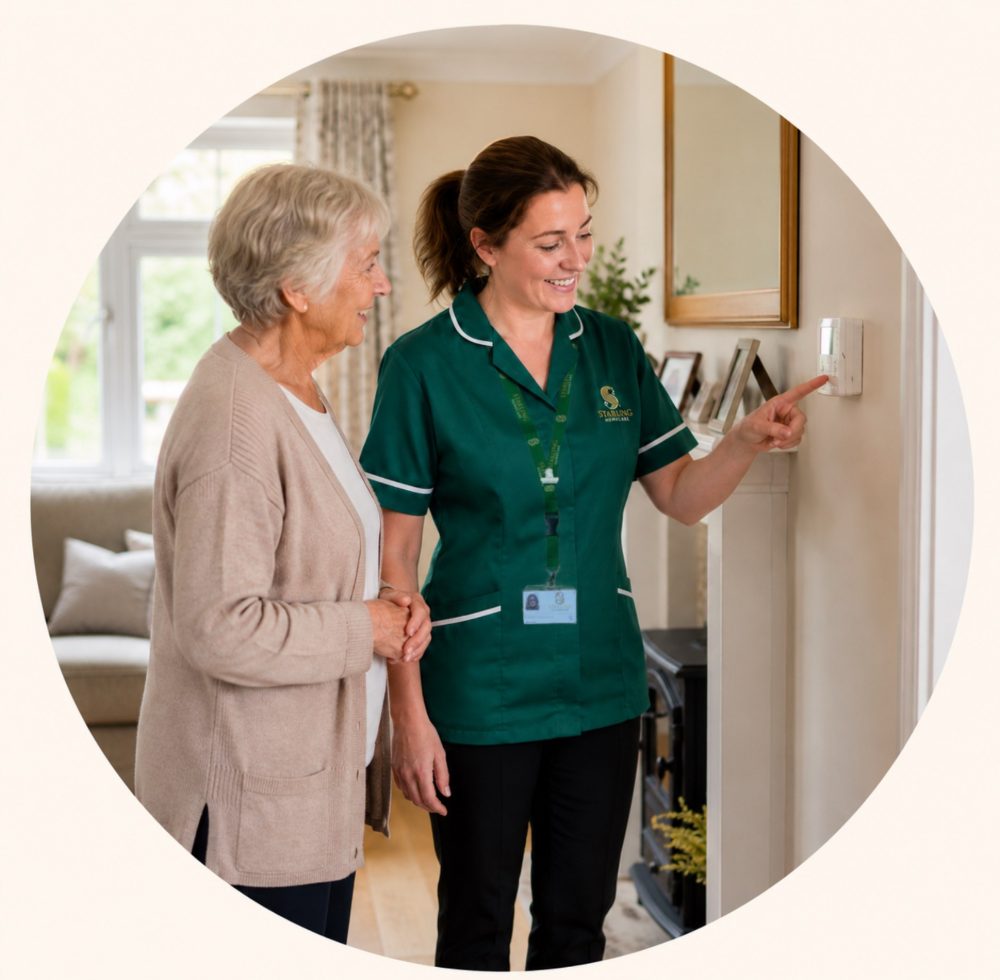
Personal care at home means practical help with the everyday tasks of looking after yourself. That includes washing, dressing, using the toilet and moving about safely. It is the most common kind of home care, and it helps someone stay comfortable, clean and independent in the place they know best.
If you are reading this for an older parent or partner, you may already sense they are managing less easily than before. This guide explains plainly what personal care at home covers, how it protects dignity, and the simple steps to arrange it.
We are Starling Homecare, an independent, family-run provider in Hertfordshire, regulated by the Care Quality Commission. In our experience, families worry most about two things: whether a carer can help gently, and how to set things up without fuss. Both are very manageable.
What is personal care at home?
Personal care is hands-on support with the personal, physical side of daily life. It covers the tasks most of us do without thinking, until they become harder with age, illness or reduced mobility.
A trained carer visits the home and helps with these tasks at the person’s own pace. The aim is never to take over. The carer gives just enough support so someone can keep doing what they still can, safely.
Because personal care at home happens in familiar surroundings, the routine stays the same. Many families we support tell us this is what matters most: keeping the comfort of home while getting the help they need.
What does personal care include?
Personal care at home covers a clear set of everyday tasks. Most care plans draw on some of the following, shaped around what the person actually needs.
- Washing, bathing and showering, including help in and out of the bath safely.
- Dressing and undressing, and choosing clothes that suit the day.
- Help using the toilet, with calm and discreet continence support.
- Oral care, shaving, hair and skin care, and keeping nails clean and tidy.
- Help moving about, getting in and out of bed, and staying steady on the feet.
- Support with eating and drinking, and prompting or helping with medication where the plan calls for it.
However, not everyone needs all of these. A short morning visit to help someone wash and dress is just as much personal care as fuller support across the day.
How does it differ from other home care?
It helps to know where personal care sits among the other kinds of support. Companionship care is about company, conversation and getting out and about. Domestic support covers the home itself, such as cleaning, laundry and shopping.
By contrast, personal care is the hands-on help with the body and the daily routine. Many people have a mix: some personal care, a little help around the house, and good company alongside it.
We explain medication help, mobility support and the other elements within our personal care support at home, so a plan can grow gently as needs change.
How do good carers protect dignity?
This is the question families ask us most, and it is the right one. Help with washing or using the toilet is personal, and how a carer does it matters as much as the help itself.
Good personal care is unhurried and follows the person’s lead. A carer explains what they are doing, offers choices, and protects privacy at every step. Small things matter: keeping someone covered and warm, asking how they like things done, never rushing.
Continuity helps too. When the same small team visits, they come to know how someone likes their morning to go, which makes the whole thing feel ordinary rather than clinical.
How do you arrange care at home?
Arranging personal care at home is more straightforward than most families expect. It usually follows a few simple steps.
First comes a conversation about what the person needs and what a typical day looks like. A carer or care manager then visits to agree a care plan together, setting out the tasks, the timings and any preferences. Care can often begin within a few days.
A good provider holds registration with the Care Quality Commission, which regulates home care in England. You can ask to see a provider’s registration and read its inspection report before you decide. Our guide to the signs an older relative may need help at home can help you judge the right moment to start.
What does it cost?
Costs for personal care at home depend on how much support someone needs and how often. In practice, most people arrange care as visits, charged by time.
At Starling Homecare, visiting care starts from 30 minutes, from £34, with travel to and from the home included and no hidden fees. Regulated home care is also exempt from VAT. Some people pay privately, while others receive help from their local council or the NHS, which our care funding guide explains in more detail. The NHS social care and support guide is a good place to understand what help may be available.
Personal care at home is, at heart, a way of helping someone keep their independence and dignity in the place they know best. Knowing what it involves makes the decision feel a little less daunting.
If you would like to talk through what personal care might look like for someone you love, our St Albans team is here on 01727 324 127 or at [email protected]. We are always happy to explain the options clearly, at your own pace.
Common Questions About Personal Care at Home
What is included in personal care?
Personal care at home covers help with washing, bathing, dressing, using the toilet and continence, oral and skin care, and moving about safely. It can also include support with eating and prompting medication. A care plan sets out which tasks someone needs and how they prefer them done.
Who provides the care?
Trained carers from a home care provider give personal care in the person’s own home. In England, any provider offering personal care must register with the Care Quality Commission, which inspects their care against national standards.
How do I arrange personal care for an elderly parent?
Start with a conversation about what your parent finds harder day to day. A care provider will then visit to agree a care plan, covering the tasks, timings and any preferences. Care can often begin within a few days. You can also ask your local council for a needs assessment if your council may help with funding.
Arranging Care Is Simple
Starting care can feel like a big step. We keep it calm and straightforward, and we are here to guide you from your very first call.
1. Talk to us
Get in touch by phone or request a callback. We will listen, answer your questions and help you understand the options, so you can decide what feels right in your own time.
2. A home visit and initial consultation
We arrange a visit to understand your routines, your home and what matters most to you. Together we agree an initial consultation and shape the support that feels right.
3. Your care begins
A small, familiar team starts your care, arriving at the agreed times and staying involved as your needs change. We remain your trusted adviser throughout.
Whenever you are ready, we are here to help.