
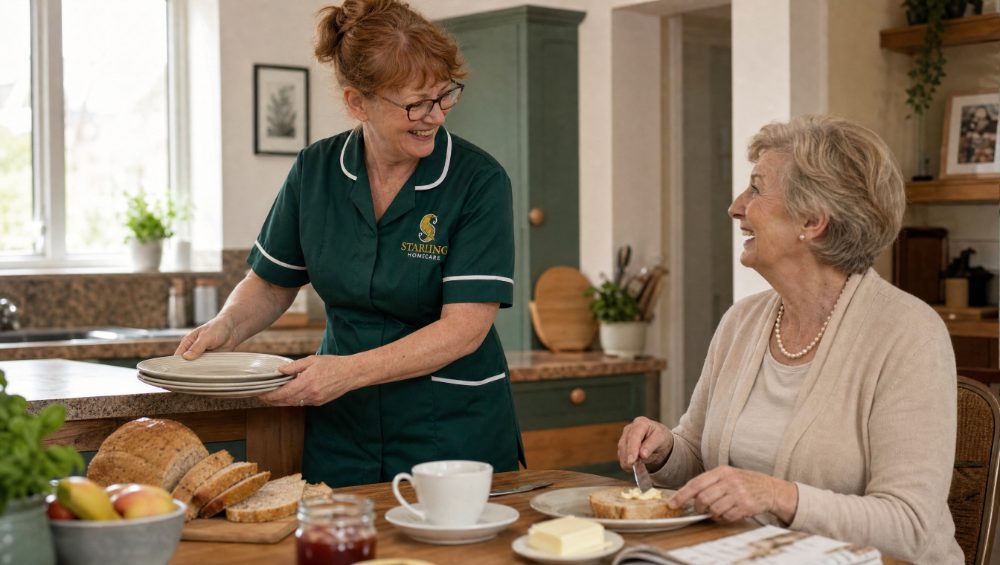
What does a live-in carer do? They live in the person's home and support them all day: help to get up, wash and dress, meals, medicine prompts, housework and company. They also sleep in the home, so someone familiar is there at night, with proper breaks built into each day.
To talk anything through with someone local, our St Albans team is on 01727 324 127.
What does a live-in carer do in the morning?
Mornings usually follow the person's own routine, not the carer's. On our live-in care page we describe a typical start: gentle help to get up, wash and dress, a home-cooked breakfast and any medication that is due.
In practice, that might mean a cup of tea in bed first, then a shower with support, then breakfast at the kitchen table. Some people like a slow start. Others like to be up and dressed early. The carer follows the care plan, which records those preferences.
If you are still weighing up options, our guide to live-in care or visiting care sets out how families decide.
The Care Quality Commission treats personal care, such as washing, dressing and toileting, as a regulated activity. That is one reason the provider behind a live-in carer matters.
How does a live-in carer help with medicines?
A live-in carer prompts and supports medicines as set out in the care plan. For example, they can remind someone to take tablets from their pharmacy packs, and note that they have been taken. They also reorder prescriptions and collect them.
They do not change doses or make clinical decisions, and they do not give injections. If something looks wrong, they contact the GP, pharmacist or district nurse. Our guide to whether home carers can give medication explains the different levels of support.
What happens in the middle of the day?
The middle of the day is often where live-in care feels most different from visits. There is time for lunch without hurry, and time to do things rather than only get things done.
- Meals and drinks. Planning, shopping and cooking, with the person involved as much as they like.
- Getting out. A walk, a trip to the shops, a café, church or a club.
- Appointments. Going along to the GP, dentist or hospital and helping to remember what was said.
- Home help. Laundry, tidying, changing beds and keeping the kitchen clean.
- Company. Conversation, hobbies, the crossword or the garden.
The NHS guide to help at home from a paid carer lists much the same everyday tasks. A live-in carer simply does them across the whole day, at the person's pace.
When does a live-in carer take a break?
A live-in carer needs proper rest. So each day includes a break. We plan this into the care, and arrange cover when someone should not be left alone.
The carer also needs their own bedroom and somewhere to rest. Our guide to preparing for a live-in carer covers the room, keys, food and time off in more detail.
What does a live-in carer do in the evening and overnight?
Evenings tend to wind down: supper, perhaps a favourite programme, then help to get ready for bed. The carer makes sure the house is locked and that drinks, glasses and any alarm are within reach.
Then the carer goes to bed too. They are nearby if needed, for example for a trip to the toilet or a moment of worry. However, a live-in carer cannot be awake all night and then work all day.
If someone needs help several times every night, we talk through the safest way to cover that. Sometimes separate overnight care is the right answer.
Can one live-in carer support a couple?
Often, yes. Where two people live together and both need some help, one carer can support them both through the day. Our live-in care for couples explains how that works and when it fits. The routine simply has to cover two sets of preferences.
How is a typical day agreed?
Before care starts, the routine is written into the care plan with the person and their family. It covers times, food, washing preferences, medicines, outings and what to do if something changes. Our page on what a care plan is explains how that record works.
The plan is not fixed for ever. As needs change, or as the person and carer get to know each other, the day can shift.
Frequently asked questions
Does a live-in carer do housework?
Yes, light housework connected with the person's daily life is usually part of the role. That includes laundry, washing up, tidying and changing the bed. Heavy cleaning or gardening is better agreed separately.
Is a live-in carer awake all night?
No. A live-in carer sleeps in the home and is available if needed occasionally. If someone needs regular help through the night, a waking night carer may be needed as well.
How much does live-in care cost?
At Starling Homecare, live-in care is from £255 a day, plus a weekly food allowance for the carer. Regulated home care is VAT exempt. The exact rate is confirmed in a written quote before care begins.
As an independent, family run provider registered with the Care Quality Commission, Starling Homecare arranges live-in care across Hertfordshire from St Albans. If you are wondering whether a live-in carer would suit your parent's day, we can walk through their routine with you and say honestly what live-in care would and would not cover.
Figures and guidance checked on 12 November 2026 against the NHS social care and support guide and Starling Homecare's published live-in care rates.
Arranging Care Is Simple
Starting care can feel like a big step. We keep it calm and straightforward, and we are here to guide you from your very first call.
1. Talk to us
Get in touch by phone or request a callback. We will listen, answer your questions and help you understand the options, so you can decide what feels right in your own time.
2. A home visit and initial consultation
We arrange a visit to understand your routines, your home and what matters most to you. Together we agree an initial consultation and shape the support that feels right.
3. Your care begins
A small, familiar team starts your care, arriving at the agreed times and staying involved as your needs change. We remain your trusted adviser throughout.
Whenever you are ready, we are here to help.