
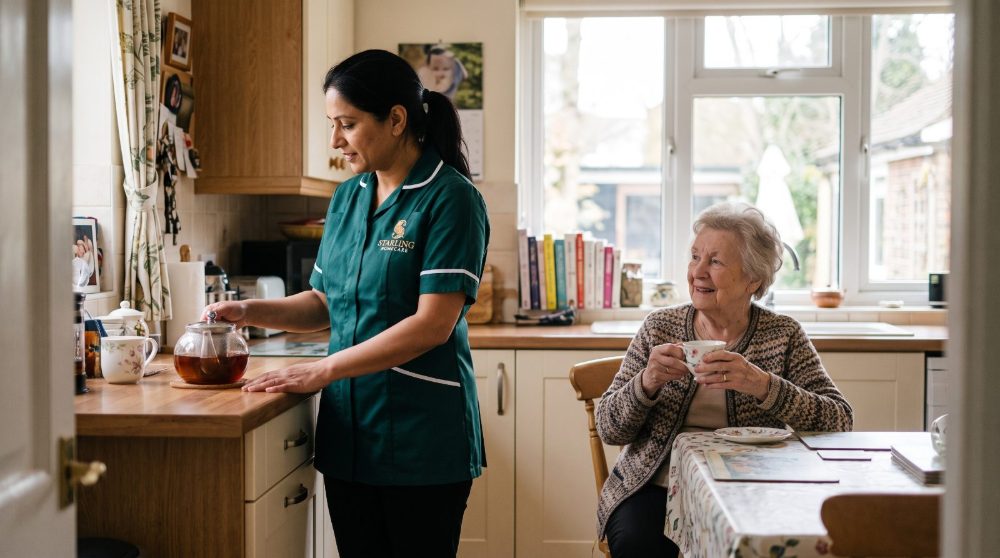
Self Care Week, from 16 to 22 November 2026, is a timely prompt to check the habits that keep older people well at home. The basics are simple: regular drinks and meals, daily movement, warmth, company, and using the local pharmacy for minor illnesses.
To talk anything through with someone local, our St Albans team is on 01727 324 127.
What is Self Care Week?
It is a yearly awareness week run by the Self-Care Forum. The charity has organised it since 2011. The aim is to build support for self care in communities, in families and across generations.
This year's theme is "Mind and Body". The Forum's view is that most health is self managed, with the NHS supporting self care throughout.
What does Self Care Week mean for older people?
For an older parent, self care is rarely about anything dramatic. Instead, it is the ordinary things that slip when energy is low or the days are short. So this Self Care Week, older people and their families might simply check a few everyday basics together.
Drinks through the day
The NHS guide to water and drinks suggests 6 to 8 cups or glasses of fluid a day. Water, lower fat milk, tea and coffee all count. A flask by the chair or a glass at each meal is often easier than remembering. Our article on what helps when a parent is not drinking enough goes further.
Meals that actually get made
Cooking for one can feel like too much on a dark evening. A cupboard of easy, favourite foods keeps the routine going. So does one proper hot meal a day.
Some movement every day
The NHS guidelines for adults over 65 say to be active every day, even if it is light activity. They also say to break up long periods of sitting. For example, a walk to the post box counts. So does standing up to make each cup of tea.
Warmth
The NHS advises heating the rooms someone regularly uses to at least 18°C. A warm bedroom matters too, especially first thing.
Looking after the mind as well as the body
The "Mind and Body" theme is a useful reminder that loneliness affects wellbeing too. The NHS page on loneliness in older people says people who live alone or lack regular contact are particularly at risk.
Its suggestions are practical:
- invite someone round, even for a short time
- plan something to look forward to
- join a local group, class or activity
- try volunteering, which brings regular contact
- contact a befriending service such as Age UK, The Silver Line or Re-engage
For ideas closer to home, our What’s On guides for older people list local groups, clubs and events town by town.
Using the pharmacy first
Knowing where to go is part of self care. The NHS says pharmacists can advise on a range of minor illnesses. They can also tell you if you need a doctor.
Under the NHS England Pharmacy First service, pharmacies can treat seven common conditions without a GP referral. For adults these include shingles, sinusitis and sore throat. However, the urinary infection pathway only covers women aged 16 to 64. For an older mother, call the GP practice or NHS 111 instead.
If something is urgent and you are unsure what to do, the NHS says to use 111 online or call 111. Winter vaccinations are part of the picture too; our guide to winter vaccinations in Hertfordshire explains who is invited.
How families can encourage self care without taking over
Self care means the person doing what they can for themselves. So the most helpful role is often noticing, not doing. A weekly phone call that asks about meals, sleep and who they have seen tells you a lot.
Then offer small, specific help. "Shall I set up a delivery of the soups you like?" lands better than "You need to eat more". Finally, watch for changes. A fuller fridge than usual, or a missed regular group, can be an early sign.
Frequently asked questions
Is Self Care Week only for people with health conditions?
No. The Self-Care Forum describes it as building support for self care across communities, families and generations. It is as much about staying well as managing an illness.
What is Pharmacy First, in plain terms?
It is an NHS service that lets community pharmacies assess and treat seven common conditions. You can walk in or contact the pharmacy directly, without a GP appointment. The pharmacist will say if a doctor is needed.
Dad finds talk of "self care" patronising. What works better?
Leave the label out and start with something he enjoys. Asking about plans for the week, or offering a lift to a club, opens the conversation.
How do I find something sociable for Mum locally?
Local What's On listings and befriending charities are good starting points. A first visit together can make a new group feel far less daunting.
In St Albans, Harpenden, Hemel Hempstead, Welwyn Hatfield, Potters Bar and Cheshunt we provide visiting care from 30 minute calls upwards. We also offer companionship care for people who would like regular company or a hand getting out. A short visit can cover a hot meal, a drink to hand and a chat. That keeps the person's own routine going. You can read about the different types of home care.
Figures and guidance checked on 8 November 2026 against the Self-Care Forum, the NHS and NHS England.
Arranging Care Is Simple
Starting care can feel like a big step. We keep it calm and straightforward, and we are here to guide you from your very first call.
1. Talk to us
Get in touch by phone or request a callback. We will listen, answer your questions and help you understand the options, so you can decide what feels right in your own time.
2. A home visit and initial consultation
We arrange a visit to understand your routines, your home and what matters most to you. Together we agree an initial consultation and shape the support that feels right.
3. Your care begins
A small, familiar team starts your care, arriving at the agreed times and staying involved as your needs change. We remain your trusted adviser throughout.
Whenever you are ready, we are here to help.