
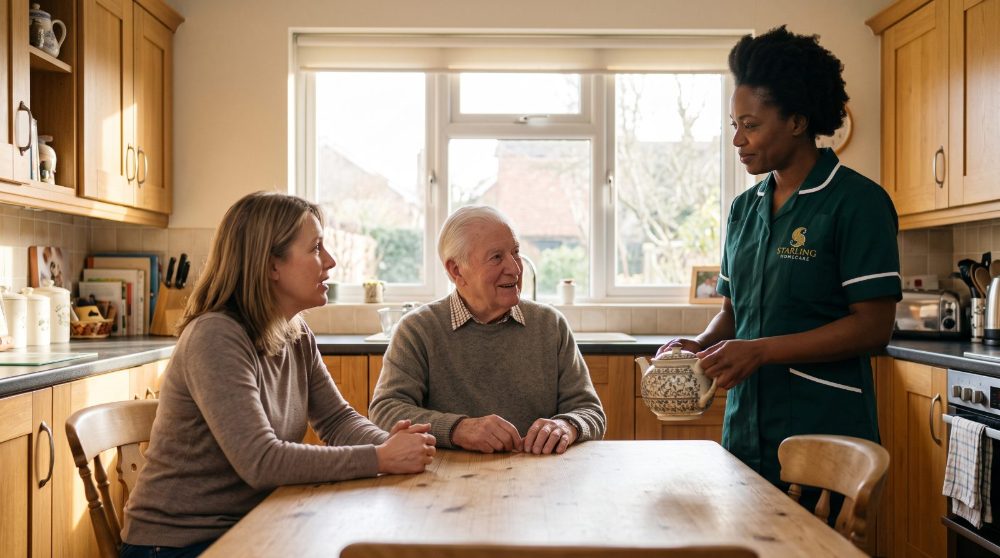
Respite care in St Albans is short-term support that steps in so a family carer can rest. The person they look after stays safe and well cared for at home. It can be a few hours a week, a regular day, or a longer block of cover when you need to be away.
Most people who care for a relative do not think of themselves as carers. They are simply a daughter, a husband or a neighbour who quietly does more and more. Respite care exists for exactly those people.
This week is Carers Week, which runs from 8 to 14 June 2026, and it is a good moment to say something plainly. Looking after someone you love is rewarding, but it is also tiring, and no one can keep giving from an empty cup.
Why taking a break can feel impossible
When you care for someone every day, stepping away can feel like letting them down. Many of the families we support in St Albans tell us they have not had a proper break in months.
The worry is understandable. You know the routine, the medicines and the small things that keep the day calm. Handing that over can feel like a risk.
Good respite care is built to take that risk away. The aim is continuity, so the person you care for stays comfortable and you can switch off knowing they are in safe hands.
What the latest research says about carers
New research from Carers UK, published in May 2026 put a number on the strain. Nearly half of carers in paid work, 47 percent, are thinking about cutting their hours or leaving their job. The pressure of juggling care with everything else is reaching a tipping point for many.
The same report found that 74 percent of working carers say their job actually supports their wellbeing. Many described work as a form of respite, a bit of time and identity that is theirs alone.
That is the part worth holding onto. A break is not a luxury or a sign of failing. It is what allows a carer to keep going, at home and at work, without burning out.
What respite care in St Albans actually looks like
Respite care is flexible by design, because no two caring situations are the same. It can be a sitting service for a few hours so you can rest, see friends or keep a medical appointment.
It can be a regular weekly visit that gives you a dependable pocket of time to plan around. For a longer break, live-in respite places an experienced carer in the home, so your relative keeps their routine while you are away.
Whatever the shape, the care covers the everyday essentials: personal care, meals, medication reminders, companionship and a watchful eye. You can read more about what respite care at home involves on our service page. We cover similar ground in our guide to respite care for carers in Harpenden.
How a break helps you keep caring
Rest is not time wasted. It protects your health, your patience and your ability to notice when something changes in the person you care for.
In our experience, carers who take regular short breaks cope far better over the long term than those who try to do everything alone. A carer who becomes unwell themselves helps no one, least of all the person who relies on them.
Respite also gives the person receiving care something valuable: a new face, a different conversation and a little variety in the week. Done well, it is good for both of you.
Local support for carers in St Albans
You do not have to arrange everything privately. As a carer in Hertfordshire, you are entitled to a free carer’s assessment from the county council. It looks at how caring affects your life and what might help.
That assessment can lead to practical support, and in some cases help towards the cost of a break. Carers in Hertfordshire, a local charity, offers free advice, support groups and information for unpaid carers across the county.
These services sit alongside private respite care, not against it. Many families use a mix, and we are happy to talk through how the pieces fit together.
How to arrange respite care in St Albans
The first step is a conversation, not a commitment. We talk through the routine, the person’s needs and the kind of break that would help you most.
From there we agree a plan and match a carer who suits the situation. The same familiar faces then support your relative each time. As a CQC registered, family run provider based in St Albans, we hold ourselves to the standards we would want for our own families. You can find out more about home care in St Albans on the area page.
If you are in St Albans or nearby and would like to talk it through, our St Albans team is on 01727 324 127 or [email protected].
Common Questions About Respite Care in St Albans
What is respite care and how does it work?
Respite care is short-term care that temporarily takes over from a family carer, either at home or elsewhere. At home it can be a few hours, a regular day or a longer live-in stay. The aim is to give the carer a break while the person they look after stays safe and supported.
Is respite care free in St Albans?
It can be, depending on circumstances. Hertfordshire County Council may contribute towards a break following a carer’s assessment or a needs assessment, based on need and finances. Many families also arrange respite privately for flexibility, and the two can work together.
How long can respite care last?
There is no fixed limit. Respite can be as short as a couple of hours or as long as a few weeks, for example while you go away or recover from illness yourself. The right length depends on your situation and the needs of the person you care for.
In closing
Caring for someone is one of the most generous things a person can do, and it should not cost you your own health. A break, taken in good time, is part of caring well, not a step away from it.
If a little support would help you keep going, our respite care team in St Albans is here to talk whenever you are ready, on 01727 324 127.
Arranging Care Is Simple
Starting care can feel like a big step. We keep it calm and straightforward, and we are here to guide you from your very first call.
1. Talk to us
Get in touch by phone or request a callback. We will listen, answer your questions and help you understand the options, so you can decide what feels right in your own time.
2. A home visit and initial consultation
We arrange a visit to understand your routines, your home and what matters most to you. Together we agree an initial consultation and shape the support that feels right.
3. Your care begins
A small, familiar team starts your care, arriving at the agreed times and staying involved as your needs change. We remain your trusted adviser throughout.
Whenever you are ready, we are here to help.