
Post-operative care in St Albans is easier to arrange than most people expect. The hospital tells you what it needs before it will send you home. The pre-operative assessment asks about your home circumstances. The NHS also advises having an adult with you for at least 24 hours after a general anaesthetic or an epidural. If you know those two things early, the rest follows.
This piece is for the person with a date in the diary, or the relative asked to be that adult. It covers the questions you will be asked and the honest answers. It also covers what a few paid visits do on the days when the honest answer is no.
Starling Homecare is a family run, CQC registered provider. Our St Albans team arranges post-operative care in St Albans, Wheathampstead, Colney Heath and the villages around the city every week.
What the pre-operative assessment asks about your home
The NHS describes the pre-operative assessment as an appointment with a nurse, a day or more before the operation. It can be in person, by phone or by video. You are asked about your health, your medical history and your home circumstances.
That last part is the one people wing. The nurse is trying to work out whether you can go home safely and when. Who lives with you. Whether you can get up the stairs to bed and to the bathroom. Who can collect you, since the NHS is clear you will not usually be able to drive yourself home. And whether anyone can be with you for the first day and night.
In our experience, families answer these questions optimistically, because a hesitant answer feels like it might delay the operation. It rarely does. What it does is shape the discharge plan. A plan built on an honest picture of your home is the one that gets you home on time and keeps you there.
The 24 hour rule, and who is going to be that adult
The NHS says it is a good idea to have an adult available to help you for at least 24 hours. That applies after a general anaesthetic or an epidural. For a day case at St Albans City Hospital, West Hertfordshire's elective care centre on Waverley Road, that usually means the first night at home.
For a lot of people in St Albans that adult is a son or daughter who lives in London. Or it is a partner who is older than the patient. The question is not whether somebody loves you enough to come. It is whether that person can be awake at three in the morning and help you to the bathroom. And whether they are fit to drive you back if something is wrong.
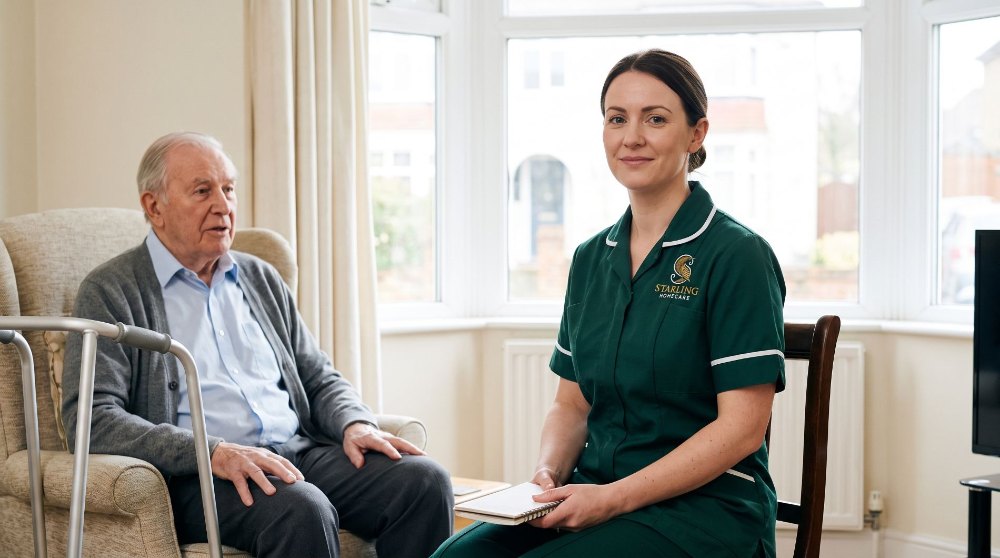
Post-operative care in St Albans fills exactly this gap. A carer can cover the evening you get home, a waking or sleeping night, and the morning after. The family member then does the visiting and the reassurance rather than the lifting and the lying awake. The NHS also says you should not be afraid to ask for equipment that helps, such as a walking frame. A carer arriving into a house with the right equipment already in place is the arrangement that works.
What has to be true at home before you are discharged
The NHS is plain that each hospital has its own discharge policy. Your discharge is affected by how quickly your health improves and by what support you will need at home. Two things decide it, and only one of them is medical.
The other is your home. Can you manage the stairs, or is there a bed and a toilet on one level. Washing safely matters too, given the NHS advice to keep the wound dry and usually not shower for the first 48 hours. Then meals, and painkillers taken on time. Is there someone to change a dressing, or does the community nursing team need to come in.
Where the answer to any of these is not yet, a short period of care at home turns it into a yes. That is the difference between coming home on the day planned and waiting on the ward while a bed downstairs is sorted out.
Eight questions to ask before you leave the ward
The NHS suggests a list of questions to ask before discharge. Every one of them has a practical consequence at home. Who to call if you have a concern once you are home. What you should be trying to do on your own, such as going to the bathroom and getting out of bed. What you should avoid. How much pain, bruising or swelling to expect. When and where stitches come out, or how long dissolvable ones take. How to care for the wound. Whether you need to come back to hospital or see your GP for a follow up, and when. When you can go back to work.
Write the answers down, or ask the person collecting you to. The answers are what a carer works from in the first week. Which movements to encourage, which to leave alone, and what a normal amount of swelling looks like against a call to the ward.
Where paid care fits in the first fortnight
Post-operative care is temporary by design. The NHS says the earlier you get out of bed and start walking, eating and drinking after your operation, the better. It says to get back into your regular routine as soon as possible. A carer's job in that fortnight is to make the routine possible, not to do it for you.
In practice that is a morning visit for washing, dressing and breakfast while bending is hard. It is help with the leg exercises the physiotherapist set, meals and a tidy kitchen. And it is a watch on the signs the NHS asks you to look for, such as pain or swelling in the leg or skin that feels hot, which need medical help straight away. Visits step down as the surgeon's timeline says they should.
Our post-hospital and rehabilitation care page sets out what those visits include. Our guide to home care after hospital in St Albans covers the unplanned version, after an emergency admission rather than a booked operation. If your operation is at the New QEII or the Lister, our sister guide to post-operative care in Welwyn Garden City and Hatfield follows the same countdown from the other side of the county. The county navigator to home care after hospital in Hertfordshire explains who does what across the NHS, the council and a private provider.
Arranging post-operative care in St Albans
The pre-operative assessment is the moment to arrange it. That is when you know the date, the anaesthetic and whether you are staying in overnight. Tell the nurse honestly what your home is like and tell us the date. We build a short plan around the discharge rather than around a crisis. Our St Albans team is on 01727 324 127 or at [email protected], and the St Albans area page shows the villages we cover.
Common questions about post-operative care in St Albans
Do I need someone with me after a day case operation in St Albans?
The NHS advises having an adult available to help you for at least 24 hours after a general anaesthetic or an epidural. You will not usually be able to drive yourself home either. If nobody in the family can cover that first day and night, a carer can, including a waking or sleeping night.
When should I arrange post-operative care at home?
At the pre-operative assessment. The NHS says this usually happens one or more days before the operation and covers your home circumstances. Arranging care then means it starts on the day you come home rather than being organised in a rush from the ward.
How long do people need post-operative care in St Albans?
It depends on the operation and on the surgeon's own timeline, which the NHS says takes precedence. Most arrangements are short, a few days to a few weeks. Visits step down as you get back to your routine. It is temporary care, built to end.
Where to start
If there is a date in your diary, the useful next step is a look at your home with the discharge questions in hand. The stairs, the bathroom, the first night, and who will be there. Our St Albans team is on 01727 324 127 if it would help to talk that through before your assessment.
NHS guidance on having an operation (before surgery, after surgery and getting back to normal) was checked on 15 September 2026 at nhs.uk. Your own surgical team's advice takes precedence.
Arranging Care Is Simple
Starting care can feel like a big step. We keep it calm and straightforward, and we are here to guide you from your very first call.
1. Talk to us
Get in touch by phone or request a callback. We will listen, answer your questions and help you understand the options, so you can decide what feels right in your own time.
2. A home visit and initial consultation
We arrange a visit to understand your routines, your home and what matters most to you. Together we agree an initial consultation and shape the support that feels right.
3. Your care begins
A small, familiar team starts your care, arriving at the agreed times and staying involved as your needs change. We remain your trusted adviser throughout.
Whenever you are ready, we are here to help.