
FND treatment is rehabilitation rather than a cure, and a team delivers it rather than a tablet. For most people it combines four things. They are a proper explanation of the diagnosis, physiotherapy designed for functional symptoms, occupational therapy, and psychological therapy where it helps. Medication, meanwhile, plays only a supporting role. This guide describes what each part involves, who provides it in Hertfordshire, and how care at home from Starling Homecare fits around it.
We write this for families as much as for the person with the diagnosis. This matters because FND treatment asks a lot of the household. The work happens between appointments, at home, on ordinary days. The people around someone can help it along or quietly undo it.
The clinical detail below comes from the patient guide at neurosymptoms.org, written by Professor Jon Stone, a consultant neurologist. We read it on 22 September 2026. In short, it describes what treatment looks like. It does not replace the advice of your own neurologist or GP, and nothing here is a treatment plan.
Why understanding the diagnosis is the first part of FND treatment
First of all, treatment starts with the explanation, not with an exercise sheet. Professor Stone's guide says there are no quick fixes for FND, but there are slow fixes. People who improve often say a key factor was whether the diagnosis and explanation made sense to them.
In addition, he describes five things to take on board. The condition is common, it is genuine, the symptoms are potentially reversible, it is not your fault, and getting better takes work. The guide describes a good start for treatment as the point where the diagnosis makes sense and you no longer fear that something has been missed. Even so, it is only a start.
If you are not there yet, our guide to how FND is diagnosed explains why a normal scan does not rule it out. Our overview of FND symptoms describes the main types.
Physiotherapy for FND is not ordinary physiotherapy
Physiotherapy has had growing evidence behind it since about 2012, especially for functional weakness and movement problems. The guide is explicit that FND physiotherapy differs from physiotherapy after a stroke or for MS. In FND, movement is usually worse when the person concentrates on it and better when it happens automatically. As a result, a physiotherapist works with that difference rather than against it.
In practice that can mean kicking a ball or looking at a fixed point ahead, instead of straining to move a weak leg. Distraction is described as a way to open the door to more natural movement, not a trick to use all day.
The other half of physiotherapy is pacing. Most people with FND also have fatigue, pain or weakness that activity makes worse. The usual pattern is too much on a good day and almost nothing on a bad one. The guide's advice is to set a modest daily level, less than your best day and more than your worst. In other words, leave some petrol in the tank. Activity can make symptoms worse, it says, but it is not causing damage.
Occupational therapy: turning daily life into the treatment
Occupational therapists treat the ordinary activities of a day as the rehabilitation itself. That means washing and dressing, meals, housework, getting out and work. The guide's OT section describes goal setting in small graded steps. Importantly, you do not move on until you are confident with the step you are on.
Two points matter for families. First, symptoms wax and wane. When they worsen, the advice is to go back a few steps and grade up again, not to abandon the plan. Second, the guide is equally cautious about equipment and about carers.
It says adaptive equipment can change movement and delay improvement. So it is usually better avoided early on, unless someone is at risk without it. Carers can be essential in some cases, but prolonged reliance can reduce confidence, fitness and independence. That second point shapes how we work, and we come back to it below.
Psychological therapy, and what it is not
The guide takes on the misconception directly. Many people develop FND without being stressed, sometimes out of the blue or after a physical injury. Stress makes everything worse and is a major cause for some people, but in many it is not that important. Likewise, seeing a psychologist is rarely like old-fashioned psychoanalysis.
Instead, what therapy can do is practical. It can identify anxiety, depression or panic where they exist, and spend longer on understanding the condition. It can also address behaviours that get in the way of recovery, such as fear of movement. And it can unpick unhelpful thoughts, for example that expecting a seizure makes one more likely.
For functional seizures in particular, the aim of treatment is described as finding strategies to regain control. That starts with learning to recognise the warning signs. If a seizure happens while you are with someone, our guide to what to do during a functional seizure covers the moment itself.
Where medication fits in FND treatment
Medication rarely fixes FND symptoms by itself, and people improve without it. That is the guide's own summary, alongside a clear instruction to consult your doctor before starting or stopping anything. Where medication helps is with the things that travel with FND: sleep, pain, low mood and worry.
The practical implication for a household is patience. Where a doctor prescribes a medicine, the guide notes that side effects tend to come in the first fortnight. Benefit, on the other hand, may take six to eight weeks. So decisions about whether something is working are made with the prescriber over months, not days.
Who provides FND treatment in Hertfordshire?
Treatment runs through NHS neurology, physiotherapy, occupational therapy and psychology working together. Which team you reach, however, depends on where your GP is. In the east and north of the county, the neuro rehabilitation service at Danesbury in Welwyn names FND among the conditions it treats. In the west, community neuro rehabilitation runs through Central London Community Healthcare, reached from Harpenden Memorial Hospital.
Our guide to FND support in Hertfordshire sets out which service covers your town and what to ask your GP for.
Finally, relapse is part of the picture and worth planning for. The guide says FND symptoms quite commonly return, sometimes after months or years. Its advice is to expect that and make a relapse plan with your therapist. Be honest early if things are sliding, and revisit the techniques that helped before.
How Starling Homecare supports FND treatment at home
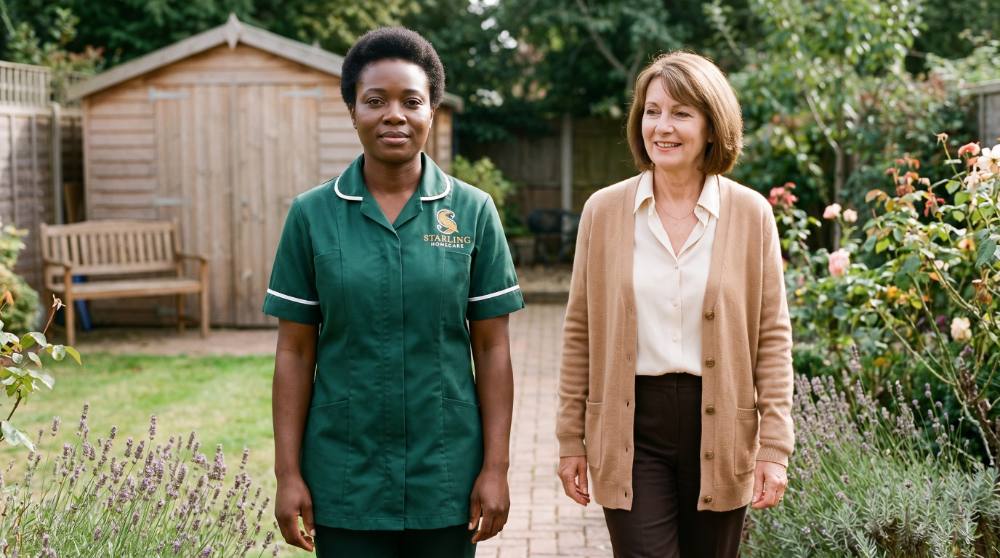
Our role is to make the treatment plan workable at home without becoming the thing the plan warns against. Starling Homecare is an independent, family-run provider regulated by the Care Quality Commission. Accordingly, we support people with FND across Hertfordshire with visiting, overnight and live-in care. The principle we hold to is the one in the guide. Taking part in daily activities is rehabilitation, so the carer's job is to make the graded steps possible, not to do them for the person.
On a bad day that means the minimum the plan asks for still happens: up, dressed, a short time outside if possible. On a good day, by contrast, it means someone steady enough to stop the boom, so tomorrow is not the bust. In between, it means getting to physiotherapy and psychology appointments on time and keeping the medication routine straight. It also means giving the family carer the hours they need to stay well.
Families we support with FND often tell us the hardest part is knowing when to step in. Our guide to supporting someone with FND at home is about exactly that judgement, and our FND care at home page describes the service.
Where we support people with FND across Hertfordshire
Each of our areas has its own local team and number, so call the one nearest you:
- St Albans: 01727 324 127
- Harpenden: 01582 824 830
- Welwyn Hatfield: 01707 714 000
- Potters Bar: 01707 714 000
- Hemel Hempstead: 01442 954 137
- Berkhamsted: 01442 954 137
- Tring: 01442 954 137
- Hitchin: 01462 534739
- Hertford: 01920 746779
- Radlett and Shenley: 01923 988 550
Common questions about FND treatment
Does Starling Homecare provide care at home for someone going through FND treatment in Hertfordshire?
Yes. We provide visiting, overnight and live-in care at home for people with FND across Hertfordshire. It is planned around the NHS rehabilitation programme rather than instead of it. The care supports graded activity and independence, so the person does the steps and the carer makes them possible.
Can FND be cured?
The patient guide describes FND symptoms as potentially reversible and says there are slow fixes rather than quick ones. Many people improve with rehabilitation, and relapses are common enough that planning for them is part of good treatment. Your neurologist is the right person to ask about your own outlook.
Is FND treatment available on the NHS in Hertfordshire?
Yes. FND treatment runs through NHS neurology, physiotherapy, occupational therapy and psychology, and your GP makes the referral. In the east and north the neuro rehabilitation service at Danesbury in Welwyn treats FND. In the west, community neuro rehabilitation runs through Central London Community Healthcare.
FND treatment is slow, layered and mostly done at home, which is why the people around someone matter so much to it. If you would like to talk about how care at home could support the plan, our St Albans office is on 01727 324 127. The treatment section of neurosymptoms.org, the source for this guide, is worth reading in full.
Arranging Care Is Simple
Starting care can feel like a big step. We keep it calm and straightforward, and we are here to guide you from your very first call.
1. Talk to us
Get in touch by phone or request a callback. We will listen, answer your questions and help you understand the options, so you can decide what feels right in your own time.
2. A home visit and initial consultation
We arrange a visit to understand your routines, your home and what matters most to you. Together we agree an initial consultation and shape the support that feels right.
3. Your care begins
A small, familiar team starts your care, arriving at the agreed times and staying involved as your needs change. We remain your trusted adviser throughout.
Whenever you are ready, we are here to help.