
Dual sensory loss means a person's sight and hearing have both declined enough that, together, they make communication, getting information and getting around harder. It is more common in later life, it does not necessarily mean total deafness or blindness, and Hertfordshire has a specialist team that can assess what would help.
To talk anything through with someone local, our St Albans team is on 01727 324 127.
Families often notice it in small ways first. Mum stops answering the phone, misreads her post, or sits quietly through a family lunch she once led. Sometimes the trouble looks like reluctance, as our article on what to do when a parent won't wear their hearing aids explores, when the real issue is that two senses are now struggling at once.
What is dual sensory loss?
The charity Sense uses the term deafblindness, and the two describe the same thing. The definition it quotes is a combined sight and hearing condition that causes difficulties with communication, access to information and mobility.
Crucially, Sense explains that being deafblind does not necessarily mean being totally deaf or blind. Most deafblind people have some sight and some hearing.
How common is it in older people?
According to Sense's guide to deafblindness, more than 450,000 people in the UK are deafblind. It expects that to pass 610,000 by 2035, largely because the population is ageing.
That is because the usual causes are common in later life. Sense lists age-related hearing loss, macular degeneration, cataracts, glaucoma and diabetic eye disease, as well as stroke.
What signs should families look out for?
Watch for changes that suggest someone is working harder to follow what is going on:
- not hearing someone who speaks from behind, or being startled when someone approaches
- turning the volume up
- struggling in low light or bright light
- not recognising familiar people
- relying more on touch to find things
- holding things close to the face
Sense advises speaking to the GP as soon as possible if you notice signs like these. It also recommends that older adults have an eye test, normally every two years, and says you can ask the GP for a hearing test at any time if you think hearing is going.
What help is available in Hertfordshire?
There is a right to specialist help. Under the Department of Health's deafblind guidance for local authorities, issued in 2014, councils in England must make sure assessments are carried out by someone suitably qualified. They should also offer access to specifically trained one-to-one support workers where needed, and give information in an accessible way.
In practice, Hertfordshire County Council's Sensory Services has a deafblind team that meets deafblind adults and children and their carers. Its specially trained workers help with equipment, everyday living skills and getting about safely. Depending on need, support can include communicator guides, intervenors and volunteers. You can ask for an assessment through the council website or on 0300 123 4042, and family carers can ask for a carer's assessment too.
The council's hearing equipment includes loop systems, flashing smoke alarms, television amplifiers, and doorbells and phones that flash. For sight loss, it offers vision rehabilitation.
Should my parent register as sight impaired?
Registration starts at the eye clinic. The clinic can issue a Certificate of Vision Impairment, and a copy goes to the council. RNIB explains that the council should then be in touch within about two weeks to talk about going on the register.
In Hertfordshire, the council page says the charity Herts Vision Loss handles registration. Registering is a choice, and RNIB notes the council must assess support needs whether or not someone registers.
How can you talk more clearly with an older parent?
Small habits make a big difference. RNID's communication tips include:
- getting their attention first, with a simple gesture such as a wave, before you start speaking
- facing the person when you talk to them
- speaking naturally, without shouting or exaggerating lip movements
- reducing background noise, for example by moving to a quieter room
- being patient, and rephrasing if something is not understood
- writing things down
How does care at home help with dual sensory loss?
Routine and familiarity matter more when two senses are fading.
You can read more about our sensory impairment care, and our pages on hearing loss and sight loss.
Frequently asked questions
Is dual sensory loss the same as being deafblind?
Yes, the terms describe the same combined loss. Sense uses deafblindness, while others say dual sensory loss or combined sight and hearing loss. What matters is getting the right assessment, whatever the label.
Can hearing aids and glasses solve it?
They often help a great deal and are worth keeping up to date. However, they may not fully restore what has been lost, which is why specialist assessment and communication support still matter.
Who should we contact first?
Start with the GP, an optician for an eye test and an audiology check for hearing. At the same time, ask Hertfordshire County Council's Sensory Services for an assessment of daily living needs.
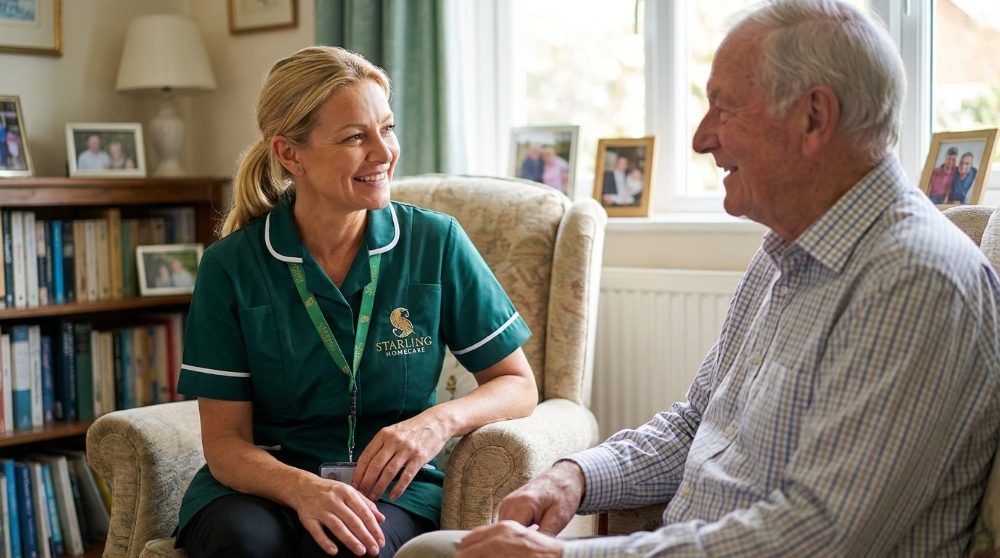
Starling Homecare is a family run, CQC registered home care provider based in St Albans, supporting people from Marshalswick to the city centre and across Hertfordshire. When sight and hearing are both fading, steady visits from carers can help someone keep their routines, their post and their conversations within reach. You can read more about our home care in St Albans.
Figures and guidance checked on 2 November 2026 against Sense and Hertfordshire County Council Sensory Services.
Arranging Care Is Simple
Starting care can feel like a big step. We keep it calm and straightforward, and we are here to guide you from your very first call.
1. Talk to us
Get in touch by phone or request a callback. We will listen, answer your questions and help you understand the options, so you can decide what feels right in your own time.
2. A home visit and initial consultation
We arrange a visit to understand your routines, your home and what matters most to you. Together we agree an initial consultation and shape the support that feels right.
3. Your care begins
A small, familiar team starts your care, arriving at the agreed times and staying involved as your needs change. We remain your trusted adviser throughout.
Whenever you are ready, we are here to help.