
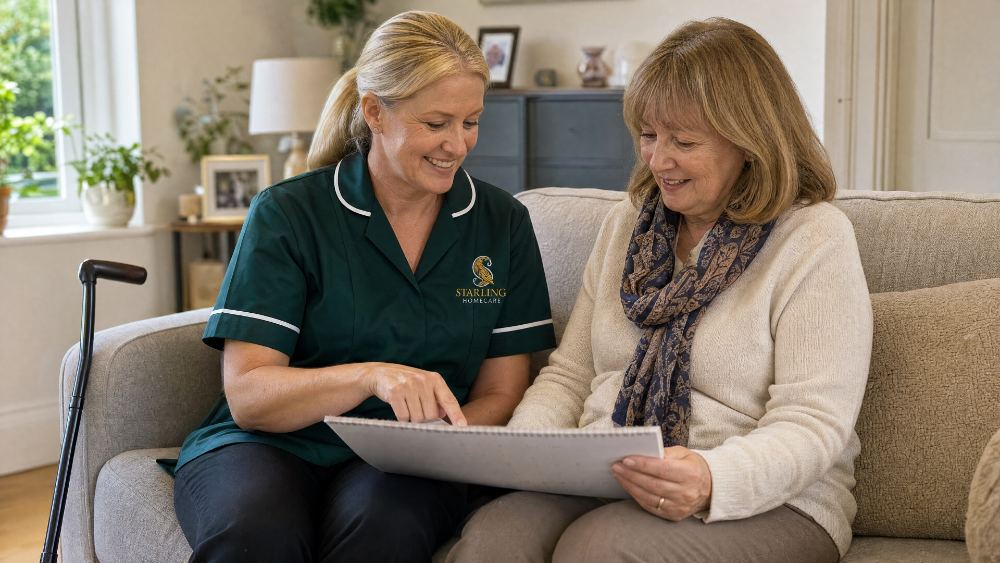
Can someone with MS live alone? Yes, many people with multiple sclerosis live on their own for years. What decides it is how fatigue, mobility and relapses affect that person, and whether there is a plan for the bad days as well as the good ones.
To talk anything through with someone local, our St Albans team is on 01727 324 127.
Why the answer is different for everyone
MS affects people in very different ways. The NHS guide to living with MS says it may touch daily life a little or a great deal. Symptoms can also come and go, with relapses followed by periods of recovery.
So a parent, sibling or partner with MS may manage alone with ease for months. Then a relapse or a run of poor sleep changes the picture for a while. Families often worry most about that uncertainty, rather than any single task.
It also helps to separate two questions. One is whether the person wants to live alone. The other is what would make it safe. If a partner currently does the caring, our article on MS respite care at home looks at breaks for the family carer.
What usually decides it
Four things usually matter most:
- Fatigue. MS fatigue is not ordinary tiredness, and it can use up the energy needed for cooking or washing.
- Balance and mobility. Getting in and out of the bath, up the stairs or to the door can be the riskiest moments.
- Relapses. A relapse can make a manageable week unmanageable, sometimes quickly.
- Connection. Living alone suits some people well. For others it slowly becomes isolation.
None of these needs to rule out independent living. However, each one needs a practical answer that the person agrees with.
Planning around fatigue
The MS Society's advice on managing fatigue centres on planning. It suggests building proper rest into the day and deciding which activities matter most.
For someone living alone, this often means handing over the tasks that drain energy for little reward. For example, a carer might take on the shopping, changing the bed or preparing a meal for later. That leaves the person's good hours for work, friends or something they enjoy.
An occupational therapist can also assess the home and suggest equipment. Ask the MS nurse, GP or council how to be referred.
Can someone with MS live alone after a relapse?
Often yes, but the weeks after a relapse may need more support than usual. The MS Society's guidance on relapses says recovery can take weeks or possibly months. It also notes that fatigue is often worse during a relapse.
So it is worth agreeing a relapse plan before one happens. A simple plan covers three things:
- who to call: the MS nurse or neurology team about sudden new symptoms, and the GP, who can check for infections that can mimic a relapse
- which daily tasks someone else would take on for a while
- who checks in each day until things settle
Keep the plan by the phone, with the contact numbers the person's own team has given them.
Making the home safer for living alone with MS
Small changes help. The NHS mentions walking aids, wheelchairs and adaptations such as stair lifts or rails.
In Hertfordshire, the council can carry out an assessment where needs are more complex. According to Hertfordshire County Council's equipment page, equipment recommended after that assessment can be loaned free of charge. For walking sticks or a wheelchair, the starting point is the GP.
Also think about falls. A phone within reach, or a personal alarm, means help is a button away. If falls are starting to happen, ask the GP about a referral to a falls service.
Staying connected, and an early warning system
Writing on the MS Society blog about living alone with MS, one member describes a simple habit. She texts two friends every morning, and they raise the alarm if they do not hear from her.
That routine costs nothing and respects independence. Later, regular visits from a familiar carer can add a second layer of contact.
When care at home helps
Care works best when it fits the day the person is actually having. Our MS care at home can include unhurried help with washing and dressing, meals and housekeeping that save energy, and support with transfers.
It can also include extra cover during and after relapses, and liaison with the MS nurse or GP with the person's agreement. Visits start from 30 minutes, so support can begin small and grow only if needed.
Frequently asked questions
Is it safe for my brother with MS to live alone if he keeps falling?
Repeated falls are a signal to act, not a verdict. Ask his GP about a falls referral and an equipment assessment. Make sure he can always call for help. Support at the riskiest times, such as showering, also helps.
Who should we tell about a relapse?
The MS nurse or neurology team should hear about sudden new symptoms. The GP can rule out an infection. It also helps to tell the team about each relapse, because knowing how many relapses there have been, and how they affect the person, can help their MS care.
Can someone with MS live alone if they use a wheelchair?
Many do, but it depends on the home and the help available. An occupational therapy assessment can show which adaptations and equipment would make daily tasks possible. Some people also choose regular care visits for transfers and personal care.
Does the council help with care for MS in Hertfordshire?
Anyone can ask Hertfordshire County Council for a needs assessment. Our guide to care needs assessments in Hertfordshire explains what happens and what to prepare.
Living alone with MS is rarely a single yes or no; it is a plan that changes over time. Starling Homecare, a family run and CQC registered provider in St Albans, supports people with MS across Hertfordshire through visiting and live-in care. If you are weighing up whether someone you love can keep living alone, we can talk through what help on the harder days might look like.
Figures and guidance checked on 25 October 2026 against the NHS website, the MS Society and Hertfordshire County Council.
Arranging Care Is Simple
Starting care can feel like a big step. We keep it calm and straightforward, and we are here to guide you from your very first call.
1. Talk to us
Get in touch by phone or request a callback. We will listen, answer your questions and help you understand the options, so you can decide what feels right in your own time.
2. A home visit and initial consultation
We arrange a visit to understand your routines, your home and what matters most to you. Together we agree an initial consultation and shape the support that feels right.
3. Your care begins
A small, familiar team starts your care, arriving at the agreed times and staying involved as your needs change. We remain your trusted adviser throughout.
Whenever you are ready, we are here to help.