
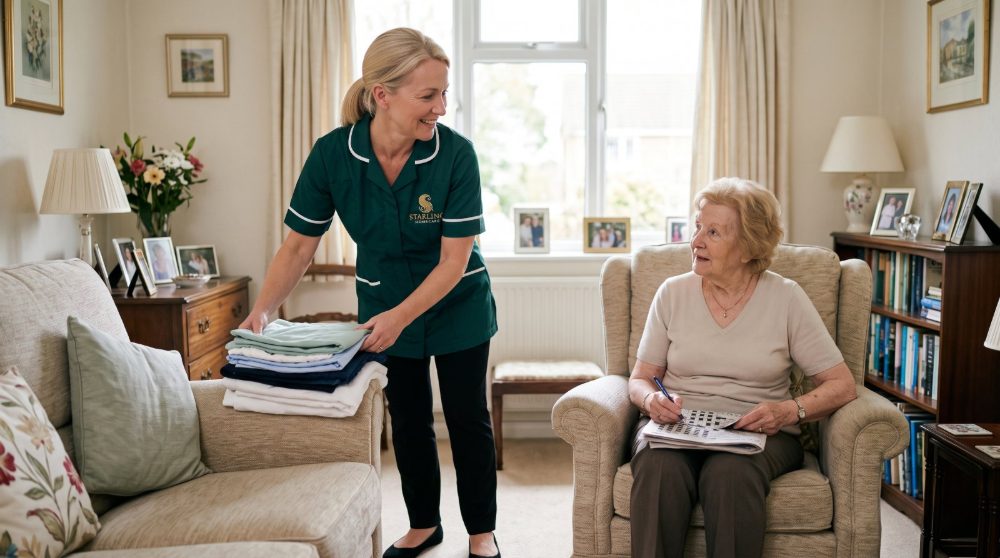
Many people with arthritis say their joints feel stiffer and more painful when it turns cold and damp, although research is limited and experiences vary. The practical answer to arthritis in cold weather is to keep the home warm, dress in loose layers, and keep moving gently every day.
To talk anything through with someone local, our St Albans team is on 01727 324 127.
Does cold weather really affect arthritis?
For some people, yes, though not for everyone. The charity Arthritis UK, previously Versus Arthritis, says reports vary widely and research is limited.
One study it funded at the University of Manchester, called Cloudy with a Chance of Pain, is often quoted. It linked higher humidity, lower air pressure and stronger winds with days of significantly more pain. So damp, blustery days may matter as much as the cold itself.
Arthritis UK also mentions Raynaud's phenomenon, which some people with arthritis have too. With Raynaud's, cold or stress can reduce blood flow to the fingers and toes.
Winter tends to show up the small jobs that stiff hands find hardest. Our article on helping someone with arthritis at home looks at the tasks that quietly stop getting done.
Keeping warm with arthritis in cold weather
Start with the rooms your relative actually uses. The NHS advice on keeping warm is to heat them to at least 18°C if you can.
Then think about clothing. Arthritis UK says several loose layers trap heat better than one thick jumper. Hats, gloves and an extra pair of socks help on the way out of the door.
For stiff joints, the charity suggests some people find comfort in:
- a hot water bottle or a microwavable wheat bag
- a warm bath or a hot shower
However, check that the bathroom is warm and that getting in and out of the bath is safe first. If heating costs worry you, our guide to keeping an older parent warm in winter covers help that may be available.
Why keeping joints moving matters in winter
It is tempting to stay in one chair when it is cold. But for arthritis in cold weather, Arthritis UK says staying active helps ease pain. It keeps you warmer too.
The NHS physical activity guidelines for older adults suggest:
- being active every day, even if it is just light activity
- breaking up long periods of sitting with some movement
- activities for strength, balance and flexibility on at least two days a week
Low impact options Arthritis UK suggests include swimming, yoga, tai chi and gentle exercises at home. In practice, small habits count. For example, standing during the adverts, walking to the kitchen to make the tea, or a few gentle hand stretches after breakfast.
If you are unsure what is safe for a particular joint, the GP or a physiotherapist can advise. A routine they suggest is the one to follow.
Getting out safely on icy or wet days
Going out still matters, for shopping, appointments and seeing people. Arthritis UK suggests shoes with good grip and sticking to cleared footpaths where you can.
Also, plan trips for the warmer middle of the day, and allow extra time. Having someone alongside on a frosty morning can make the difference between going and staying in.
The charity also says people with inflammatory arthritis, and those taking steroids or disease modifying drugs, should have a flu vaccination this winter. If you are unsure whether that applies, ask the GP practice or pharmacist.
Where practical help at home fits in
Cold mornings often make the first hour of the day the hardest. A visit at that time can help with washing and dressing in a warm room, then a hot breakfast. Our page on what happens in a home care visit explains how this is planned.
Other help is more about the house. Laundry, changing beds, carrying shopping and keeping the kitchen stocked are all heavy on sore hands and knees.
Frequently asked questions
Does Starling Homecare provide arthritis care in Hertfordshire?
Yes. Starling Homecare is an independent, family run provider based in St Albans and registered with the Care Quality Commission. We provide arthritis care at home in Hertfordshire, through visiting care and live-in care. You can read more on our arthritis care page.
Why do my mother's joints ache before it rains?
Nobody has a firm answer yet. The Manchester study linked humidity, low pressure and wind with more pain, which fits what many people describe. If her pain is changing or getting worse, mention it to her GP.
How warm should the house be for someone with arthritis?
The NHS suggests at least 18°C in the rooms someone uses regularly. A warm bedroom matters as much as the sitting room, because stiff mornings start there.
Should Dad stay indoors when it is icy?
Not always. Grippy shoes, cleared paths and company can make a short trip manageable. On the worst days, moving around indoors still keeps joints working.
Can a carer help with exercises?
A carer can encourage gentle activity and keep someone company during a routine their physiotherapist has set. They do not design exercise programmes or give treatment. That stays with the GP and physiotherapist.
We support people with arthritis through our arthritis and mobility care at home. Where we provide visiting care, visits can be timed for stiff mornings or dark afternoons. Where housework is the hardest part of a cold day, our domestic support at home page explains what that help covers.
Figures and guidance checked on 8 November 2026 against Arthritis UK and the NHS.
Arranging Care Is Simple
Starting care can feel like a big step. We keep it calm and straightforward, and we are here to guide you from your very first call.
1. Talk to us
Get in touch by phone or request a callback. We will listen, answer your questions and help you understand the options, so you can decide what feels right in your own time.
2. A home visit and initial consultation
We arrange a visit to understand your routines, your home and what matters most to you. Together we agree an initial consultation and shape the support that feels right.
3. Your care begins
A small, familiar team starts your care, arriving at the agreed times and staying involved as your needs change. We remain your trusted adviser throughout.
Whenever you are ready, we are here to help.