
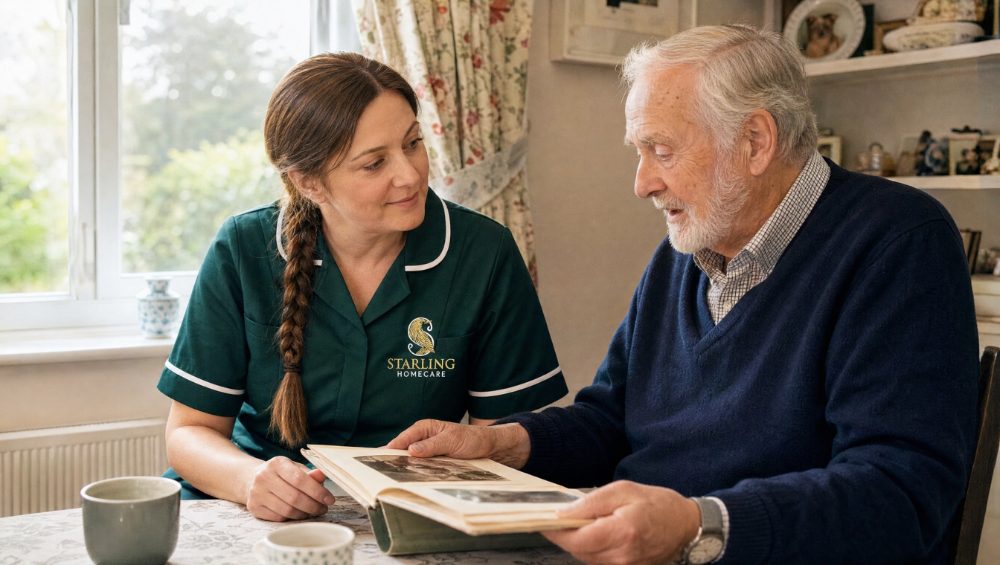
Among Parkinson's speech problems, a quiet, soft or breathy voice is common, and the person often does not realise how quiet they have become. You can help by checking volume gently, giving them time, and asking their specialist or Parkinson's nurse about a referral to a speech and language therapist.
To talk anything through with someone local, our Welwyn Hatfield team is on 01707 714 000.
Why does Parkinson's make a voice quieter?
Parkinson's UK's guide to speech and communication explains that the voice can become quieter, softer and often breathy. The medical term is hypophonia. The voice may also sound hoarse, or flat in tone and volume. Some people start speaking faster or slower without meaning to.
The hardest part for families is that the person may not notice. Parkinson's UK says they may feel they are shouting when they are speaking quietly. So "Speak up, Dad" can feel unfair to him, because to him it already sounds loud enough.
Facial expression can change too. A "masked face" can look blank even when someone feels strongly. That can make conversations harder to read on both sides. Our Parkinson's care at home page explains how support fits around these changes, and our article on when to get help at home with Parkinson's covers the wider picture.
How can you tell it is more than a quiet day?
Look for patterns rather than single moments. It helps to notice where Parkinson's speech problems show up most, such as on the phone or at a busy table. Parkinson's UK suggests that if people often ask someone to repeat themselves, their voice may be too quiet. For example, friends may stop phoning, or a parent may go quiet in busy rooms.
A gentle way to check is to ask someone they trust for an honest view. Recording a short conversation can also help, as long as your parent is comfortable with that. Then the evidence comes from them, not from a family member's complaint.
Getting help for Parkinson's speech problems
Speech and language therapists help with voice, speech and communication. NICE guidance on Parkinson's disease says doctors should consider referring people early on to a therapist with experience of Parkinson's. It also says speech and language therapy should be offered to people who have problems with communication.
Parkinson's UK recommends seeing a therapist as soon as you can after diagnosis. If the voice has become quieter, it suggests talking to the specialist or Parkinson's nurse, who may be able to refer.
Speech therapy in Hertfordshire
In east and north Hertfordshire, Hertfordshire Community NHS Trust's adult speech and language therapy service lists Parkinson's among the conditions it sees. It accepts self-referrals as well as GP referrals. West Hertfordshire is served by Central London Community Healthcare NHS Trust instead. If you are not sure which covers your parent's address, the service can confirm on 0300 1237571.
The same therapists often help with swallowing, which our article on Parkinson's swallowing problems at mealtimes explains.
Everyday ways to help a parent be heard
Most of what helps is about time and patience. These ideas draw on Parkinson's UK's advice for families:
- Give time. Do not hurry them, and do not push them to talk if they would rather not.
- Do not pretend to understand. Instead, check back: "So you're talking about the garden, is that right?"
- Let them finish. Only finish sentences or speak for them if they have agreed to that.
- Ask how they feel. Their face may not match their mood, so a simple question avoids guesswork.
- Cut background noise. Turn off the television or radio, and sit face to face.
Parkinson's UK also has tips for the person speaking. For example, imagine talking to someone at the back of a large room, without shouting. Short sentences and clear words help too. However, any exercises should come from their own therapist.
How regular company helps
A quiet voice can slowly shrink someone's world. Conversations get shorter, phone calls stop, and busy family gatherings become tiring. In practice, a quiet room and unhurried one to one time make conversation much easier.
That is where companionship care can help. A carer who visits regularly learns how your parent speaks, and makes space for proper conversation. To see how a visit is shaped, read what happens in a home care visit.
Frequently asked questions
Does Starling Homecare provide Parkinson's care at home?
Yes. Starling Homecare is an independent, family run home care provider based in St Albans and registered with the Care Quality Commission. We support people living with Parkinson's with visiting care in St Albans, Harpenden, Hemel Hempstead, Welwyn Garden City and Hatfield, Potters Bar and Cheshunt, and with live-in care across Hertfordshire.
Can my parent refer themselves to speech therapy?
In east and north Hertfordshire, the community adult speech and language therapy service accepts self-referrals. Elsewhere, ask the GP, specialist or Parkinson's nurse. A short note of what you have noticed makes that conversation quicker.
Should I speak for my parent at appointments?
Only if they want you to. Parkinson's UK advises against talking for someone unless they have agreed. Agreeing a signal beforehand, such as a glance when they want help, can keep them in charge.
Is a quiet voice a sign that something has changed?
Voice changes are common with Parkinson's, but only the person's own team can say what a change means for them. If you notice a new or quick change, mention it to the specialist or Parkinson's nurse.
Companionship sits alongside personal care and medication prompting in what our carers offer in Welwyn Hatfield, from Welwyn Garden City to Brookmans Park. Our carers support, prompt and listen; they do not provide therapy, but they can encourage any routine your parent's therapist has set. More about our local team is on our home care in Welwyn Hatfield page.
Figures and guidance checked on 20 November 2026 against Parkinson's UK, NICE and Hertfordshire Community NHS Trust.
Arranging Care Is Simple
Starting care can feel like a big step. We keep it calm and straightforward, and we are here to guide you from your very first call.
1. Talk to us
Get in touch by phone or request a callback. We will listen, answer your questions and help you understand the options, so you can decide what feels right in your own time.
2. A home visit and initial consultation
We arrange a visit to understand your routines, your home and what matters most to you. Together we agree an initial consultation and shape the support that feels right.
3. Your care begins
A small, familiar team starts your care, arriving at the agreed times and staying involved as your needs change. We remain your trusted adviser throughout.
Whenever you are ready, we are here to help.