
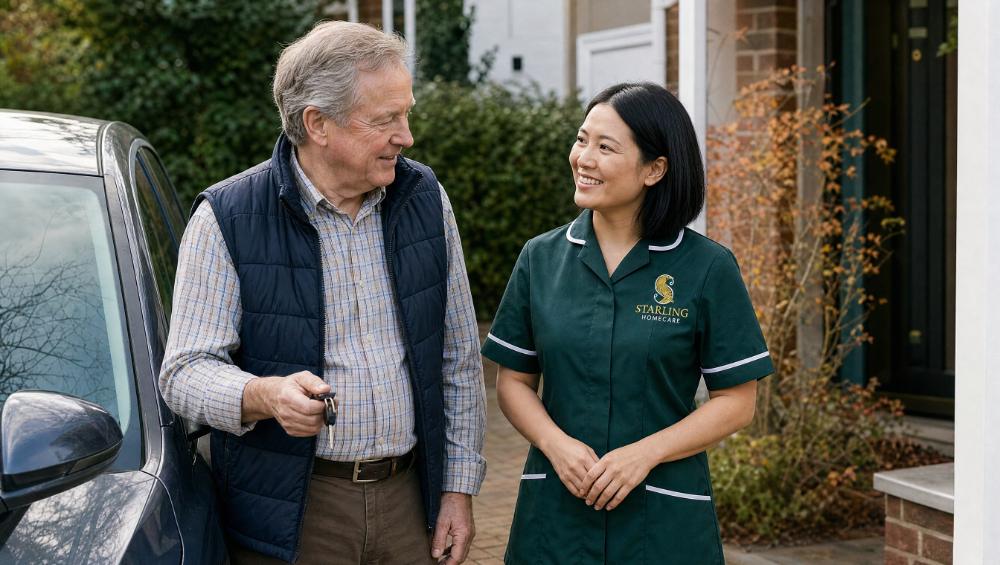
The rule for driving after a stroke is that you must stop for at least one month and restart only when a doctor or healthcare professional says it is safe. You must also tell the DVLA if problems such as weakness, eyesight changes, or difficulties with balance, memory or understanding last beyond that first month.
To talk anything through with someone local, our St Albans team is on 01727 324 127.
What are the rules for driving after a stroke?
For a car or motorcycle licence, GOV.UK's stroke and driving guidance is clear. You must stop driving for at least one month. After that, you can drive again only once a doctor or healthcare professional confirms it is safe.
If you have had a stroke and recovered, you do not need to tell the DVLA. However, you must report it if any of these last beyond one month:
- weakness in your arms or legs
- eyesight problems, such as loss of part of your field of vision or double vision
- problems with balance, memory or understanding
You must also tell the DVLA if you have a seizure of any type, if you need brain surgery as part of treatment, or if a doctor thinks you may not be safe to drive.
Coming home is often the moment these questions surface. Our guide to what help is available after a stroke at home covers the wider picture, and our stroke care at home page explains how carers support recovery.
Bus, coach and lorry licences
The rules are stricter for these licences. GOV.UK says you must tell the DVLA and stop driving for at least one year. The DVLA then assesses your case and advises whether tests are needed before you reapply.
How do you tell the DVLA?
You can report the condition online through GOV.UK, or fill in form STR1 and post it to the address on the form. For a bus, coach or lorry licence, the form is STR1V.
GOV.UK says you can be fined up to £1,000 if you do not tell the DVLA about a medical condition that affects your driving. You may also be prosecuted if you are involved in an accident.
The Stroke Association adds that legal decisions about your licence are made by the DVLA. It also says that if a medical professional tells you to stop driving for three months or more, you must give up your licence.
How can a stroke affect driving?
Some effects are obvious, and others are easy to miss. The Stroke Association describes several that matter behind the wheel:
- Vision. Part of the field of vision may be missing. Others lose awareness of things on one side.
- Glare. Sensitivity to light can make night driving harder, especially soon after the stroke.
- Thinking speed. Slower processing can affect how quickly and accurately someone responds, and how well they judge distances.
- Concentration. Confusion and concentration problems are common at first, and often improve within the first few weeks.
- Tiredness. Fatigue can make it hard to stay focused or awake at the wheel.
- Weakness. Weakness in the arms, hands, legs or feet can affect use of the controls.
Our article on fatigue after a stroke explains what to expect.
Insurance, assessments and adapted cars
Tell the insurer as well as the DVLA. The Stroke Association says this applies after a stroke or a TIA.
A driving assessment centre can give individual advice, and driving assessment and mobility centres can help arrange lessons. For physical weakness, a vehicle adaptation may be possible. Examples include hand controls, lighter power steering and one handed steering. Many can be removed easily for another driver, according to the Stroke Association's guide to starting to drive again.
Talking to a parent about driving after a stroke
For many people, the car means freedom. So losing it, even for a month, can feel like a real loss. In our experience, the conversation goes better when it starts from what your parent wants to keep doing, rather than from the car.
It also helps to let the professionals carry the hard part. The doctor decides when it is safe, and the DVLA decides about the licence. That leaves the family free to focus on the practical side.
Questions that help the conversation
- Which trips matter most each week: shopping, church, a club, seeing friends?
- Who could help with those while your parent is not driving?
- Has the doctor said anything about when driving can be reviewed?
Staying independent while not driving
A month or more without the car can quietly shrink someone's world. Regular company helps keep the week full and the person connected. Our companionship care is built around that, from a chat over coffee to help planning the days ahead.
The care plan sets out what matters to the person and how visits support it. Our page on what a care plan includes explains how that works.
Frequently asked questions
Does Starling Homecare provide stroke care at home?
Yes. Starling Homecare is an independent, family run home care provider based in St Albans and registered with the Care Quality Commission. We support people recovering from a stroke with visiting care in St Albans, Harpenden, Hemel Hempstead, Welwyn Garden City and Hatfield, Potters Bar and Cheshunt, and with live-in care across Hertfordshire.
Do I have to tell the DVLA if I recovered within a month?
No, not for a car or motorcycle licence. GOV.UK says that if you have had a stroke and recovered, you do not need to report it. You still need a doctor or healthcare professional to confirm it is safe before you drive again.
What happens if someone does not tell the DVLA?
They can be fined up to £1,000 for not reporting a medical condition that affects driving. They may also face prosecution if they are involved in an accident.
Does the car insurer need to know?
Yes. The Stroke Association says you must tell your insurance company after a stroke or TIA. It may also want confirmation that you are safe to drive.
Can the family decide whether a parent drives again?
The decision sits with the doctor and the DVLA. Families can help by sharing what they notice, such as new tiredness or near misses, with the GP or stroke team.
Giving up the car for a while does not have to mean giving up the week. Our carers help people recovering from a stroke keep their routines and their company while driving is on hold. Starling Homecare is run by a local family, registered with the Care Quality Commission, and covers the whole county with live-in care.
Figures and guidance checked on 20 November 2026 against GOV.UK stroke and driving and the Stroke Association.
Arranging Care Is Simple
Starting care can feel like a big step. We keep it calm and straightforward, and we are here to guide you from your very first call.
1. Talk to us
Get in touch by phone or request a callback. We will listen, answer your questions and help you understand the options, so you can decide what feels right in your own time.
2. A home visit and initial consultation
We arrange a visit to understand your routines, your home and what matters most to you. Together we agree an initial consultation and shape the support that feels right.
3. Your care begins
A small, familiar team starts your care, arriving at the agreed times and staying involved as your needs change. We remain your trusted adviser throughout.
Whenever you are ready, we are here to help.