
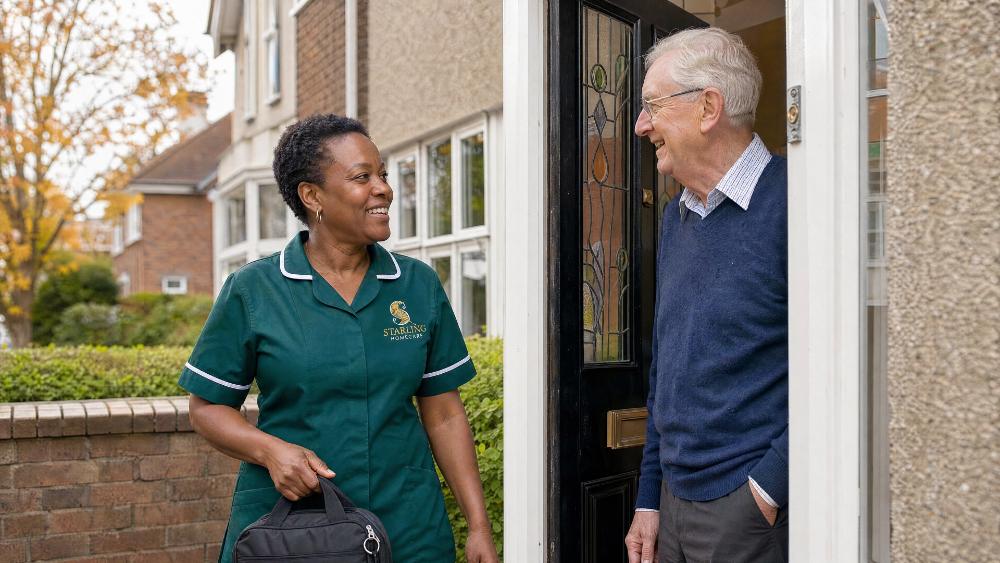
"How often should carers visit?" is best answered by the day itself: carers should come when help is actually needed. For one parent that means a single lunchtime visit; for another, four visits from getting up to bedtime. Start with what has to happen, and when, and the number of visits follows.
To talk anything through with someone local, our Welwyn Hatfield team is on 01707 714 000.
Starling Homecare is a family run home care provider, registered with the Care Quality Commission. We plan visiting care with families across Welwyn Garden City, Hatfield, Brookmans Park, Welwyn village and Digswell. Our guide to what everyday home care looks like in Welwyn Garden City and Hatfield describes the help itself.
What can a 30 minute visit cover?
A 30 minute visit suits a focused task. For example, it can cover a medication prompt and breakfast, or heating a lunch and leaving a drink in reach. It also suits a check that someone is safe and settled for the evening.
So how often should carers visit, and for how long? NICE sets quality standards for care in England. It says home care visits should usually last at least 30 minutes. Shorter visits should be kept for agreed tasks or checks, within a wider package, by a worker the person knows. Its reasoning is simple: rushed visits can miss needs and cost dignity.
What changes with 45 minutes or an hour?
Time changes what is possible. A 45 minute morning visit usually allows help to wash and dress without hurrying, then breakfast and tablets. An hour gives room for a shower, a proper cooked meal, or a walk to the shops.
Longer visits also leave space for conversation. That matters, because for someone who lives alone a visit may be the main company of the day. Also, a carer who is not watching the clock is more likely to notice changes in mood, appetite or mobility.
How often should carers visit? Working out the pattern
A simple way to plan is to walk through a normal day on paper. Then mark the moments when your parent cannot manage safely alone.
- Getting up: washing, dressing, breakfast and morning medicines.
- Midday: lunch, a drink, a prompt for any lunchtime tablets.
- Teatime: an evening meal, curtains and lights, a check on the heating.
- Bedtime: help to undress, wash and get into bed safely.
Next, cross off the moments that family, neighbours or a day centre already cover. What remains is the starting pattern. For example, if a daughter calls in each evening, two daytime visits may be enough for now.
Medicine times often settle the question. If tablets must be taken at set times, visits fit those times, not the reverse. In the same way, someone who is unsteady first thing may need a morning visit every day, including weekends.
Does a needs assessment help you decide?
It can. The NHS guide to care needs assessments says the assessment is free, and anyone can ask. In Hertfordshire, you ask Hertfordshire County Council.
The assessment looks at what your parent needs help with. You may plan to arrange and pay for care yourselves. Even so, the NHS page on help at home from a paid carer notes it helps you explain those needs to an agency.
When are visits no longer enough?
Visits work well while the gaps between them are safe. However, some signs suggest the pattern needs a rethink:
- falls or confusion at night, when nobody is there
- needing help at unpredictable times, not just at set points in the day
- a family carer who is not sleeping or is running out of road
- visits that keep getting longer because the needs keep growing
At that point, overnight care or live-in care may suit better. Our guide to choosing between live-in care and visiting care sets out how families weigh the two.
Visiting care from Starling Homecare in Welwyn Hatfield
Our visiting care at home runs from 30 minute visits upwards. Visits can include personal care, medication prompting and support, and companionship. The pattern can change as needs change.
Visiting care is priced from £34 a visit. The final cost depends on the visit pattern agreed.
Frequently asked questions
Does Starling Homecare offer short visits in Welwyn Garden City and Hatfield?
Our visits start at 30 minutes, which fits a focused task such as a medication prompt. We cover Welwyn Garden City, Hatfield and the surrounding villages.
Is one visit a day enough for someone who lives alone?
Sometimes, for a parent who is largely independent and needs one meal or a check. If they need help to get up, take timed medicines or go to bed, one visit leaves gaps.
Can the number of visits change later?
Yes. Needs rarely stay the same, so a good pattern is reviewed. Visits can be added after a hospital stay, for example, and reduced again as someone recovers.
Are 15 minute care visits allowed?
NICE's quality standard says visits should be at least 30 minutes. Short visits are for agreed tasks or checks within a wider package. In our view, personal care should never be squeezed into a short slot.
There is no right number of visits for every family, only a right pattern for your parent. Our Welwyn Hatfield team can talk through your parent's day with you. More about our local care is on our home care in Welwyn Hatfield page.
Figures and guidance checked on 25 October 2026 against NICE quality standard QS123: length of home care visits and the NHS social care and support guide.
Arranging Care Is Simple
Starting care can feel like a big step. We keep it calm and straightforward, and we are here to guide you from your very first call.
1. Talk to us
Get in touch by phone or request a callback. We will listen, answer your questions and help you understand the options, so you can decide what feels right in your own time.
2. A home visit and initial consultation
We arrange a visit to understand your routines, your home and what matters most to you. Together we agree an initial consultation and shape the support that feels right.
3. Your care begins
A small, familiar team starts your care, arriving at the agreed times and staying involved as your needs change. We remain your trusted adviser throughout.
Whenever you are ready, we are here to help.