Winter bugs and older people are a poor mix, but most of the protection happens at home: washing hands with soap and water, keeping visitors away while they are unwell, and making sure a parent keeps drinking. UKHSA's latest weekly figures, for 5 to 11 October, show flu and COVID-19 circulating at baseline or low levels, which makes now a calm moment to put good habits in place before the busier months.
To talk anything through with someone local, our St Albans team is on 01727 324 127.
None of this needs to feel clinical. It is mostly small routines that everyone, including visitors, can follow.
Families often worry about two things: a parent picking up a bug from a visitor, and a parent becoming unwell when nobody is there to notice. Both can be planned for.
What do the latest winter virus figures show?
The UK Health Security Agency (UKHSA) publishes weekly winter virus data. Its national flu and COVID-19 surveillance report of 15 October 2026 covers 5 to 11 October.
- Flu: activity remained stable at baseline levels. The hospital admission rate was 1.88 per 100,000.
- COVID-19: activity showed mixed trends at low levels. Hospital admissions rose to 2.46 per 100,000, from 2.13 the week before.
- RSV: activity increased to baseline levels, with positivity at 1.0%, up from 0.4%.
The figures for the oldest age group stand out. For people aged 85 and over, the COVID-19 hospital admission rate was 26.69 per 100,000, up from 24.20.
For norovirus, the UKHSA winter virus update says activity is within expected levels for the time of year. Laboratory reports were 18.6% lower than the 5-season average for the same period.
Why winter bugs and older people need extra care
The main risk with a stomach bug is losing fluid. UKHSA says dehydration is a risk with norovirus, especially for young children, older people and those who are immunocompromised.
The NHS dehydration page says older adults are more prone to dehydration. It also lists depending on others for drinks as a risk factor, which applies to many people who need help at home.
When it comes to winter bugs and older people, small changes matter. A parent with a heavy cold or a tummy bug may also eat less, move less and sleep more. Those changes are easy to miss on a short phone call.
Hand washing: why soap and water beats gel
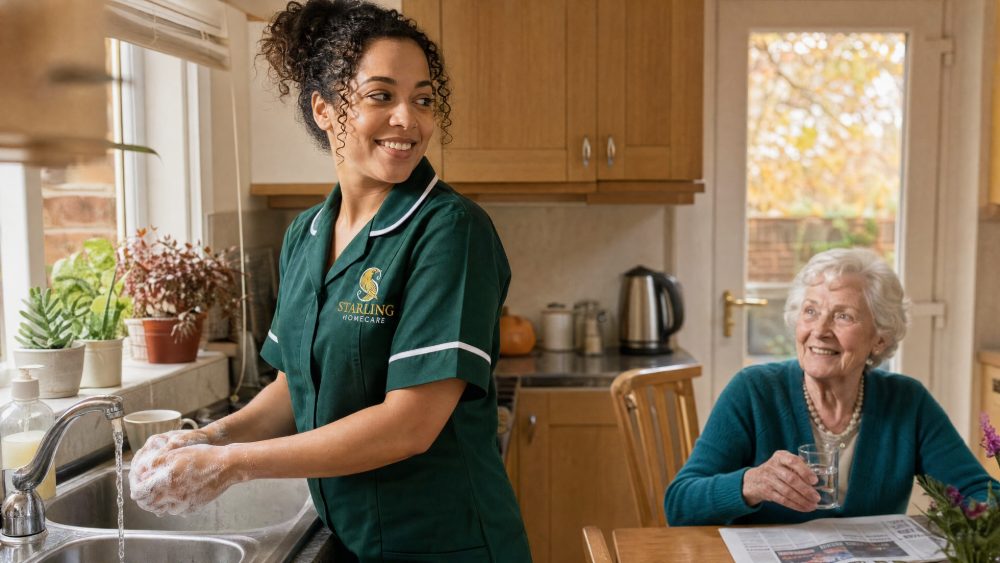
UKHSA and the NHS both say that alcohol hand gels do not kill norovirus. Soap and warm water is the reliable choice, and UKHSA advises bleach-based products for cleaning surfaces.
The NHS hand washing guidance suggests washing for about 20 seconds, the time it takes to sing "Happy Birthday" twice. The key moments include:
- after using the toilet
- before eating or handling food
- after blowing your nose, sneezing or coughing
When someone has norovirus, the NHS advises washing clothes and bedding that have poo or vomit on them at 60°C, separately from other laundry. It also suggests cleaning toilet seats, flush handles, taps and bathroom door handles.
Staying away when unwell, and for 48 hours after
The kindest thing a visitor with a bug can do is wait. UKHSA advises that anyone with diarrhoea and vomiting stays away from work, school or nursery until 48 hours after symptoms stop, and does not prepare food for others during that time.
The NHS says the same in a different way: do not visit hospitals or care homes until you have been free of sickness and diarrhoea for 2 days. The same principle makes sense for visiting an older parent at home.
A phone or video call can fill the gap. Grandchildren with colds can wave from the window and visit properly once they are better.
Fluids and spotting dehydration early
Keeping fluids going is the most practical thing families can do. The NHS suggests drinking regularly through the day, so that pee stays pale, and drinking more during vomiting or diarrhoea.
Signs of dehydration listed by the NHS include:
- thirst and a dry mouth, lips or tongue
- headache, light-headedness or dizziness
- dark yellow, strong-smelling pee, or peeing less often
- tiredness
Leaving a filled glass within reach and offering a drink at every visit helps more than reminders alone. If a parent feels sick, the NHS suggests starting with small sips.
What to do if a parent becomes unwell
Knowing where to turn removes a lot of worry. This is general NHS guidance, not medical advice, and each situation is different.
- Pharmacist: the NHS norovirus page says to speak to a pharmacist if you have norovirus and are an older person, or have signs of dehydration such as dark, smelly pee or peeing less than usual. A pharmacist may suggest oral rehydration powder mixed with water.
- NHS 111: the NHS says to call 111 if someone keeps being sick and cannot keep fluids down, or if vomiting lasts more than 2 days. 111 can help when a GP surgery cannot be reached or is closed.
- GP: for ongoing concerns, contact the parent's own GP surgery.
- 999 or A&E: the NHS lists signs such as being confused or not responding as usual, severe difficulty breathing, or blue, grey, pale or blotchy skin, lips or tongue.
For protection before the season peaks, see our guide to winter vaccinations in Hertfordshire. For a warm home and hot meals, our article on keeping warm in winter covers the essentials.
How home care supports a parent through winter bugs
A steady care routine quietly covers the habits that matter most. Our carers wash their hands on arrival, prepare food hygienically and can help keep the kitchen and bathroom clean, as set out in the care plan.
They offer drinks and leave fresh ones within reach, so fluids do not depend on a parent remembering. Our personal care support also includes help with washing, dressing and continence care, done with dignity.
Familiar carers at consistent visit times also notice change. A parent who has barely touched yesterday's drink, or seems more tired than usual, is noticed and the family hears about it promptly, as agreed in the care plan.
We are a CQC-regulated home care provider. Visiting care is from £34 a visit, and live-in care is from £255 a day, or from £295 a day for couples. These are starting rates, and a price is agreed after an assessment.
Our St Albans team visits homes across the city and nearby, from Marshalswick and Jersey Farm to Redbourn. You can reach them on 01727 324 127 or at stalbans@starlinghomecare.co.uk, and read more on our St Albans home care page.
Common questions about winter bugs and older people in St Albans
Does hand sanitiser kill norovirus?
No. UKHSA and the NHS both say alcohol hand gels do not kill norovirus. Wash hands with soap and warm water instead, especially after using the toilet and before handling food.
How long should I stay away from my parent after a stomach bug?
UKHSA advises staying away from work, school or nursery until 48 hours after symptoms stop. The NHS says not to visit hospitals or care homes until you have been free of sickness and diarrhoea for 2 days. Waiting the same 48 hours before visiting an older parent follows the same principle.
When should an older person with sickness and diarrhoea get help?
The NHS says older people with norovirus should speak to a pharmacist, and UKHSA notes that older people are among those most at risk of dehydration. Call 111 if they keep being sick and cannot keep fluids down. Call 999 if they become confused or are not responding as usual.
Are winter viruses high in October 2026?
UKHSA's report of 15 October 2026 shows flu stable at baseline levels and COVID-19 at low levels. RSV has risen to baseline levels, and norovirus is within expected levels for the time of year.
Most of what protects an older parent this winter is ordinary: clean hands, a full glass, visitors who wait until they are well, and someone who notices when something changes. Agreeing those habits now means the whole family knows what to do if a bug does arrive.
Details checked against UKHSA, GOV.UK and NHS pages on 19 October 2026. Our prices are starting rates, checked on the same date.
Arranging Care Is Simple
Starting care can feel like a big step. We keep it calm and straightforward, and we are here to guide you from your very first call.
1. Talk to us
Get in touch by phone or request a callback. We will listen, answer your questions and help you understand the options, so you can decide what feels right in your own time.
2. A home visit and initial consultation
We arrange a visit to understand your routines, your home and what matters most to you. Together we agree an initial consultation and shape the support that feels right.
3. Your care begins
A small, familiar team starts your care, arriving at the agreed times and staying involved as your needs change. We remain your trusted adviser throughout.
Whenever you are ready, we are here to help.