
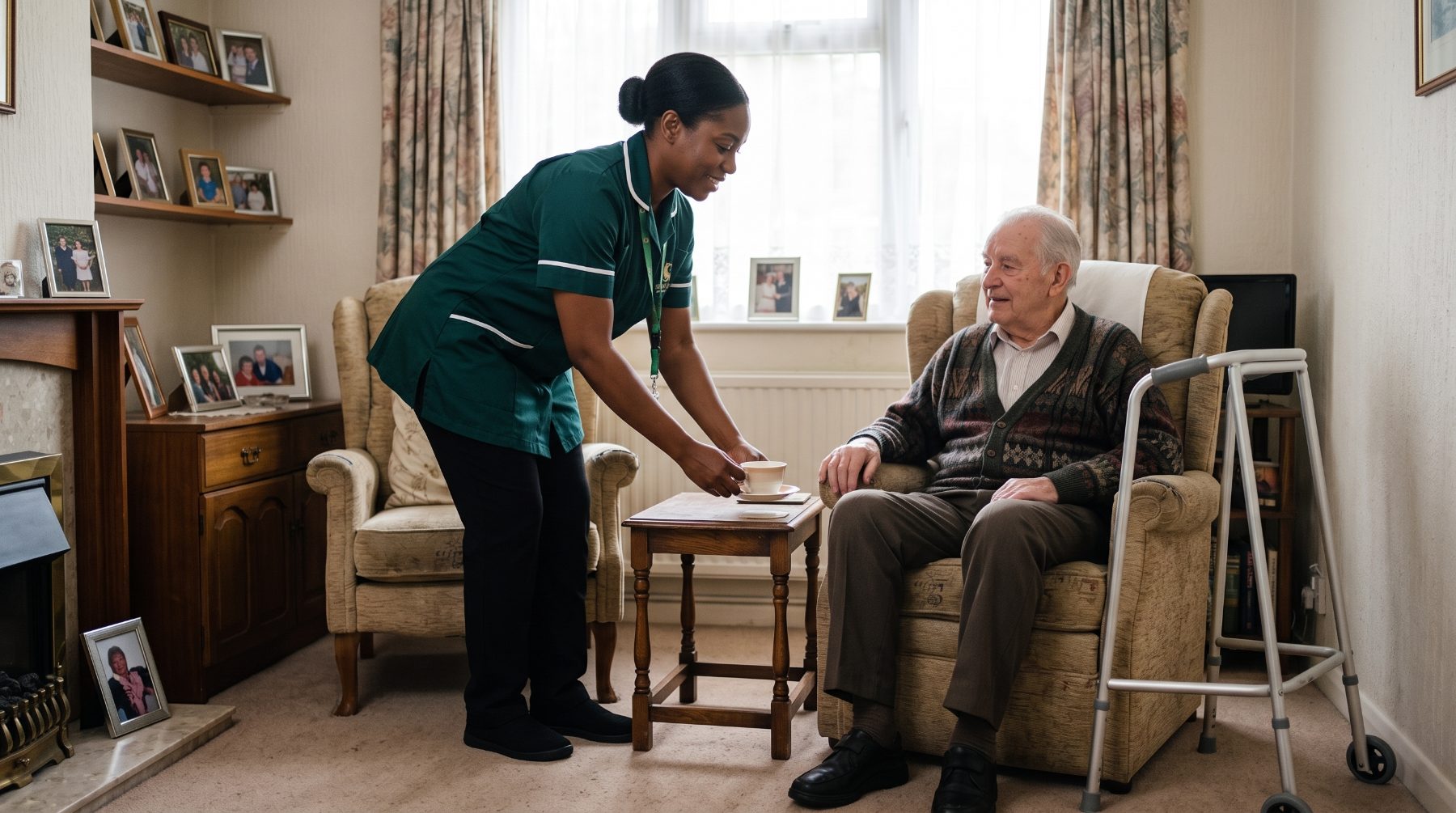
Home care after hospital in St Albans works best when the first few weeks at home are planned as carefully as the discharge itself. Hospitals aim to send people home as soon as they are medically ready, so for most families the question is not whether a relative comes home, but how the first weeks will actually go.
That question deserves a calm, practical answer. A little planning turns an anxious return into a steady recovery in familiar surroundings.
We help families across St Albans put that plan in place, so we know where the pressure points are. This guide walks through the first weeks home: what the hospital and NHS arrange, and what is worth organising yourself.
Why do the first weeks at home matter?
Recovery does not finish on the ward. Strength, appetite and confidence rebuild gradually once someone is home, and the first weeks set the pattern.
Getting home sooner is usually better for recovery, but it moves the real work of recuperation into the house itself. Meals, medicines, rest and gentle activity all matter more than they first seem.
A good first fortnight is quiet and unremarkable: meals happen, medicines are taken, appointments are kept, and someone notices early if anything slips.
Which hospital will your relative come home from?
In St Albans, that depends on why they were in. Planned, lower-risk surgery is often carried out at St Albans City Hospital, the elective care centre run by West Hertfordshire Teaching Hospitals NHS Trust, while an emergency admission usually means Watford General, the Trust's main acute hospital.
Knowing which site matters for the practical things: who collects your relative, how far the journey home is, and where follow-up appointments will be.
It helps to agree early who is at the house for the first evening and who does the first food shop. The first 48 hours home shape how safe and settled someone feels.
What does the NHS arrange first?
Across west Hertfordshire, a service called Discharge Home to Assess supports people leaving hospital. Rather than waiting on a ward for every assessment, a medically ready person can go home and be assessed there, with a short period of support focused on getting back on their feet.
Short-term NHS support of this kind is a bridge, not a permanent arrangement. It concentrates on recovery goals, then steps away once they are met.
Who provides what, and in what order, is set out in our county guide to home care after hospital in Hertfordshire. This article is the St Albans companion: the plan a family builds around that system.
What should your own plan cover?
Think of the first weeks as a simple checklist, ideally agreed before discharge day. For the first week, make sure the house is warm, the fridge is stocked, medicines have been collected and everyone understands any changes made in hospital.
Across the weeks, keep one list of follow-up appointments and how your relative will get to each, whether at St Albans City Hospital, the GP surgery or Watford General. Check any equipment provided is actually being used, and agree who visits on which days so no day is empty and no one is overstretched.
Nights deserve their own thought, because worry tends to peak after dark. And if something does not look right, new confusion, a wound that concerns you, breathlessness, contact the GP or NHS 111 promptly rather than waiting for the next appointment.
Where does home care fit in?
Many families use short daily visits to steady the first weeks: help with washing and dressing while strength returns, a proper meal, medication prompts, and a reliable eye on how recovery is really going. Support like this runs alongside NHS involvement and family help, then carries on smoothly once the short-term services finish.
As a CQC regulated, family-run provider, we keep the same small team visiting, which matters most in exactly these weeks. Our post-hospital care is designed to taper: more support at the start, less as confidence returns.
The aim is not to create dependence. It is to make sure the recovery that began on the ward is finished properly at home. You can read about our local team on the page for home care in St Albans.
Common Questions About Home Care After Hospital in St Albans
How quickly can home care start after a hospital stay in St Albans?
Often within a few days, and sooner where there is time to plan before discharge. If a stay is expected, it is worth speaking to us before discharge day, so visits can begin the day your relative comes home rather than after a difficult first week.
What NHS support is there when someone leaves hospital in St Albans?
Across west Hertfordshire, the Discharge Home to Assess service lets a medically ready person be assessed at home rather than on a ward, with a short period of support focused on recovery. It is time-limited, so many families plan what will follow it alongside it.
Do you cover the villages around St Albans?
Yes. Our St Albans team supports the city and the surrounding area, including London Colney, Bricket Wood, Sandridge, Wheathampstead and Colney Heath. The same small team covers the area, so visits stay consistent wherever home is.
Coming home from hospital should feel like the end of the hard part, not the start of a harder one. If someone you love is on a ward now and you are thinking about the weeks ahead, our St Albans team is on 01727 324127 and always happy to talk things through, with Hertfordshire County Council's coming out of hospital guidance a useful place to start.
Arranging Care Is Simple
Starting care can feel like a big step. We keep it calm and straightforward, and we are here to guide you from your very first call.
1. Talk to us
Get in touch by phone or request a callback. We will listen, answer your questions and help you understand the options, so you can decide what feels right in your own time.
2. A home visit and initial consultation
We arrange a visit to understand your routines, your home and what matters most to you. Together we agree an initial consultation and shape the support that feels right.
3. Your care begins
A small, familiar team starts your care, arriving at the agreed times and staying involved as your needs change. We remain your trusted adviser throughout.
Whenever you are ready, we are here to help.