
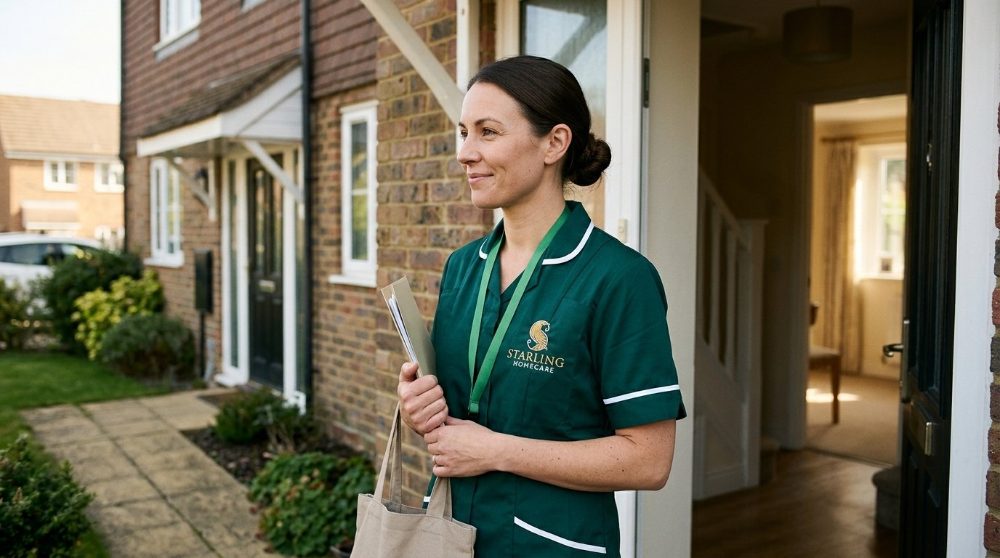
Home care after hospital in Hertford works best when the first month home is planned as carefully as the discharge itself. Hospitals now work hard to get people home as soon as they are medically ready, so the family question is rarely whether someone comes home, but what the first four weeks will actually look like.
That question deserves a calm answer, not a scramble. A little planning turns a worrying fortnight into a steady recovery in familiar surroundings.
We help families around Hertford put that plan in place, so we know where the pressure points are. This guide walks through the first month: what the hospital and NHS arrange, and what is worth organising yourselves.
Why does the first month at home matter so much?
The pressure to leave hospital promptly is real and well documented. The Health Foundation's December 2025 analysis found that around 11 per cent of hospital bed days in England were occupied by people medically fit to leave, and that on a single day at the end of September 2025 more than 12,400 people who were ready to go home were still in a hospital bed.
Getting home sooner is usually better for recovery, but it moves the real work of recuperation into the home itself. Strength, confidence and appetite rebuild gradually, and the first month sets the pattern.
A good month one is quiet: meals happen, medicines are taken, appointments are kept, and someone notices early if anything slips.
What is the journey home to Hertford like?
For most people around Hertford, a hospital stay means the Lister in Stevenage, East and North Hertfordshire NHS Trust's specialist hospital for emergency and inpatient care, with Hertford County Hospital serving the town as a sister site of the same Trust. Home may be Hertford itself, or Ware, Hoddesdon, Bengeo, Hertford Heath or Stanstead Abbotts.
That distance matters in practical ways. The person coordinating the return is often a son or daughter doing it from another town, between visiting hours and work.
It helps to agree early who collects your relative, who does the first food shop, and who is in the house for the first evening. The first 48 hours home shape how safe and settled someone feels.
What does the NHS put in place first?
Across East and North Hertfordshire, an integrated community service called Discharge Home to Assess supports people leaving hospital. Rather than waiting in a ward for assessments, a medically ready person can go home and have their health and social care assessments there, with an enablement pathway of up to 21 days and a team that works seven days a week.
Short-term NHS support of this kind is a bridge, not a permanent arrangement. It focuses on recovery goals, then steps away once they are met.
Who provides what, and in what order, is explained in our county guide to home care after hospital in Hertfordshire. This article is the companion piece: the plan a family builds around that system.
What should your own month one plan cover?
Think of it as four quiet weeks, planned before discharge day if you can. For the first week, make sure the house is warm, the fridge is full, medicines have been collected and everyone understands any changes made in hospital.
Across the month, keep a single list of follow-up appointments and how your relative will get to each one, whether at Hertford County Hospital, the GP surgery or the Lister. Check any equipment that has been provided is actually being used, and agree who visits on which days so no day is empty and no one burns out.
Nights deserve their own thought, because worry peaks after dark. And if something does not look right, a new confusion, a wound that worries you, breathlessness, do not wait for the next appointment: contact the GP or NHS 111 promptly.
Where does private home care fit in?
Many families use short daily visits to steady the first weeks: breakfast and medication prompts, a proper meal later, help with washing while strength returns, and a reliable eye on how recovery is really going. Support like this can run alongside NHS involvement and family help, then carry on seamlessly when the short-term services finish.
As a CQC regulated, family-run provider, we keep the same small team visiting, which matters most in exactly these weeks. Our post-hospital care is built to taper: more support at the start, less as confidence returns.
The aim is not to create dependence. It is to make sure the recovery that started on the ward actually finishes at home.
Common Questions About Home Care After Hospital in Hertford
How quickly can home care start after a hospital stay?
Often within a few days, and sooner where there is time to plan before discharge. If a stay is expected, it is worth talking to us before discharge day, so visits can begin the day your relative comes home rather than after a difficult first week.
What support does the NHS provide when someone leaves hospital in Hertford?
Across East and North Hertfordshire, the Discharge Home to Assess service allows a medically ready person to be assessed at home rather than on a ward, with an enablement pathway of up to 21 days. It is short-term support focused on recovery, so many families plan what will follow it alongside it.
Do you support the villages and towns around Hertford?
Yes. Our Hertford team supports the town itself along with Ware, Hoddesdon, Bengeo, Hertford Heath and Stanstead Abbotts. The same small team covers the area, so visits stay consistent wherever home is.
Coming home from hospital should feel like the end of the hard part, not the start of a harder one. If someone you love is on a ward now and you are thinking about the weeks ahead, our Hertford team is on 01920 746779 and at [email protected].
Arranging Care Is Simple
Starting care can feel like a big step. We keep it calm and straightforward, and we are here to guide you from your very first call.
1. Talk to us
Get in touch by phone or request a callback. We will listen, answer your questions and help you understand the options, so you can decide what feels right in your own time.
2. A home visit and initial consultation
We arrange a visit to understand your routines, your home and what matters most to you. Together we agree an initial consultation and shape the support that feels right.
3. Your care begins
A small, familiar team starts your care, arriving at the agreed times and staying involved as your needs change. We remain your trusted adviser throughout.
Whenever you are ready, we are here to help.