
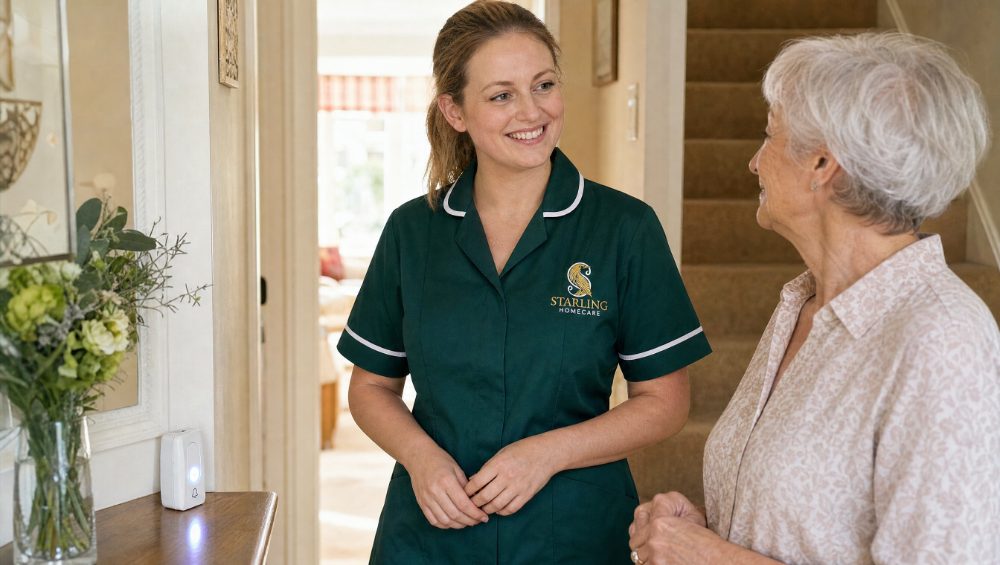
The hearing loss equipment that helps most at home covers three everyday moments: knowing someone is at the door, hearing the phone, and being woken by a smoke alarm. Flashing or vibrating doorbells, amplified phones and smoke alarms with a vibrating pad are all available. Hertfordshire County Council's Sensory Services team can assess what a person needs.
To talk anything through with someone local, our Harpenden team is on 01582 824 830.
Hearing aids do a lot, but they come out at night and in the bath. They may also miss a doorbell two rooms away. That is where simple equipment fills the gaps. Our page on hearing loss care at home explains how carers support people with hearing loss. If hearing aids are part of the difficulty, our article on what to do when a parent won't wear their hearing aids may help.
Which hearing loss equipment helps with the door?
A missed knock is more than an annoyance. It can mean a missed delivery, a missed nurse visit, or a parent who stops opening the door at all.
The RNID guide to doorbells describes several options:
- Flashing doorbells, which flash a bright light indoors when the button is pressed.
- Vibrating pagers, with a small receiver worn or carried, so the alert follows the person around the house and garden.
- Extra receivers, which plug in around the home so the alert reaches more than one room.
- Amplified chimes, which may be enough for someone with some hearing.
- Smart doorbells, which send an alert to a smartphone, often with a camera.
The right choice depends on the person. For example, someone who spends most of the day in one chair may manage well with a flashing receiver beside them. Meanwhile, someone who potters in the garden may prefer a pager.
What helps with the telephone?
RNID lists telephone amplifiers and extension ringers, which make landline calls louder and the ring easier to notice.
RNID also points to Relay UK, a text to speech relay service that helps people talk over the phone. In addition, RNID notes that hearing aids can connect to phones. So it is worth asking about this at the next audiology appointment.
How do smoke alarms work for someone with hearing loss?
This is the piece of hearing loss equipment that matters most for safety. A standard alarm may not wake someone who has taken their hearing aids out for the night.
According to the RNID guide to smoke alarm systems, these systems link the detectors to a pad under the pillow and a flashing light. A good pad is hard to disconnect, and shows a warning light if it is unplugged. RNID adds that people with severe or profound hearing loss may get one free. It suggests asking the fire and rescue service or the council.
In Hertfordshire, the fire and rescue service offers free home fire safety visits to residents at greater risk. That includes older people, people living alone and anyone with health or support needs. First, you complete an online self-check, and the service gets in touch if it suggests a visit. It is worth mentioning hearing loss when you do.
What about the television and conversation?
A television turned up loud can cause friction with neighbours or a partner. Hertfordshire County Council lists TV amplifiers and loop systems among the equipment its Sensory Services can help with. RNID also covers settings and devices that help people hear the TV more clearly.
None of this replaces conversation, but it can make an evening in the sitting room easier for everyone.
How do you get hearing loss equipment in Hertfordshire?
Start with the council. Hertfordshire County Council's Sensory Services lists flashing smoke alarms, flashing doorbells and telephones, TV amplifiers and loop systems among its equipment. The team has a conversation with the person to work out what they need, which it calls an assessment.
You can contact Sensory Services on 0300 123 4042. There is also a SignVideo service on weekdays from 8am to 6pm. The council's page does not set out charges, so ask about any cost when you call. RNID notes that a council sensory team may be able to help with the cost of a doorbell system.
The council also lists HertsHelp sensory link workers, who offer free support.
How can a carer help with the equipment day to day?
Equipment only works if it is switched on, charged and where it should be. That is where regular visits help. For example, a carer can check the pager is clipped on and the pad is plugged in. They can also make sure the doorbell receiver is in the right room. They can also remind someone to test the alarm the way the manufacturer recommends.
Carers also notice when things change, such as a person missing the phone more often. For families in Harpenden and Batford, that kind of observation is often what prompts a fresh assessment. Our sensory impairment care page explains how that support fits together. Our guide to what happens in a home care visit shows how these checks sit within a normal visit.
Frequently asked questions
Does Starling Homecare provide hearing loss care at home?
Yes. Starling Homecare is an independent, family run home care provider based in St Albans and registered with the Care Quality Commission. We support people living with hearing loss with visiting care in St Albans, Harpenden, Hemel Hempstead, Welwyn Garden City and Hatfield, Potters Bar and Cheshunt, and with live-in care across Hertfordshire.
Is hearing loss equipment free in Hertfordshire?
The council's Sensory Services page does not state charges, so ask when you contact the team. RNID says a smoke alarm may be free for people with severe or profound hearing loss.
Does my parent need a smart doorbell?
Not necessarily. A smart doorbell suits someone who carries a smartphone. However, a flashing receiver or a vibrating pager is often simpler for someone who does not.
Who should test a vibrating smoke alarm?
Follow the manufacturer's instructions on how and how often to test it. A carer or family member can help with the button, but the instructions come first.
Small pieces of equipment can give a person back the confidence to answer the door and sleep soundly. Our carers visit people in Harpenden, and can help keep that equipment working as part of everyday care.
Figures and guidance checked on 20 November 2026 against Hertfordshire County Council Sensory Services and RNID.
Arranging Care Is Simple
Starting care can feel like a big step. We keep it calm and straightforward, and we are here to guide you from your very first call.
1. Talk to us
Get in touch by phone or request a callback. We will listen, answer your questions and help you understand the options, so you can decide what feels right in your own time.
2. A home visit and initial consultation
We arrange a visit to understand your routines, your home and what matters most to you. Together we agree an initial consultation and shape the support that feels right.
3. Your care begins
A small, familiar team starts your care, arriving at the agreed times and staying involved as your needs change. We remain your trusted adviser throughout.
Whenever you are ready, we are here to help.